Information as of August 2026
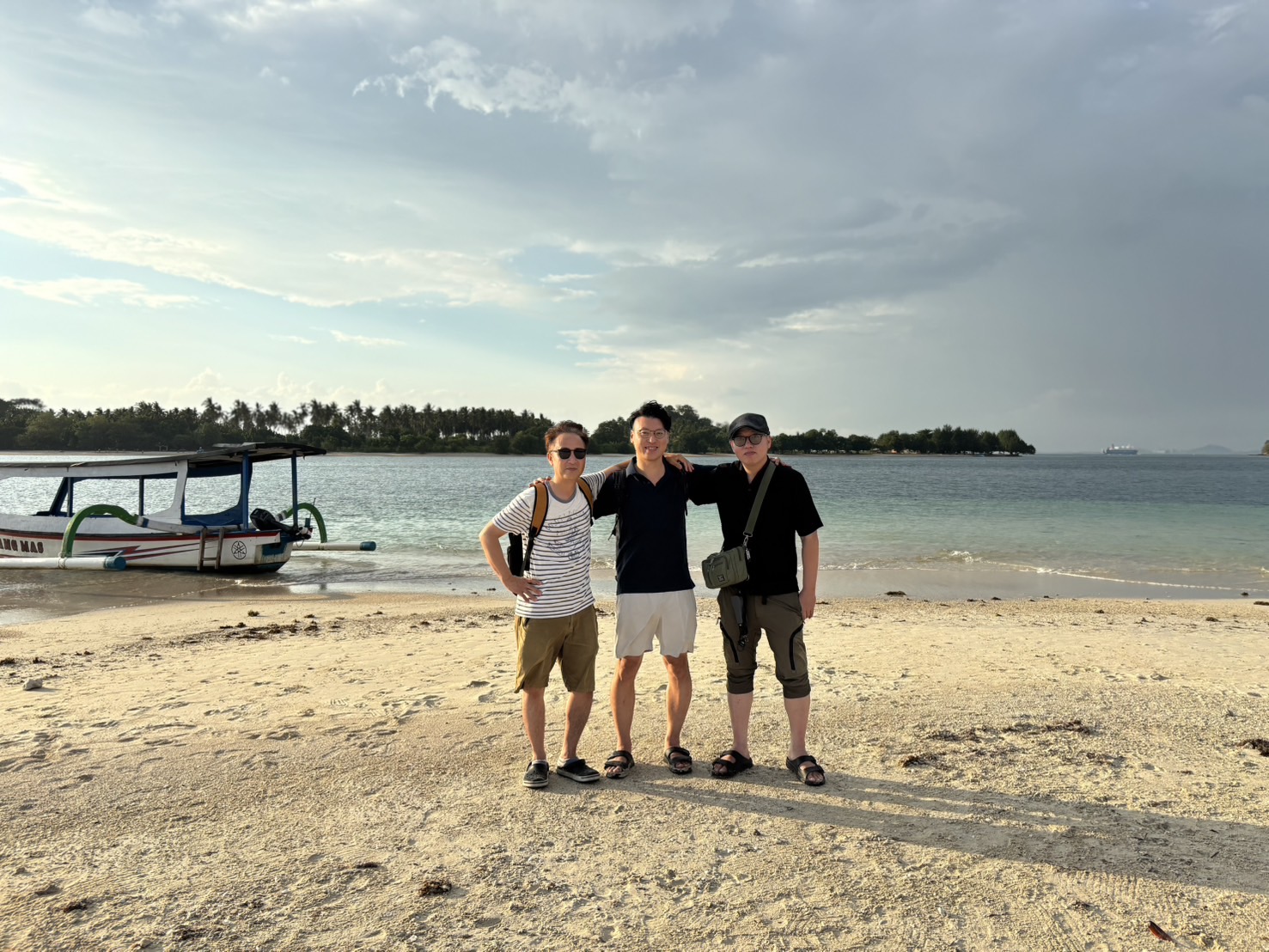
Lombok is an Indonesian island sitting just east of Bali. It’s less famous than Bali, but that also means a lot of “not-overdeveloped nature” and “simple everyday life” is still very much alive here. This article pulls together the basics for anyone considering Lombok for the first time: what kind of place it is, how to get here, the best season, the culture and the main areas. We’re based in an area called Sekotong, in the southwest of Lombok, and we run this site while actually living here, so we’ve added the perspective of people on the ground, something you won’t find in a travel agency brochure.
Lombok is also somewhere many people ask, “Is it safe?” This article only touches on the overview; we cover the details honestly in a separate article, so please read that as well.
What you’ll learn in this article
- ✓What kind of place Lombok is (where it sits relative to Bali, its size and cultural background)
- ✓How to get to Lombok, and a comparison of the 3 routes from Bali (plane, fast boat, public ferry)
- ✓Climate and the best season, plus the basics of Sasak and Islamic culture
- ✓The main areas (Mataram, Senggigi, Kuta Lombok, the Gili Islands, Sekotong) and a safety overview
The short answer
Lombok is an “island on the rise” just east of Bali. Most international travellers arrive via Bali or via Jakarta. The best season is the dry season, roughly April to October, and the island suits travellers looking for nature that hasn’t been over-developed and a simple way of life.
What is Lombok? The “other paradise” just east of Bali
Lombok is part of Indonesia’s Lesser Sunda Islands, and it’s home to Mataram, the capital of West Nusa Tenggara Province. It sits right next to Bali across the Lombok Strait, and on a map you can see it lies just to Bali’s east. In terms of distance, it’s only about an hour by plane from Bali’s main airport (Ngurah Rai International Airport) to Lombok’s airport.
The island measures roughly 80 km from north to south and from east to west, with a population of about 2.7 million. Around 90% of people belong to the Sasak ethnic group, and because Muslims are the majority, the cultural background differs from Bali, where most people are Hindu. If Bali is “a fully developed tourist island,” Lombok is at the “on the rise” stage: some areas have big resorts, while traditional fishing villages and countryside stretch out right next door.
In the north stands Mount Rinjani (3,726 m), Indonesia’s second-highest active volcano, and from the south to the southwest there are white-sand beaches dotted along the coast. Sekotong, where we’re based, is at the island’s southwest tip and is the gateway to the “South Gili Islands” that float off the main island of Lombok.
Getting to Lombok
Most international travellers reach Lombok with a connection inside Indonesia. There are two common routes.
The first is via Bali (Denpasar / Ngurah Rai International Airport). You fly into Bali, on a direct or connecting flight, and then transfer to a domestic flight to Lombok International Airport (nickname: Praya Airport). This is the route most international travellers use, and the connection is relatively smooth.
The second is via Jakarta (Soekarno-Hatta International Airport). Fares can sometimes be cheaper than going through Bali, but you tend to have more connections and longer waits.
Diagram: How to choose your connection point
Want to add some Bali sightseeing to your trip?
▼
YES
Via Bali (Denpasar)
The standard route used by most international travellers. The connection is also relatively smooth.
NO
Via Jakarta is also an option
Fares can sometimes be cheaper, but you tend to have more connections and longer waits.
Lombok International Airport opened in 2011, so it’s a relatively new airport, and it’s in the Praya area of central Lombok. Mataram, the capital, and the Senggigi area are around an hour away by car, and you can also reach our area, Sekotong, by road from the airport (please check travel times and transfer options in advance with your accommodation or stay programme).
For the facilities after you land, and a rough idea of how to get to each area and how long it takes, see our separate article, “Lombok International Airport guide.”
About visas
Indonesia has had a visa-exemption scheme for eligible countries, but there have been reports that the scheme was recently suspended temporarily (we haven’t been able to confirm the start date of the suspension, when it will resume, or the details of any alternative procedure as of writing). It was previously said that a stay of about 30 days was possible under “visa on arrival (VOA)” or “visa exemption,” but because the rules are likely to have changed, this article doesn’t state a specific length of stay or procedure. Before you travel, be sure to check the latest information with the Indonesian embassy or consulate in your country, or your own government’s official travel advice.
Comparing the 3 routes from Bali to Lombok
There are three ways to get from Bali to Lombok: plane, fast boat and public ferry. Choose according to your purpose and budget. Here’s how they compare. For a more detailed comparison by departure point and operator, see our separate article, “How to get from Bali to Lombok.”
← The table scrolls sideways
| Transport | Approx. travel time | Approx. fare | Notes |
|---|---|---|---|
| Plane | About 1 hour | From around Rp450,000 one way (about US$25) | The fastest. Served by carriers including Garuda Indonesia |
| Fast boat | About 1.5–2 hours | From around Rp400,000 one way (about US$22) | Several departure points, including Benoa, Serangan, Sanur and Padang Bai. Motorbikes and cars can’t be taken |
| Public ferry | About 4–5 hours | Around Rp57,000 one way (about US$3.20) | Padang Bai–Lembar route. Runs 24 hours and departs whenever full. Motorbikes and cars can be carried |
* The fares and travel times above are guides based on general travel information (US dollar figures assume roughly US$1 ≈ Rp17,800, as of September 2026). They vary with exchange rates, fuel costs and the operator, so we recommend checking the latest information just before you travel.
Diagram: Travel time from Bali to Lombok by transport
If you just want to save time, take the plane. If you’d like the journey to be part of the activity and enjoy the feel of a boat trip, take the fast boat. If you want to keep costs down or take your motorbike with you, the public ferry is the one for you.
Climate and the best season
Lombok has a drier climate than Bali and is broadly divided into a dry season and a rainy season.
- Dry season (around April to October): Clear skies and low humidity make this the most comfortable time of year. June to August in particular is stable and well suited to beaches, snorkelling and climbing Mount Rinjani.
- Rainy season (around November to March): The whole island turns green. It doesn’t rain every day; the usual picture is an afternoon squall on many days. It’s also a time with fewer travellers, when accommodation prices tend to drop.
Diagram: Lombok’s dry and rainy seasons
* Varies from year to year. Even in the rainy season, it’s less common for it to rain all day (as of August 2026)
Note
The boundary between the seasons shifts from year to year. If you’re going for the Mount Rinjani climb, be aware that around January to March the trail can deteriorate and the mountain may even be closed.
On the other hand, if you’d like to relax at a time with fewer tourists, the rainy season is an option too. If you want more detail, including monthly temperatures and rainfall and when festivals fall, see our separate article, “The best season to visit Lombok.”
Culture and people | The Sasak and an Islamic island
The Sasak make up about 90% of Lombok’s population. Unlike Bali’s Hindu culture, most people on Lombok follow Islam. As a result, the adhan (the call to prayer) from the mosques is part of everyday life, and during Ramadan (the fasting month) restaurant opening hours can change, so there are times when you need to be culturally considerate in ways that differ from Bali.
At the same time, one of Lombok’s own charms is that you can visit villages (such as Sade Village) where the traditional Sasak way of life is still strongly present. Around February every year, a traditional event called the “Bau Nyale Festival” is also held. As a traveller, a few basic habits will make your stay more pleasant: keep your skin covered modestly, and respect local manners when visiting mosques or traditional villages.
Area guide | Where to go on Lombok
Lombok is big, and how you enjoy it varies a lot from area to area. Here’s a quick introduction to the main areas.
← The table scrolls sideways
| Area | Character | Good for |
|---|---|---|
| Mataram | The capital. The island’s hub, with the airport, hospitals and large shopping centres | People who prioritise shopping and access to medical care |
| Senggigi | A long-established resort area on the west of the island. Also famous for its sunsets | People who want a classic beach resort |
| Kuta Lombok (Mandalika) | The south of the island. A surfing mecca, with development moving fast in recent years | People who want to surf or stay active |
| Gili Islands (Trawangan, Air, Meno) | Three small islands off the northwest of the island. Quiet islands with no cars or motorbikes | People who want snorkelling and slow island time |
| Sekotong | The island’s southwest tip. The gateway to the South Gili Islands, and a quiet area that hasn’t yet become a tourist hub | People who want to get away from the bustle and experience “the real Lombok” |
* An overview of the areas based on information as of August 2026.
Diagram: Lombok’s main areas at a glance
An overview of the areas based on information as of August 2026
🏝️ A word from Sekotong
Sekotong, where we’re based, is the area of these with the least information available. It doesn’t have the buzz of Gili Trawangan up north, but that also means a quiet sea and the everyday life of local people are close at hand. (As of August 2026, local team members)
We’ll cover Sekotong’s charms in more detail in a separate article.
Safety (overview)
You may see comments like “I’m worried about safety on Lombok.” To give the conclusion first: the need to watch for petty crime such as pickpocketing and bag theft isn’t very different from other tourist destinations in Southeast Asia. It isn’t an area with frequent serious crime, but basic precautions, such as looking after your valuables and avoiding going out alone at night, are still needed.
For more detailed safety information (how to check official travel advisories, and how it actually feels as someone living here), see our separate article, “Is Lombok safe?,” where we’re honest about it.
Who Lombok suits, and who it doesn’t
Lombok has a lot going for it, but we can’t recommend it to everyone. In the interest of honest information, here’s who it suits and who it doesn’t.
Who it suits
- People who’ve been to Bali and want “somewhere a bit quieter” or “somewhere that isn’t a tourist hub”
- People who want to enjoy outdoor activities such as surfing and snorkelling
- Experienced travellers who can accept a little inconvenience
Who it doesn’t suit, or who should take care
- For people who value big-city convenience (convenience stores, 24-hour shops, a well-developed medical system and so on), areas other than Mataram can feel inconvenient at times
- People who get stressed by travel time and poor transport (not traffic jams, but the fact that there’s little public transport to begin with)
- People who are put off by the realities of a developing area, such as lots of insects and power or phone and internet service that is unstable in some places
We won’t hide these points, and we’ll cover them in specific terms in our later articles too.
FAQ
Q. How do most international travellers get to Lombok?
The two common routes are via Bali (Denpasar) or via Jakarta (Soekarno-Hatta International Airport), and most travellers go via Bali. Flight routes change, so check current flights when you book.
Q. When is the best time to visit Lombok?
The dry season, around April to October, is the most comfortable time. June to August in particular is stable and well suited to beaches, snorkelling and climbing Mount Rinjani. The rainy season (around November to March) has fewer travellers and accommodation prices tend to drop.
Q. What’s the difference between Bali and Lombok?
Bali has a large Hindu population, whereas on Lombok the Sasak make up about 90% of the population and Muslims are the majority. In tourism terms, if Bali is “a fully developed tourist island,” Lombok is an “island on the rise,” with traditional fishing villages and countryside right next door.
Related reading
- How to get from Bali to Lombok | Plane, fast boat and ferry comparedCompares the three routes from Bali to Lombok.
Summary | Get the big picture first, then dig into each area
Lombok sits right next to Bali, yet there is still relatively little systematic information about it. This article has covered the basics: how to get here, the climate, the culture and the areas. As a next step, we recommend reading on through the articles on whichever areas or topics interest you (safety, costs, the Gili Islands and so on).
We at Semelar Beach Village run a stay programme rooted in local life in Sekotong, in southwest Lombok. If you’ve been to Bali and want to know what lies beyond it, or you’re looking for time on a quiet island, please consider a stay in Sekotong too. In future articles we’ll also introduce everyday life in Sekotong and how you can spend your time there.
SEMELAR BEACH VILLAGE
Stay in the village where we live, in Sekotong
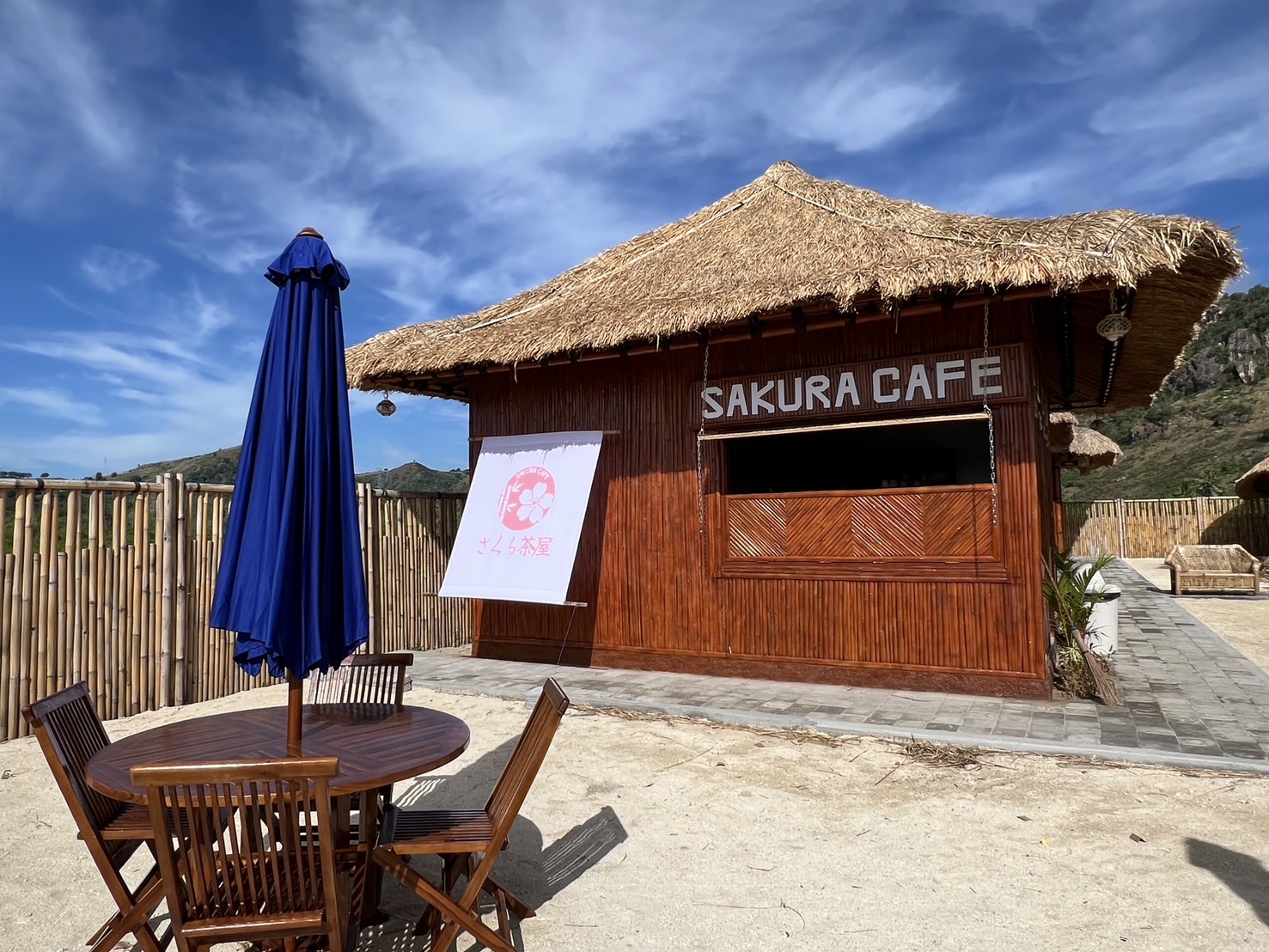
About 1 hr 10 min by car from Lombok International Airport. A stay programme where you stay in a beachfront villa, explore the islands by a boatman’s boat and watch the sunset at Sakura Cafe.
Sources used in this article
- Japan Ministry of Foreign Affairs, Overseas Safety website (Indonesia)https://www.anzen.mofa.go.jp/
- Indonesian embassies and consulates (mentioned as a place to check visa information)
- General travel information (as of August 2026)