Information as of August 2026
The best time to visit Lombok is the dry season, June to September. In this article we set out a monthly guide to temperature and rainfall, the timing of Rinjani treks and the Bau Nyale festival, and what to wear and pack in each season, from the point of view of us at Semelar Beach Village, who are based in Sekotong on Lombok.
What you’ll learn in this article
- ✓The best time to visit Lombok is the dry season, June to September, with April to May and October as the next best shoulder months
- ✓Monthly guides to temperature and rainfall, and what characterises the dry and wet seasons
- ✓The timing of events such as Rinjani treks and the Bau Nyale festival, and what to wear and pack by season
- ✓Honest cautions, such as wet-season downpours and dry-season UV
The short answer
The best season is the dry season, June to September, with the shoulder months of April to May and October next. Even in the wet season (around November to March) mornings are often sunny, so if you value quiet and lower room rates, choosing the wet season on purpose is also a way to look at it.
Lombok’s climate basics: two seasons, dry and wet
Lombok has a tropical climate close to the equator, and rather than four seasons it is made up of two seasons, dry and wet. Temperatures vary little through the year: daytime highs are generally around 29 to 32°C, and even mornings and evenings usually fall only to around 24°C. There is basically no “cold season”.
Figure: Lombok’s dry and wet seasons
* The boundaries between seasons (around April to May and October to November) shift from year to year. Rain in the wet season seldom lasts all day (as of August 2026)
What the dry season (around April to October) is like
The dry season is a time of continuing clear days and relatively low humidity. From June to September in particular, the south-easterly monsoon winds cut rainfall sharply, and monthly rainfall is said to be a few tens of millimetres or less, with hardly any rain in some months. The air is crisp and comfortable, and it is the best time for outdoor activities such as the beach, snorkelling and trekking Rinjani.
What the wet season (around November to March) is like
It doesn’t rain all day, every day in the wet season. More often a short, heavy shower (squall) falls from afternoon into the evening, and then it clears. December and January in particular are said to see the most rain and the most rainy days of the year. On the other hand, the whole island turns a deeper green, there are fewer tourists, and room rates tend to fall. For people who want a quiet stay or to keep accommodation costs down, choosing the wet season on purpose is also a way to look at it.
In a video on our operations team’s YouTube channel (published in December 2025, in Japanese), a team member who runs a business in Sekotong says that half the year is dry season, roughly April to October, and that as of early November 2025 the rainy season had just begun (video). In the same video he says that around 6am Sekotong is very cool at that time of year (video). In another video, published in November 2025, he says that once the rainy season starts there are many days with afternoon squalls, but mornings are basically clear and sunny (filmed at the end of October 2025, video).
Note that the boundaries between the seasons (around April to May and October to November) shift from year to year. It is also said that in recent years climate change has made the start and end of the rainy season harder to predict, so we recommend checking the latest local weather information as your trip approaches.
Monthly guide: temperature, rainfall and how recommended each month is
The following is a monthly guide based on the long-term averages on several climate data sites. Actual temperatures and rainfall vary from year to year, so please treat it only as a guide to the broad pattern.
← Scroll the table sideways
| Month | Temperature guide (low to high) | Rainfall guide | Character | How recommended for travel |
|---|---|---|---|---|
| January | 24–30°C | Heavy (around 250–330mm) | Peak of the wet season. Frequent squalls | ★★☆☆☆ |
| February | 24–30°C | Somewhat heavy | Wet season continues. Bau Nyale festival season | ★★☆☆☆ |
| March | 24–31°C | Somewhat heavy | End of the wet season. Rinjani is closed | ★★★☆☆ |
| April | 24–31°C | Moderate (moving into the dry season) | Start of the dry season. Rinjani usually reopens | ★★★★☆ |
| May | 24–31°C | Rather light | More settled sunny weather | ★★★★☆ |
| June | 23–30°C | Light | Dry season proper. Comfortable | ★★★★★ |
| July | 23–29°C | Very light | Driest of the year. Winds somewhat strong | ★★★★★ |
| August | 23–29°C | Among the lowest of the year | Peak of the dry season. Strong UV | ★★★★★ |
| September | 23–30°C | Light | Dry season continues. Comfortable | ★★★★★ |
| October | 24–31°C | Moderate (moving into the wet season) | End of the dry season. Afternoon showers start to increase | ★★★★☆ |
| November | 24–31°C | Rather heavy | Start of the wet season | ★★★☆☆ |
| December | 24–31°C | Heavy | The year-end holidays are the wet season proper | ★★☆☆☆ |
* The above is a guide based on general climate data, not measured values for any particular year. Please always check the local weather forecast just before you travel.
Month-by-month guide to spending your time
Peak dry season (June to September): the most recommended time
This is the time of year with the highest share of sunny days and relatively settled temperatures. Sea visibility also tends to improve, so it pairs well with snorkelling and diving. July and August, which coincide with the summer school holidays, are also a peak tourist season worldwide, and in popular areas hotel rates can rise and boats to the southern Gili Islands can get crowded. If quiet matters to you, June or September is the time to aim for.
Dry-season shoulder months (April to May and October): a good time to aim for
Some rain remains, but sunny days are the norm and temperatures are stable. Compared with the peak of the dry season there are fewer travellers, and flight and hotel prices tend to be calmer, which makes it a recommended time for those who put value for money first. However, the chance of meeting a sudden squall is higher than at the peak of the dry season.
Wet season (November to March): a time to enjoy greenery and quiet
The wet season can’t simply be called a time “to avoid”. Mornings are often sunny, and if you sit out the afternoon squall there are many days when sightseeing is perfectly fine. It is also the season when the rice fields and jungle are at their most beautiful. On the other hand, December and January bring more rain and more rainy days, and flooded roads and worse sea conditions are more likely, so if you are planning an itinerary built around activities, we recommend the dry season.
Best timing for Rinjani treks and festivals
Rinjani treks are dry season only
Trekking Mount Rinjani (3,726m), Indonesia’s second-highest active volcano, is officially closed each year from around 1 January to 31 March for safety and conservation, and the usual pattern is for it to reopen from around 1 April through December. However, depending on the weather and trail conditions that year, the opening and closing dates can shift. If you are visiting Lombok to trek, please always check the latest information from the official trekking authority or a local operator just before you travel. The best season for the trek itself is said to be around July to September, when there is less worry about the trail being slippery with rain.
Traditional events such as the Bau Nyale festival
In the Kuta area of southern Lombok, a traditional Sasak event called the “Bau Nyale festival” is held every year from around February to March. It is timed to coincide with the appearance of nyale (a kind of sea worm) that gather in the sea to spawn, and the date changes every year according to the traditional Sasak calendar. If you want to time your trip to the festival, please plan with the fact in mind that this period deliberately falls in the wet season.
What to wear and pack
On Lombok, where temperatures are high all year round, the basic approach to clothing is much the same in any season. On top of that, here are the points to bear in mind for the dry and wet seasons.
What to bring in every season
- Breathable short-sleeved tops and light clothing (quick-drying fabrics are also easier to wash)
- Sunscreen, a hat and sunglasses (as described below, UV is quite strong even in the dry season)
- One layer to put on (for adjusting your body temperature on air-conditioned flights and in restaurants)
- Both sandals and comfortable walking shoes (using one for the beach and the other for town walks and temple visits is more comfortable)
- A cover-up or scarf that keeps your skin covered (as good manners when visiting mosques and traditional villages)
What to add in the dry season (April to October)
- Stronger sun protection. With fewer clouds in the dry season, UV levels tend to be among the highest of the year
- It is also a somewhat windier time, so a hairband or a large scarf against hair-blowing and sand comes in handy
- Mornings and evenings can feel cooler than you expect, so a thin long-sleeved top is reassuring
What to add in the wet season (November to March)
- A folding umbrella or raincoat (squalls are short but come down hard)
- A waterproof bag or zip bags that can get wet (for valuables such as your phone and passport)
- Quick-drying clothes (humidity is high and laundry is slow to dry at this time)
- Choose sandals with non-slip soles, which are reassuring on roads wet with rain
Honest cautions for each season
It isn’t as simple as “the dry season is perfect and the wet season is a write-off”. Each season has cautions worth knowing in advance.
Figure: Dry season or wet season: which to choose?
Caution
- UV is fierce even in the dry season. With fewer clouds, if you neglect sun protection the risk of sunburn and heat exhaustion is higher than you might imagine. Reapply sunscreen often and keep drinking water.
- Wet-season squalls are “short but heavy”. They often stop within tens of minutes to an hour, but during that time the rain can be heavy enough to cut visibility. It is reassuring to leave some slack in plans for moving around outdoors.
- The dry-season peak (July to August) coincides with the worldwide busy season. Popular beaches and restaurants can get crowded, and accommodation rates can rise. If you want to avoid the crowds, June to September is worth considering.
- Rinjani treks and some island boat access can be cancelled or postponed on the day, depending on the season and weather. If you are planning for the wet season or the shoulder months, it is reassuring to have a spare day.
- The monthly data are only long-term averages. Year-to-year variation has also been pointed out in recent years, and they do not guarantee the weather on any particular day. Always check the latest forecast just before you travel.
🏝️ A word from Sekotong
In Sekotong, the calm seas of the dry season are ideal for snorkelling and boat trips to the southern Gili Islands. Some people, on the other hand, come for the quiet and deep green that only the wet season brings.
Frequently asked questions
Q. When is the best time to visit Lombok?
The dry season, June to September, is the most recommended. It is the time with the highest share of sunny days, and sea visibility also tends to improve. Next best are the shoulder months of April to May and October, when there tend to be fewer travellers and calmer prices.
Q. Should I avoid Lombok in the wet season?
It can’t simply be said that you should avoid it. Mornings are often sunny, and if you sit out the afternoon squall there are many days you can go sightseeing. It is a time of beautiful greenery when room rates also tend to fall. However, December and January bring more rain and more rainy days, so for an activity-centred itinerary we recommend the dry season.
Q. Can I trek Rinjani at any time?
It is officially closed each year from around 1 January to 31 March, and the usual pattern is for it to be open from around April through December. The best season for the trek is said to be around July to September. The opening period shifts from year to year, so please check the latest information from the official trekking authority and others just before you travel.
Related reading
- Lombok: The Complete GuideA pillar article giving the overall picture of climate, safety and areas.
Staying in Sekotong as an option
The way of thinking about the best season set out above applies just as well to Sekotong, our base in southwest Lombok. The calm seas of the dry season are ideal for snorkelling and boat trips to the southern Gili Islands, and some people come for the quiet and deep green that only the wet season brings. We at Semelar Beach Village run a stay programme rooted in local life in Sekotong. If you have already experienced Bali and are looking for the quiet island time beyond it, please consider a stay in Sekotong, whose face changes with the seasons, as a candidate for your next trip.
SEMELAR BEACH VILLAGE
There’s a place to stay in the Sekotong village we call home
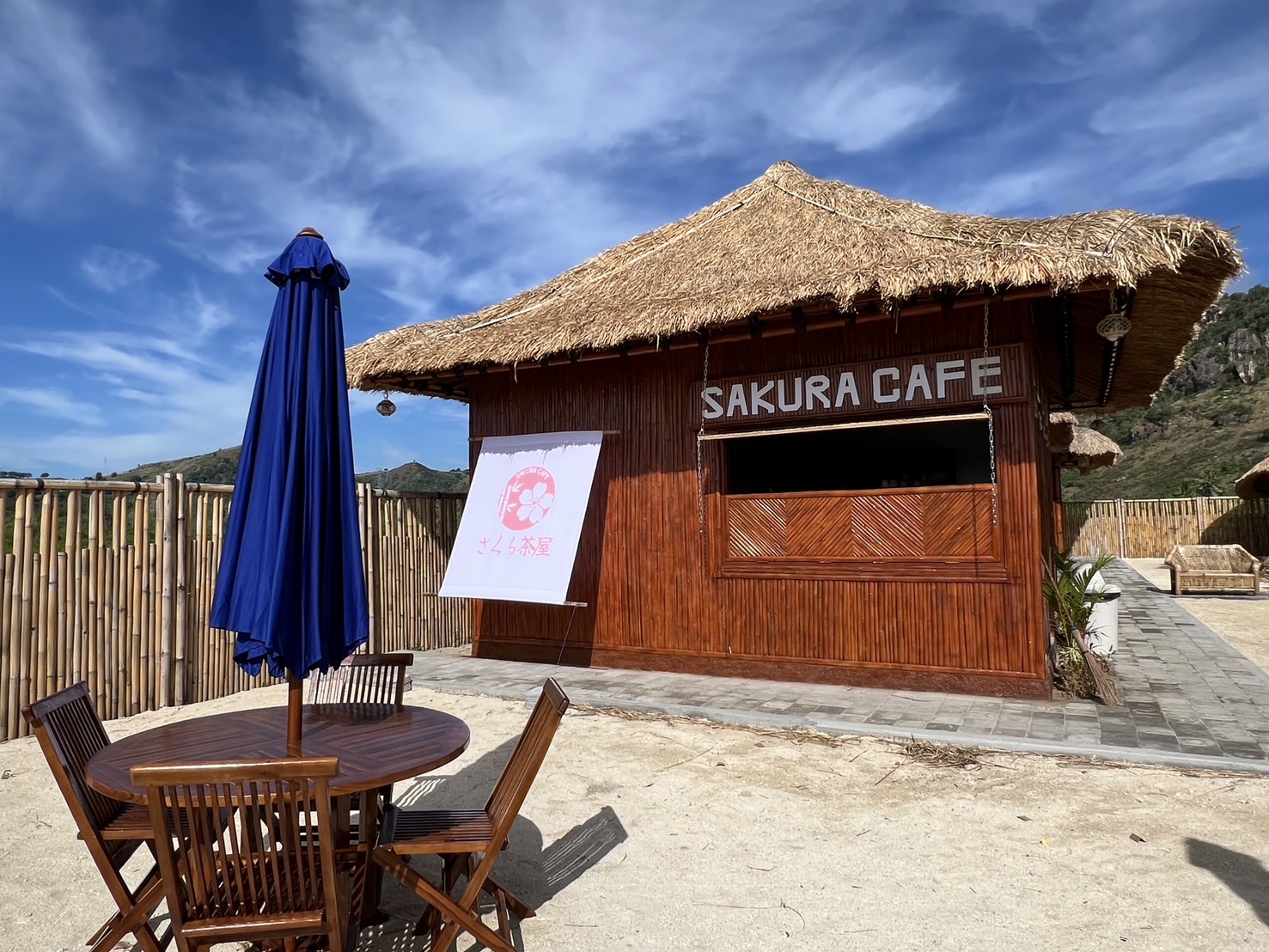
About 1 hour 10 minutes by car from Lombok International Airport. Stay in a beachfront villa, explore the coastline by local boat, and watch the sunset at SAKURA CAFE.
Sources for this article
- Long-term averages from several climate data sites (monthly temperature and rainfall guides)
- Information published by Mount Rinjani’s official trekking authority and local operators (opening and closing periods)
- General travel information (as of August 2026)
- Our operations team’s YouTube channel, “Building a town on Lombok” (in Japanese; the dry and wet season timing and how the weather feels, videos published in November and December 2025)https://www.youtube.com/@Pengembangan-Kota-di-Lombok