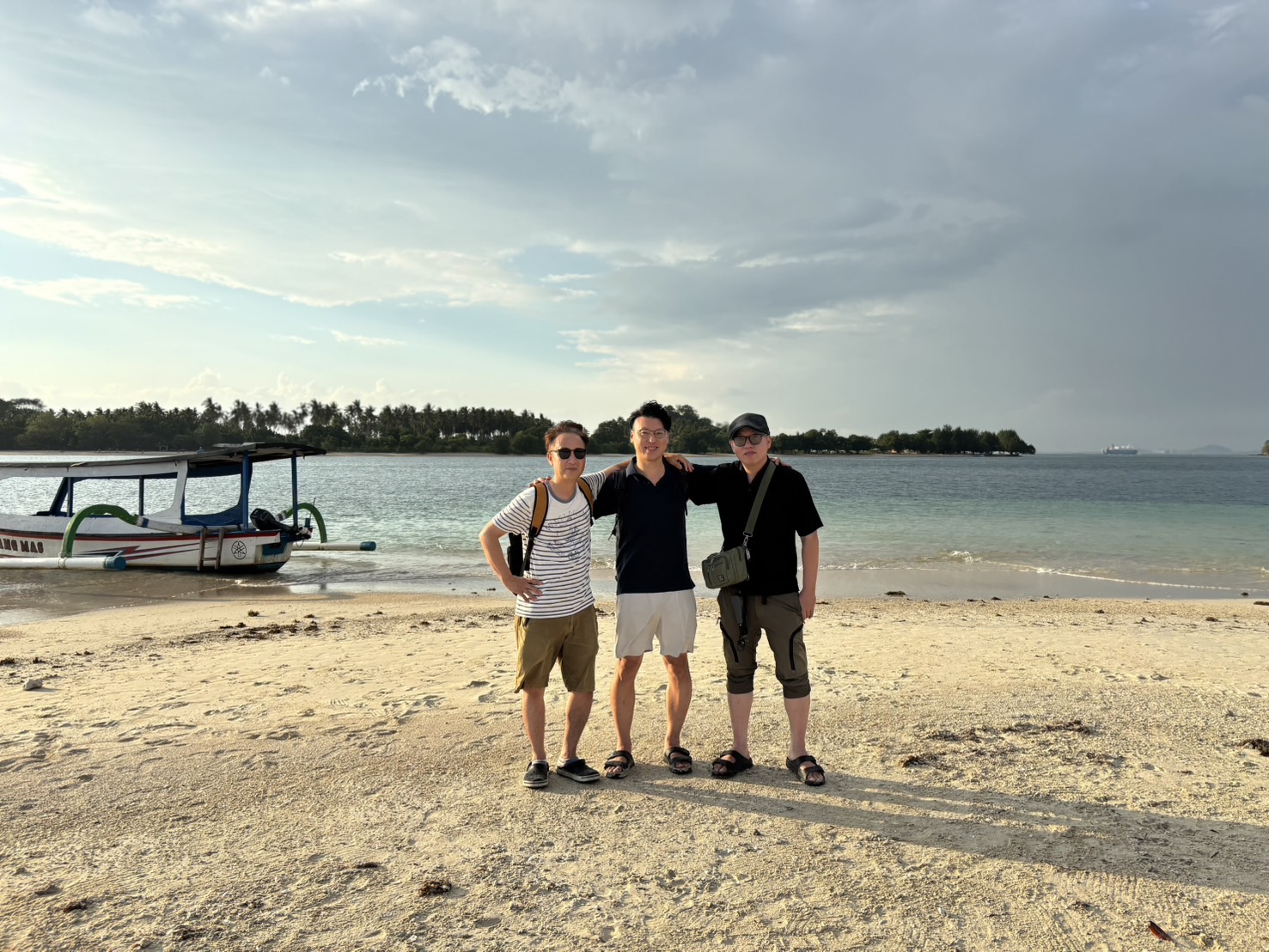
“Do people on Lombok speak Indonesian?” “I’d like to try a greeting in Sasak.” “How do you say thank you?” Walk through a Lombok village or market and you will hear a language that sounds different from Indonesian.
In short: most people on Lombok speak Sasak at home and in their villages, while Indonesian is used in schools and government offices. Visitors rarely have trouble getting by in Indonesian, but a word of Sasak such as “matur tampiasih” (thank you) or “selamat kelemak” (good morning) can open a conversation with villagers. Sasak has five dialects and levels of politeness that change words depending on who you are talking to, so the same meaning may be expressed differently by area and by listener.
This article is based on the ten Sasak expressions listed by Good News From Indonesia (2024), the English Wikipedia article on the Sasak language and a 2015 paper by a researcher at the University of Mataram, all opened and read in October 2026. It is written for people who would like to use a little of the local language in Lombok’s villages and markets.
Information as of October 2026
What this article covers
- ✓What Sasak is (how many people speak it, and how it sits alongside Indonesian)
- ✓Ten expressions you can use as a visitor
- ✓The five dialects, and why words change by area
- ✓How the word for “you” changes with the listener
- ✓Things to keep in mind when you use it
In short
Sasak, the language of Lombok’s Sasak people, had about 2.7 million speakers in 2010; it is used at home and in villages, while schools and government offices use Indonesian. Useful expressions for visitors include “matur tampiasih” (thank you), “selamat kelemak” (good morning), “embe taok?” (where?) and “aik putek” (drinking water). Dialects and polite forms change the wording, so switch to Indonesian if you are not understood (as of October 2026).
What is Sasak? How it sits alongside Indonesian
According to English Wikipedia, Sasak is the language of the Sasak people of Lombok, with about 2.7 million speakers in 2010, roughly 85% of the island’s population at the time (the 2020 census counted about 3.76 million people on Lombok). It is an Austronesian language; its closest relative is Sumbawa, spoken on the neighbouring island, and together with Balinese they form a Bali-Sasak-Sumbawa group.
The same article says Sasak has no official status and that Indonesian is the language of education, government and literacy. Sasak is used in families and villages; in towns, conversation often mixes in Indonesian, but Sasak has not been abandoned. Besides the Latin alphabet, there is a traditional script almost identical to Balinese, used on palm-leaf manuscripts that are read aloud in ceremonies called pepaosan.
Visitors can expect Indonesian to work at accommodation, shops and markets, and a word or two of Sasak works best as a way to start a conversation.
Ten expressions you can use
Good News From Indonesia (December 2024) lists ten Sasak expressions worth knowing on Lombok. The meanings below are translated from the article’s explanations in Indonesian.
← Scroll sideways to see the whole table
| Sasak | Meaning and use (as explained in the source) |
|---|---|
| Matur tampiasih | Thank you (polite). Tampiasih on its own is more casual |
| Selamat kelemak | Good morning. A morning greeting |
| Embe taok? | Where? Add the name of a place after it |
| Ndek taok | I don’t know |
| Aik putek | Drinking water. Useful when ordering water at a stall |
| Silak bedahar | Please eat. Often heard when you visit a Sasak home |
| Silak | Please, go ahead. Used to invite or offer |
| Pelungguh / Side | You. The first for people you respect, the second for peers |
| Berugak | A pavilion for resting, chatting or receiving guests (a noun) |
| Jagak angen | Guard your heart (jaga hati); mind other people’s feelings |
From Good News From Indonesia, “10 Ungkapan Bahasa Sasak di Lombok” (27 December 2024).
The same article gives an example of “embe taok?” followed by a place name, as in asking where Senggigi beach is. “Silak” is used when offering something, as in “please, try it”.
Figure: Sasak by situation (from Good News From Indonesia)
Five dialects: words change by area
According to English Wikipedia, Sasak speakers recognise five dialects, named after how they say “like that” and “like this”: Kutó-Kuté in the north, Nggetó-Nggeté in the northeast, Menó-Mené in the centre, Ngenó-Ngené in the central east and west, and Meriaq-Meriku in the central south.
The same article cites linguist Peter K. Austin as saying these labels do not capture all the regional variation and that some dialects are hard for each other’s speakers to understand. We could not confirm whether the ten expressions above are the same in every dialect. If a phrase does not work in a village, asking how it is said there is a conversation in itself.
How the word for “you” changes with the listener
Sasak has a system of politeness that changes words according to the listener’s status. English Wikipedia describes three levels for the person addressed (low, mid and high) plus a humble-honorific dimension, with every level except low called alus. It says the system was probably borrowed from Balinese or Javanese.
For example, “you” is kamu at the low level, side at the mid level, pelinggih at the high level and dekaji in the honorific form. “To eat” likewise changes: mangan, bekelór, madaran, majengan. Good News From Indonesia says to use pelungguh for people you respect, side (shortened to de) for peers and kamu for someone younger, so the spelling of the polite form differs between sources (pelinggih and pelungguh).
Figure: Levels of “you” (from English Wikipedia)
A 2015 paper by a University of Mataram researcher says side corresponds to “you” (Indonesian anda), and that adding -de after a noun means “your”. It gives the examples “Ne songkok-de” (this is your cap) and “Side eak bait ape?” (what will you take?). The same paper notes that aku (I), kamu (you), nie (he or she) and ite (we) also have short forms attached to words.
Things to keep in mind when you use Sasak
Take care
- Indonesian is what will get you by. Use Sasak as a way into conversation
- Wording differs by dialect. If you are not understood, ask how it is said locally
- With older people or people you have just met, use polite forms (matur tampiasih, pelungguh)
- At ceremonies and prayers, being quiet matters more than words
Behaviour matters as much as words. For dress, photography and visiting Sasak villages, see the Sasak people and traditional villages, and for Sasak wedding processions you may meet on the road, see Sasak weddings and nyongkolan.
A note from Sekotong
Sekotong in southwest Lombok is an area of fishing villages in West Lombok regency. We have not checked whether language use and wording in Sekotong match the description and table above, since dialects differ. Start with a word of thanks, and if it is not understood, ask how it is said there.
Drawbacks of learning Sasak for a trip, and who it suits
First, the drawbacks. There are few books or resources for visitors who want to learn Sasak, and dialects are said to differ widely. The phrases in this article come mainly from one article’s list of ten, and we have not confirmed dialect differences or correct pronunciation. For practical travel, Indonesian is more useful.
Even so, a greeting in the language most people on Lombok speak at home is a way into conversation in villages and markets. It suits people interested in local languages, people staying a while in a village and anyone who enjoys talking with local people.
Frequently asked questions
Q. Is Indonesian understood on Lombok?
Yes. English Wikipedia says Indonesian is the language of education and government, and Sasak is used in families and villages. Visitors rarely have trouble in Indonesian.
Q. How do you say thank you in Sasak?
Politely, matur tampiasih; casually, tampiasih (Good News From Indonesia, 2024).
Q. How do you say good morning in Sasak?
Selamat kelemak.
Q. How many Sasak dialects are there?
Speakers recognise five: Kutó-Kuté, Nggetó-Nggeté, Menó-Mené, Ngenó-Ngené and Meriaq-Meriku. Some are said to be hard for each other’s speakers to understand.
Q. How should I say “you”?
Side for peers, pelungguh (pelinggih in some sources) for people you respect, and kamu for someone younger. If unsure, use the polite form.
Summary
Sasak, the language of Lombok’s Sasak people, had about 2.7 million speakers in 2010; it is used at home and in villages, while schools and government offices use Indonesian. Useful expressions for visitors include matur tampiasih (thank you), selamat kelemak (good morning), embe taok? (where?) and aik putek (drinking water).
Sasak has five dialects and levels of politeness that change with the listener, so wording varies by area and person. Use it to start a conversation, and switch to Indonesian if you are not understood (as of October 2026).
Related reading
- The Sasak people and traditional villagesSasak culture and how to visit villages
- Sasak weddings and nyongkolanThe wedding processions you may meet on the road
- Lombok food guideSpice, hygiene, halal food and what to order
More on this topic: Lombok Travel Essentials. Sample 3- to 5-night itineraries in Sekotong, with the cost per person: Stay Programme Itineraries.
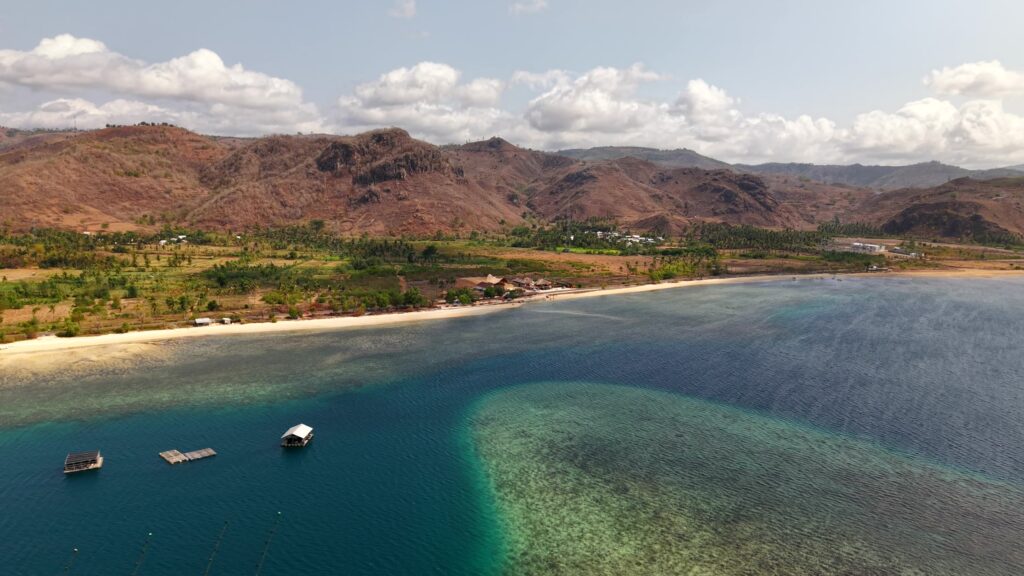
SEMELAR BEACH VILLAGE
Come and spend some time in the Sekotong village we call home
About 1 hour 10 minutes by car from Lombok International Airport. We offer a stay programme of 3 nights/4 days or more, with island trips by local boat and sunsets at SAKURA CAFE. The villas are due to be completed in stages from 2027.
Sources used for this article
- Good News From Indonesia, “10 Ungkapan Bahasa Sasak di Lombok yang Harus Kawan Tahu” (27 December 2024; ten expressions and their use, pelungguh and side)https://www.goodnewsfromindonesia.id/2024/12/27/10-ungkapan-bahasa-sasak-di-lombok-yang-harus-kawan-tahu
- Wikipedia, “Sasak language” (viewed October 2026; speakers, family, five dialects, politeness levels, script, use alongside Indonesian)https://en.wikipedia.org/wiki/Sasak_language
- Mh Isnaeni, “Perbandingan Klitika dalam Bahasa Sasak dengan Klitika dalam Bahasa Indonesia” (Jurnal Sasindo, July 2015; University of Mataram; side and -de, short pronoun forms)https://openjournal.unpam.ac.id/index.php/Sasindo/article/view/396/322