If you want to make something with your hands in Lombok, the main options confirmed in our articles are five: pottery making, weaving, cooking classes, visiting the bamboo craft village, and touring a pearl farm. Near the airport, the ways in are Penujak pottery and the weaving of Sukarara village; near Mataram, Banyumulek pottery; and in the east of the island, the bamboo crafts of Loyok village and the striped cloth of Pringgasela village.
This guide brings together our published articles on pottery, weaving, cooking classes, East Lombok Regency and pearls, and the sources behind them (the Indonesian tourism board, ANTARA, The Jakarta Post, and booking pages such as Expedia). We did no new research for it, so prices and times are only those confirmed in the original articles, given with the date they were checked.
It is written for people looking for something other than the sea on a Lombok trip, people who want a half-day activity to do with children, and people who want a plan ready for a rainy day.
Information as of November 2026
In this article
- ✓The hands-on experiences on Lombok and where they are, area by area (figure)
- ✓The pottery villages (Banyumulek, Penujak and Masbagik) and making pottery yourself
- ✓The weaving villages (Sukarara and Pringgasela) and how long a cloth takes
- ✓Cooking class times and rough prices (as shown on booking pages)
- ✓The bamboo crafts of Loyok village, and visiting a pearl farm
- ✓Choosing by where you stay, and what to check before booking
SHORT ANSWER
For an easy first try near the airport, choose Penujak pottery (Rp50,000 for an experience, according to the tourism board); to see cloth and try weaving, Sukarara village; for cooking, a class near where you stay. Transport is often not included, and pottery you make may not be ready to take home the same day. Check prices and times before you book.
What hands-on experiences can you do in Lombok?
Lombok’s crafts grew mostly out of the everyday tools of the Sasak people. The pottery is reddish-brown unglazed earthenware, such as jars and water jugs, and Garuda Indonesia’s inflight magazine (2017) writes that the methods have been passed down from mother to daughter. The cloth is woven by women on traditional looms, and there are two kinds: songket, with gold or silver thread woven in, and striped cloth woven from yarn dyed with plants.
To these add a bamboo craft village in the east, classes where you learn local dishes, and the pearl farm rafts floating off the West Lombok coast. Some places are for watching only; at others you can make something yourself. The figure below sorts them by area of the island.
Figure: Hands-on experiences by area of the island
Getting from Sekotong at the western end of the island to the villages in the east means crossing the whole island. Rather than trying to cover several in one day, it is easier to pick one area and add one or two experiences close to it.
Where can you make pottery? The three villages compared
The three villages most often named for Lombok pottery (gerabah in Indonesian) are Banyumulek in West Lombok Regency, Penujak in Central Lombok Regency and Masbagik in East Lombok Regency. Lombok Pottery Center (founded in 1988), which deals in handmade pottery, also names these three as the villages where the potters live.
Banyumulek is about 20 minutes by car from Mataram. Entry to the village is free, and you can watch pottery being made or try making it yourself (Good News From Indonesia, October 2024). The easiest time to visit is 8 am to 4 pm; if you want to see the firing, arrive around 10 am to be in time for firing from about 11 am. Penujak is a village about 2 km from Lombok International Airport, and the tourism board describes an experience including instruction, a piece to take home, lunch and a small bird-shaped whistle as a souvenir for Rp50,000 (about US$3; US$1 is about Rp17,800, a September 2026 guide). A booking site listed a two-hour workshop experience in Penujak at AU$24 per adult (October 2026). For Masbagik, we found no information for visitors.
← Scroll the table sideways
| Experience | Where and how to get there | What was confirmed | What to check |
|---|---|---|---|
| Pottery (Banyumulek) | West Lombok Regency. About 20 minutes by car from Mataram | Free entry. Easiest to visit 8 am to 4 pm. Firing from about 11 am | Price of making pottery yourself, and how to collect your piece |
| Pottery (Penujak) | Central Lombok Regency. About 2 km from the airport | Experience with lunch Rp50,000 (tourism board); two hours AU$24 (booking site, October 2026) | Which workshop runs it, and whether you can take your piece home that day |
| Weaving (Sukarara village) | Central Lombok Regency. About 20 minutes by car from the airport | You can watch weaving and also try it yourself (tourism board) | Times and prices (not confirmed) |
| Cloth (Pringgasela village) | East Lombok | Striped cloth dyed with plants, woven on a loom called a gedogan | Whether visitors are received |
| Bamboo crafts (Loyok village) | Southern foot of Mount Rinjani. About 670 m above sea level | Described as the centre of bamboo crafts in West Nusa Tenggara | Whether you can try weaving bamboo |
| Pearl farm | West Lombok coast | Visits take about an hour. Most need booking in advance | Which farms take visitors, and how to book |
Sources: our pottery, weaving, East Lombok Regency and pearl articles (Indonesian tourism board, Good News From Indonesia, Wotif, Jadesta, The Spot Lombok and others). Prices are as checked at the time and may change.
Pieces you make may take days to dry and fire, so ask first whether you can take yours home that day or have it sent after firing. The tourism board notes that some households stop making pottery during the harvest season. How pots are made village by village, and how to buy them, is covered in Lombok Pottery Villages.
Where can you watch weaving, and can you try it yourself?
The way in is Sukarara village in Central Lombok Regency. According to the tourism board, it is about 25 km from Mataram, the provincial capital, and about 20 minutes by car from Lombok International Airport, and you can not only watch the weaving but try it yourself. Times and prices were not confirmed in the original articles, so ask in the village first. Because it is close to the airport, you can stop by on the day you arrive or before your flight home.
Handwoven cloth takes a long time. According to ANTARA (2024), a cloth from Sukarara takes one to three months depending on the pattern and size, and weavers say even a plain cloth takes a month. Prices range from several hundred thousand to several million rupiah a piece; in our souvenir article, a typical Sukarara design cost Rp1 million to Rp3 million (about US$56 to US$169) a piece (checked August 2026).
Pringgasela village in the east of Lombok weaves striped cloth from plant-dyed yarn on a loom called a gedogan (CNN Indonesia, 2018). Sade village, where weaving traditions are kept alive, was badly damaged by a fire on the night of 22 August 2026. How it is now is covered in our Sade village article (see Related reading). How the weaving villages differ, and how to buy cloth, is in Lombok Weaving Villages.
Where are the cooking classes, and how long do they take?
Within what our article saw on booking pages on 1 November 2026, there are cooking classes in Bonjeruk village in Central Lombok, on a farm in Bayan in the north, in Tetebatu in the east and on Gili Air. The dishes vary by class and include Sasak-style nasi goreng, satay, fried tempeh (fermented soybean cake), gado-gado (vegetables with peanut sauce), klepon (coconut-coated rice balls) and ayam taliwang.
← Scroll the table sideways
| Class | Time | Price (booking page) | Transport |
|---|---|---|---|
| Bonjeruk village (Central Lombok) | From 8 am, about three hours. Six Sasak dishes and lunch in the village | AU$66.61 per person | Not included. Can be added from some areas |
| Farm in Bayan (North Lombok) | 2.5 to 3 hours, up to six people | From Rp362,250 (about US$20) per person | Extra |
| Tetebatu (East Lombok) | Four hours of village walk and cooking | US$45.05 per person | Meet at an eatery in the village |
| Gili Air | 1.5 to 2.5 hours. Three a day: 11.30 am, 4 pm and evening | US$39 to US$46 | On the island |
Source: our cooking class article (Expedia and Seek Sophie booking pages, viewed 1 November 2026). Prices are as seen on that day and vary with group size and date.
Choosing a class close to where you stay keeps travel time and transport costs down. In one case the cancellation terms shown on the same page contradicted each other, so check them before you book. What each class covers is in Cooking Classes in Lombok.
Can you visit the bamboo craft village and a pearl farm?
The village known for bamboo crafts is Loyok in East Lombok Regency. The tourism village page of Indonesia’s Ministry of Tourism describes Loyok as a village in Sikur district about 670 m above sea level and the centre of bamboo crafts in West Nusa Tenggara. detik (2021) reported that Loyok’s woven bamboo goes to Europe, the United States, Australia, Japan and elsewhere, and that in 2017 local people set up a group to teach the weaving. Whether you can try weaving bamboo yourself was not confirmed in the original articles. It is usually visited together with Tetebatu, a nearby mountain village. Where the village is and how to get round is in Things to Do in East Lombok.
Pearls are farmed in the bays of the West Lombok coast, including Sekotong. Our pearl article notes that some of the farming companies offer tours of about an hour, showing the process from collecting oysters to nucleus insertion and harvest. Few farms take visitors, and most require booking in advance. How to judge pearls and where to buy them is in Lombok Pearl Guide.
Which experience suits where you are staying?
Most hands-on experiences finish in about half a day, which makes them easy to fit in on a rainy day or a day off the sea. When choosing, look first at how far each one is from where you are staying.
← Scroll the table sideways
| Where you stay | Nearby experiences | Notes |
|---|---|---|
| Near the airport, Kuta | Penujak pottery, Sukarara weaving | Can be fitted in on arrival day or before you leave |
| Mataram, Senggigi | Banyumulek pottery, Bonjeruk cooking class | Banyumulek is about 20 minutes from Mataram |
| Sekotong | Banyumulek pottery, village experiences | About an hour and a half by car from Sekotong to Mataram |
| The north, foot of Mount Rinjani | Bayan farm cooking class, Loyok village, Tetebatu | Mountain villages are easier with a night there |
| Gili Islands | Gili Air cooking class | Everything is on the island |
Sources: our pottery, weaving, cooking class, East Lombok Regency and Sekotong articles. Travel times are the rough guides given in the original articles.
Note
- Check whether transport is included; if not, arrange a car there and back first
- Check when your pottery can be collected, and how to carry fragile pieces home
- Ask before photographing people or inside homes in the villages
- At cooking classes, say in advance if you need dishes without meat or chilli
- Prices are as checked at the time. Booking sites and on-the-spot prices can differ
What hands-on experiences are there in our village in Sekotong?
Sekotong, in southwest Lombok, is an area of fishing villages about 1 hour 10 minutes by car from Lombok International Airport and about 40 minutes from Lembar port. We, Semelar Beach Village, run a beach cafe in the village, SAKURA CAFE (10 am to 10 pm, closed on Mondays), among other places, and take bookings for a stay programme. The stay programme runs from 3 nights/4 days to 5 nights/6 days at Rp4,800,000 per person (about US$270). It includes airport transfers, local transport, a guide, a welcome dinner and a massage; flights and accommodation are not included.
The village experiences include going out to the pearl rafts and opening oysters, helping in the fields to plant or harvest seasonal crops, and visiting a Sasak village to watch the weavers at work; making chocolate from cacao is planned to open in 2027. These are experiences you choose within the stay programme, and they are listed on our Things to Do page. We take requests through our enquiry form; please ask us about prices. Thirteen private villas are under construction, with the first due to be completed in early 2027 (the plan as of August 2026).
A note from Sekotong
We have not confirmed any cooking class for visitors in Sekotong. You can eat local food at LOCAL FOOD STREET, a row of food stalls (11 am to 10 pm, closed on Mondays), and at SEMELAR MARKET (10 am to 10 pm, closed on Mondays). The pearl rafts and the fish-farming rafts float in the same bay, and at first you cannot tell them apart. Ask someone in the village and they will show you.
Limits of this guide, and who it suits
First, the limits. This guide is a summary of existing articles, and nothing in it was newly checked on the spot. Pottery and cooking class prices come from the tourism board and booking pages, and some have no publication date. The times and prices of the weaving experience in Sukarara and of weaving bamboo in Loyok were not confirmed. For Masbagik, we found no information for visitors.
On the other hand, it lists the experiences by area of the island, so you can use it to add one half-day plan that fits where you are staying. It suits people who like crafts and textiles, people looking for something to make with children, and people who want a rainy-day plan ready.
Frequently asked questions
Q. Can I try making pottery in Lombok?
Yes. The tourism board’s page on Penujak lists an experience with instruction, a piece to take home and lunch for Rp50,000. A booking site also had a two-hour workshop experience for AU$24 (October 2026).
Q. Can I try weaving?
The tourism board says that in Sukarara village you can not only watch the weaving but try it yourself. Times and prices were not confirmed, so ask in the village first.
Q. Are there experiences near the airport?
The pottery village of Penujak is about 2 km from the airport, and Sukarara village is about 20 minutes by car. You can stop by on arrival day or before your flight home.
Q. How much are cooking classes?
On the booking pages on 1 November 2026, the Gili Air class was US$39 to US$46, the Bayan farm class from Rp362,250 per person, and the Bonjeruk village class AU$66.61 per person.
Q. Are there hands-on experiences in Sekotong?
In our village in Sekotong, you can choose going out to the pearl rafts and opening oysters, helping in the fields, or watching weaving in a Sasak village, within the stay programme. Please ask us about prices through the enquiry form.
Summary
The main hands-on experiences in Lombok are pottery making, weaving, cooking classes, visiting the bamboo craft village and touring a pearl farm. Near the airport, the ways in are Penujak and Sukarara; near Mataram, Banyumulek; in the east, Loyok and Pringgasela.
Whatever you choose, pick a place close to where you stay, and before booking check whether transport is included, how to collect what you make, and the price and time. Prices are as checked at the time and may change (as of November 2026).
Related reading
- Sade Village, Lombok, After the August 2026 FireVisiting the traditional Sasak village, and other villages
- TetebatuA village for walking among rice terraces and waterfalls, how to get there and spend time
- Lombok SouvenirsWhere to buy, and taking it home
More on this topic: Lombok Travel Guide. Sample 3- to 5-night itineraries in Sekotong, with the cost per person: Stay Programme Itineraries.
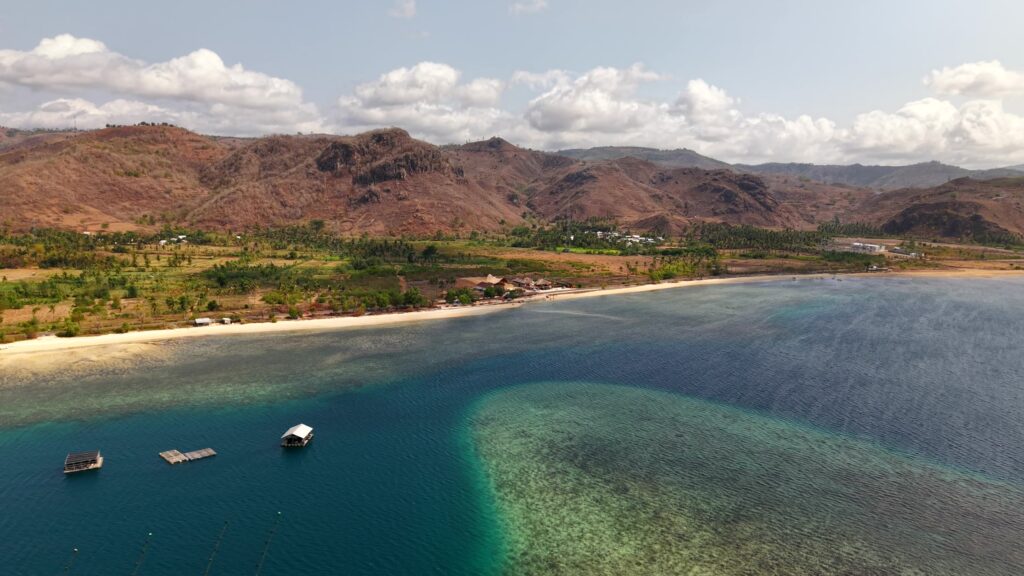
SEMELAR BEACH VILLAGE
Come and spend some time in the Sekotong village we call home
About 1 hour 10 minutes by car from Lombok International Airport. We offer a stay programme of 3 nights/4 days or more, with island trips by local boat and sunsets at SAKURA CAFE. The villas are due to be completed in stages from 2027.
Sources used
- Indonesian tourism board, “Serunya Wiskul dan Membuat Gerabah di 2 Desa Wisata Penjaga Tradisi” (location of Penujak, Rp50,000 experience)https://www.indonesia.travel/jp-ja/travel-ideas/serunya-wiskul-dan-membuat-gerabah-di-2-desa-wisata-penjaga-tradisi
- Good News From Indonesia, “Menelusuri Jejak Tradisi Gerabah Lombok di Desa Banyumulek” (10 October 2024; location, travel time, free entry, hours)https://www.goodnewsfromindonesia.id/2024/10/10/menelusuri-jejak-tradisi-gerabah-lombok-di-desa-banyumulek-awal-mula-dari-karya-rupa-yang-mendunia
- Lombok Pottery Center (Smithsonian Festival Marketplace profile; founded 1988, the three villages)https://festival-marketplace.si.edu/lombok-pottery-center-r10-a9231/
- Garuda Indonesia inflight magazine Colours (July 2017, page 78; the three villages, methods passed from mother to daughter)https://www.agencyfish.com/Garuda_Colours_Magazine/2017/July/files/basic-html/page78.html
- Wotif, “Lombok Pottery Workshop with Local Artisans” (checked October 2026; two hours, AU$24)https://www.wotif.com/things-to-do/lombok-pottery-workshop-with-local-artisans.a52052000.activity-details
- Indonesian tourism board, “Discover the Art of Hand-Weaving at These Indonesian Villages” (location of Sukarara and its weaving)https://www.indonesia.travel/au-en/travel-ideas/culture/discover-the-art-of-hand-weaving-at-these-indonesian-villages
- ANTARA, “Melestarikan tradisi menenun lewat Festival Begawe Jelo Nyesek” (28 July 2024; time per cloth and prices)https://www.antaranews.com/berita/4222011/melestarikan-tradisi-menenun-lewat-festival-begawe-jelo-nyesek
- CNN Indonesia, “Tenun Pringgasela dari NTB Bakal Unjuk Gigi di Tokyo” (17 March 2018; Pringgasela cloth)https://www.cnnindonesia.com/gaya-hidup/20180315113316-277-283198/tenun-pringgasela-dari-ntb-bakal-unjuk-gigi-di-tokyo
- Expedia, “Lombok: Authentic Sasak Cooking Class in Lombok with Lunch” (viewed 1 November 2026; Bonjeruk village)https://www.expedia.com.au/things-to-do/lombok-authentic-sasak-cooking-class-in-lombok-with-lunch.a52957273.activity-details
- Seek Sophie, “Lombok Sasak Cooking Class” (viewed 1 November 2026; farm in Bayan)https://www.seeksophie.com/experiences/lombok-sasak-cooking-class-ovmj1v6qj7
- Expedia, “Indonesian Food Cooking Class of Gili Air” (viewed 1 November 2026)https://www.expedia.com/things-to-do/indonesian-food-cooking-class-of-gili-air.a49957745.activity-details
- Ministry of Tourism, Jadesta, “Profil Desa Wisata Loyok” (Sikur district, about 670 m, bamboo crafts)https://jadesta.kemenparekraf.go.id/desa/24509
- detik, “Anyaman Loyok dari Lombok Siap Go Internasional” (23 March 2021; export markets, the 2017 group)https://finance.detik.com/foto-bisnis/d-5504864/anyaman-loyok-dari-lombok-siap-go-internasional
- The Spot Lombok, “Visit a Pearl Farm” (pearl farming in West Lombok and farm tours)https://thespotlombok.com/blog/visit-a-pearl-farm