Quick answer: typhoons do not normally hit Bali or Lombok. Both islands lie south of the equator, where typhoons do not form. What can affect them is a cyclone in the Indian Ocean to the south, mainly from November to May (BMKG), bringing heavy rain, strong winds and high waves that can cancel boats. June to October is outside that watch period and is the islands’ dry season.
Typhoons, the storms that hit East Asia, form north of the equator and rarely matter for Bali and Lombok. The two islands lie south of the equator, and in the Indian Ocean to their south, tropical low-pressure systems called cyclones can form, mainly from November to May.
When a cyclone comes near, Indonesia’s meteorological agency BMKG warns of heavy rain, strong winds and high waves. During Cyclone Seroja in April 2021, waves of 4 to 6 m were forecast in the seas south of West Nusa Tenggara, the province that includes Lombok. We read the Japan Meteorological Agency’s typhoon normals and reports of BMKG statements on 7 November 2026 to set out how to think about timing a trip.
This guide is for travellers asking whether typhoons hit Bali, those planning a rainy season (November to March) trip to Bali or Lombok, and those whose connecting flights pass through East Asia in typhoon season.
Information as of November 2026
What this article covers
- ✓The difference between typhoons and cyclones, and where they form
- ✓When to watch for cyclones south of Bali and Lombok
- ✓What was forecast during Cyclone Seroja in 2021
- ✓How many typhoons form and approach East Asia each month
- ✓How to plan dates and boat days
- ✓How to think about the sea in Sekotong
In short
Typhoons rarely matter for Bali and Lombok. What to watch is cyclones forming in the seas to the south: BMKG gives November to May as the watch period, with April, May, November and December the most frequent months. The effects are heavy rain, strong winds and high waves. If you connect through East Asia, allow extra time in July to October, when typhoons approach Japan most often.
Do typhoons hit Bali and Lombok? The difference between a typhoon and a cyclone
Both are strong low-pressure systems that form over tropical seas; the name depends on where they form. A typhoon, as the Japan Meteorological Agency defines it, is a tropical cyclone in the western North Pacific (north of the equator and west of 180 degrees longitude) or the South China Sea with maximum winds of at least 17.2 m/s (City of Kobe page, in Japanese). Similar systems in the Indian Ocean south of Bali and Lombok are called “siklon tropis” (tropical cyclones) in Indonesia, and are monitored by BMKG’s Tropical Cyclone Warning Centre in Jakarta.
According to ANTARA (30 April 2021), BMKG has tracked 10 cyclones in this centre’s area since 2008, far fewer than typhoons. Among those with notable impacts it named Cempaka, Dahlia and Seroja.
Figure: Typhoons and cyclones (from this article’s sources)
When should you watch for cyclones south of Bali and Lombok?
A BMKG official said vigilance is needed in southern Indonesia from November to May, with April, May, November and December the most frequent months (ANTARA, 30 April 2021). In November 2025, BMKG’s head said southern Indonesia had entered its active cyclone period from November, expected to last until February and possibly into March or April 2026, and urged southern coastal areas of Java, Bali, Nusa Tenggara and southern Maluku to watch for strong winds and heavy rain (CNBC Indonesia, 3 November 2025).
This period overlaps with the rainy season in Bali and Lombok (November to March). How the rain falls and how to plan are covered in Lombok’s rainy season, and month by month in Lombok in November and December and Lombok from January to March.
Figure: Typhoons near Japan and cyclones south of Indonesia by month
What happened during Cyclone Seroja in 2021?
Seroja formed in April 2021 around East Nusa Tenggara, east of Lombok, and moved towards southwest Australia. BMKG called it the second-strongest cyclone since 2008 after Kenanga, with maximum winds of 70 knots and the longest life cycle and track it had recorded. Even before it fully developed, it brought more than 300 mm of rain in a day (ANTARA, 30 April 2021).
As Seroja moved away on the evening of 7 April, BMKG’s head urged Bali, West Nusa Tenggara, East Java and other areas to watch for indirect impacts. Waves of 2.5 to 4 m were forecast in the seas south of Java and West Nusa Tenggara, and 4 to 6 m from south of West Nusa Tenggara to south of Sumba (Tempo, 8 April 2021).
As this shows, high waves and heavy rain can cover a wide area even when a cyclone’s centre is far from the islands. On days when you plan to cross by boat, check BMKG’s wave forecasts and the operator’s sailing notices the day before and on the day.
Take care
- Even when a cyclone’s centre is far away, high waves can cancel boats
- BMKG’s watch period (November to May) overlaps with the islands’ rainy season (November to March)
- Just before your trip, check boat and airline notices every day
When can typhoons disrupt your journey?
According to the Japan Meteorological Agency’s normals (1991 to 2020), 25.1 typhoons form each year and 11.7 approach Japan. Approaches to Japan average 2.1 in July, 3.3 in August, 3.3 in September and 1.7 in October, and almost none from December to March.
Bali and Lombok are in their dry season (April to October) then, but if your departure point or a connecting airport in East Asia is hit by a typhoon, flights can be delayed or changed. If you are flying via East Asia in these months, keep a spare day around departure and avoid very short connections. Flight routes to Lombok are in Lombok flights and tickets.
How should you choose your dates?
The months outside the cyclone watch period south of Indonesia are June to October, the dry season on the islands. July and August are busy with holidays in many countries; busy and quiet times are set out in When Lombok is busy or quiet in 2027.
If you go in the November to March rainy season, put boat crossings early in the trip so you can move them if waves cancel a sailing. Being back near the Bali or Lombok airport the day before your international flight home makes it less likely that a delayed boat or flight breaks your connection.
A note from Sekotong
The small boats from Sekotong to the southern Gili islands go out or not depending on the waves. If you plan island hopping in the rainy season, keep a spare day so you can cross on a fine one.
Downsides, and what not to worry about too much
The downsides first. The islands’ rainy season overlaps with the cyclone watch period, and high waves can cancel boats then. You cannot know in advance when or where a cyclone will form, and BMKG’s head said the period could extend into March or April. We did not check whether a cyclone has ever made landfall on Bali or Lombok.
On the other hand, cyclones do not approach these islands several times a year: BMKG counted 10 in its area since 2008. There are fine spells even in the rainy season, and with slack around boat days a rainy season trip works.
The Semelar Beach Village stay programme runs from 3 nights and 4 days to 5 nights and 6 days and costs Rp4,800,000 (about US$270) per person, including airport transfers, transport during the stay, a guide, a welcome dinner and a massage (flights and accommodation are separate). Sekotong is about 1 hour 10 minutes by car from Lombok International Airport. Where to stay is on Stay.
Frequently asked questions
Q. Do typhoons hit Bali?
Typhoons form north of the equator and rarely matter for Bali. Cyclones can form in the Indian Ocean south of the island, mainly from November to May.
Q. When are cyclones most common?
BMKG says vigilance is needed in southern Indonesia from November to May, with April, May, November and December the most frequent months (ANTARA, 30 April 2021).
Q. What happens when a cyclone comes?
Heavy rain, strong winds and high waves. During Seroja in 2021, waves of 4 to 6 m were forecast south of West Nusa Tenggara.
Q. Is it safe to connect through East Asia in typhoon season?
In the Japan Meteorological Agency normals, typhoons approach Japan mostly from July to October. If your route passes an airport in their path, flights can be affected, so keep a spare day around departure.
Q. When is the sea calmest?
June to October is outside the cyclone watch period and is the islands’ dry season. If you connect through East Asia, July to October is typhoon season there, so allow a spare day.
Q. Is there a typhoon season in Bali and Lombok?
No typhoon season as such, because typhoons form north of the equator. The period to watch is BMKG’s cyclone watch for the seas to the south, November to May, which overlaps with the islands’ rainy season (November to March).
Q. Can a cyclone cancel boats from Lombok?
Yes, indirectly. Even when a cyclone’s centre is far away, high waves can cancel boats. On days you plan to cross by boat, check BMKG’s wave forecasts and the operator’s sailing notice the day before and on the day.
Summary
Typhoons rarely matter for Bali and Lombok; what to watch is cyclones forming in the seas to the south, mainly from November to May. The effects are heavy rain, strong winds and high waves, and during Seroja in 2021 waves of 4 to 6 m were forecast to the south.
If you connect through East Asia, keep a spare day in July to October. In the rainy season put boat crossings early and check BMKG’s forecasts and operators’ notices (as of November 2026).
Related reading
- Lombok’s rainy seasonHow the rain falls and how to plan
- Best time to visit LombokWeather by month
- Staying safe in the sea in LombokWaves, currents and life jackets
More on this topic: Lombok Travel Essentials.
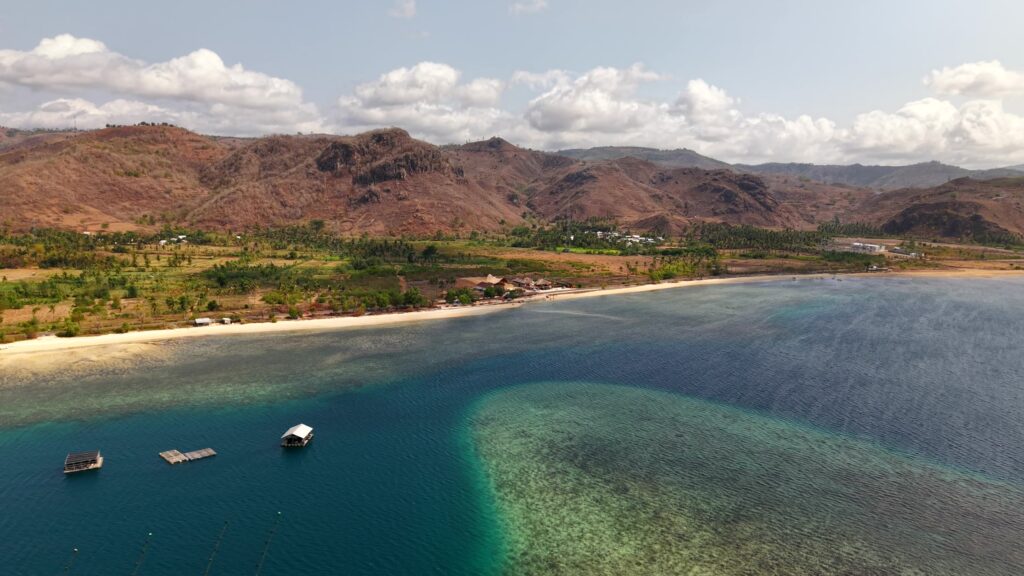
SEMELAR BEACH VILLAGE
Come and spend some time in the Sekotong village we call home
About 1 hour 10 minutes by car from Lombok International Airport. We offer a stay programme of 3 nights/4 days or more, with island trips by local boat and sunsets at SAKURA CAFE. The villas are due to be completed in stages from 2027.
Sources used for this article
- Japan Meteorological Agency, typhoon normals (formation, approach and landfall, 1991 to 2020)https://www.data.jma.go.jp/yoho/typhoon/statistics/average/average.html
- City of Kobe, “Typhoons and disasters (1)” (definition of a typhoon, in Japanese, 13 August 2021)https://www.city.kobe.lg.jp/a70034/kisyoutopics4.html
- ANTARA (Kupang), “BMKG sebut Seroja siklon tropis terkuat kedua setelah Kenanga” (watch period, 10 cyclones since 2008; 30 April 2021)https://kupang.antaranews.com/berita/49086/bmkg-sebut-seroja-siklon-tropis-terkuat-kedua-setelah-kenanga
- Tempo English, “BMKG Warns of Indirect Impact of Tropical Cyclone Seroja in NTB to C. Java” (wave forecasts; 8 April 2021)https://en.tempo.co/amp/1450310/bmkg-warns-of-indirect-impact-of-tropical-cyclone-seroja-in-ntb-to-c-java
- CNBC Indonesia, “Siklon Tropis Tiba di Indonesia, BMKG Peringatkan Dampaknya” (2025 to 2026 period; 3 November 2025)https://www.cnbcindonesia.com/tech/20251103110508-37-681635/siklon-tropis-tiba-di-indonesia-bmkg-peringatkan-dampaknya