“Will I really get to swim with sea turtles in the Gili Islands?” “Where is Turtle Point, and can I swim there from the beach?” “How much is a snorkel tour, and can I join if I am not a strong swimmer?” These are the questions people ask most when a turtle encounter is the reason for a Gili trip. The short version: sea turtles are found all around the three Gili Islands, there are spots you can reach by swimming from the beach, and there are boat tours that visit several sites. What nobody can offer is a guarantee that you will see one.
As a rough budget, a shared snorkel tour starts at Rp150,000 per person (about US$8), and a private boat starts at Rp975,000 for two people (about US$55, 2 hours), according to operator websites as of October 2026. The things to watch are the currents between the islands and the boat traffic. The basic rules with turtles are simple: do not touch them, do not chase them and do not feed them.
This guide draws on the management plan for the Gili Islands marine area issued by Indonesia’s Ministry of Marine Affairs and Fisheries (KKP), public information from the conservation group Gili Eco Trust, tour operator websites and Indonesian news reports. Where something could not be confirmed, we say so.
It is written for travellers heading from Bali or Lombok to Gili Trawangan, Gili Meno or Gili Air who want swimming with turtles to be part of the trip. For how to get to the islands, see our complete guide to the Gili Islands.
As of October 2026
What this article covers
- ✓How likely you are to see turtles in the Gilis, and how to think about the odds
- ✓What “Turtle Point” actually refers to, and where to look around each island
- ✓Prices and durations for shared tours and private boats (as of October 2026)
- ✓Advice for non-swimmers and families, and the risks from currents and boats
- ✓Distance rules around turtles, and the conservation work happening on the islands
In short
According to the management plan from Indonesia’s Ministry of Marine Affairs and Fisheries, sea turtles occur across almost the entire marine area around the three Gili Islands. If you want to swim out from the beach, the two sides of Gili Trawangan’s northeast tip are the easiest places to get in. If you are not confident in the water, a shared tour with life jackets (from Rp150,000 per person, about US$8, as of October 2026) is the practical choice. Keep three rules: never swim across between islands; do not touch, chase or feed turtles; and stay at least 3m away. Sightings are not guaranteed, so leave some slack in your schedule.
Will you see turtles in the Gili Islands, and what are the odds?
Your chances are good, but we could not find any published data that puts a number on them. The management and zoning plan (2014 to 2034) that Indonesia’s Ministry of Marine Affairs and Fisheries adopted in 2014 for the Gili Islands marine area (a marine tourism park of about 2,273ha) states that turtles are present in almost every part of the area. The species it lists are the green turtle, the olive ridley and the hawksbill.
The snorkelling site Snorkeling Report says green turtles are the most common around the Gilis. They mostly feed and rest over shallow seagrass, sometimes only a few metres from the beach. Hawksbills are more likely along the reef at the drop-off, especially at high tide. Tour listings on booking sites, on the other hand, tend to say you will “probably” see turtles, and we found no operator page that promised a sighting.
On timing, a Gili Meno hotel’s guide says turtles are there all year but visibility is best from May to October, which overlaps with Lombok’s dry season (April to October). In the rainy season (November to March), expect some days when murky water or waves make them harder to spot.
Where is Turtle Point? Where to look around each island
“Turtle Point” is not the official name of one fixed place. Tour operators and dive guides each use it in their own way, and the spot it refers to can shift. Shared tours from Gili Trawangan list “Turtle Point” as one of their stops without giving an exact location. The dive site directory dive.site lists a “Turtle Point” off the northeast of Gili Meno at 10 to 30m deep, which is a depth for divers. If you are searching from the beach with a snorkel, use the spots below as a guide.
Gili Trawangan: both sides of the northeast tip. Snorkeling Report describes two zones on either side of the northeast tip, both of which you can enter straight from the sand. Moving out from the beach, you pass sand and seagrass at about 0.5 to 2m, then coral at 2 to 3m, before the drop-off at around 6m. The north side has fewer people and boats than the east side, and its coral is said to be in better condition. Because there is sharp coral close to the beach on the north side, the site recommends reef shoes.
Gili Meno: the northwest coast, the north side and the channel towards Gili Air. The guidebook Frommer’s says turtles are often seen north of Balenta Café on the northwest coast and that the east coast is also good for snorkelling, while warning that currents can be strong at both. The travel site Travelfish names the north coast and the water between Gili Meno and Gili Air as good places to see turtles, and advises watching for boat traffic beyond the drop-off on the north coast.
Gili Air: the west coast. According to Travelfish, the west coast is a good place to meet turtles at high tide. You do have to swim quite a long way out over the seagrass, and it warns about the current between Gili Air and Gili Meno.
Figure: Where to look for turtles around the three Gili Islands (schematic)
Swim from the beach or take a boat tour?
If you are a confident swimmer and can read currents and boat traffic for yourself, going in from the beach is an option. For everyone else, a tour with a guide and life jackets is the better fit. The shared and private tour routes we checked include the turtle spots as well as the underwater statues off Gili Meno.
← Scroll the table sideways
| Aspect | Swim from the beach | Shared tour | Private boat |
|---|---|---|---|
| Rough cost | Only your own gear or rental (we could not confirm rental prices) | From Rp150,000 per person (about US$8) | From Rp975,000 for two (about US$55, 2 hours) |
| Where you can go | Only as far as you can swim | Four set stops (Turtle Point, the statues and others) | 3 to 5 stops in 2 hours, 6 to 8 in 4 hours or more |
| Crowds | Depends on place and time | Sometimes 20 or more people per boat | Just your group. Early-morning departures available |
| Safety | You judge currents and boats yourself | Guide and life jackets included | Ask the operator whether a guide is included |
| Best for | Experienced swimmers | First-timers and budget travellers | Anyone avoiding crowds, families |
Note: Prices were checked on the websites of a shared-tour operator and a private-tour operator departing from Gili Trawangan in October 2026. US dollar figures use US$1 ≈ Rp17,800 (September 2026). Prices can rise in peak season.
Snorkel tour prices and durations
Shared tours start at about Rp150,000 per person (about US$8). The website of an operator running shared tours from Gili Trawangan (updated July 2026) lists four routes, all from Rp150,000, and notes that prices tend to go up in July, August, December and around public holidays. An article by the Indonesian news outlet detikBali in May 2025 also describes a Rp150,000 per person tour that included underwater photos.
According to the same operator, there are four shared departures: 9:30 and 10:30 (about 5 hours, with an island stop; lunch not included), 13:00 (about 4 hours) and 16:00 (about 2.5 hours, ending with the sunset). The price includes gear (mask and fins), a life jacket, a guide, a glass-bottom boat and shared underwater photos, but not lunch or hotel transfers. The site also says that if you are more than 10 minutes late you cannot join.
For a private boat, a Gili private-tour operator’s website listed Rp975,000 for two people for 2 hours (about US$55) and Rp1,425,000 for 4 hours (about US$80). Each extra person costs more, Rp200,000 (about US$11) for the 2-hour trip. Early departures at 7:00 and 7:30 are available for a little more. The same site says that on shared boats, 20 to 40 people can end up circling a single turtle.
The detikBali article reports 22 tourists on the shared boat the reporter joined, and a reviewer on a booking site described around 40 people on a small boat. If crowds bother you, a private boat or an early departure is the better choice.
Can non-swimmers and children join?
With a life jacket on, even a weak swimmer can float on the surface and look down. The shared-tour operator’s website says life jackets are included in the price. However, in the detikBali article, people on the shared tour said that anyone who rented fins was not given a life jacket. If you are not confident in the water, make sure you are handed a life jacket before leaving and check that you can use it together with fins.
We could not find a minimum age for children on the tour operator websites we checked. Snorkeling Report considers the northeast zone of Gili Trawangan suitable for beginners and children, but only when sea and weather conditions are good. A booking site listing says the tour is not recommended for people with back problems or pregnant travellers, and requires that participants have no serious heart or other medical conditions. Ask when you book whether child-sized life jackets and masks are available.
Currents and boats: what should you watch for?
The most important rule is never to swim across from one island to another. Travelfish warns about the current between Gili Air and Gili Meno and advises against trying to swim it. On 18 December 2022, a 50-year-old French tourist went missing while trying to swim from Gili Trawangan to Gili Meno, and the search was called off on the seventh day, according to the Indonesian news site JPNN. The report says strong currents and high waves also hampered the search.
Conditions change even at beach entry points. Snorkeling Report describes the northeast zone of Gili Trawangan as sheltered from waves and currents, but says this does not apply when the sea is rough, in rain or strong wind, or when the tidal range is large. Reviewers on booking sites have also reported getting caught in a strong current during a tour.
Boat traffic is the other danger. The places where turtles gather are also where tour boats gather, and both Snorkeling Report and Travelfish advise watching for boats once you go past the drop-off. When swimming from the beach, wear a brightly coloured rash guard or tow a buoy, and do not head out alone.
Caution
- Never swim between islands: the currents are strong, and in 2022 a tourist who tried went missing.
- Watch for boats beyond the drop-off: the places turtles gather are also where tour boats gather.
- Do not stand on coral: in shallow water sharp coral can cut your feet. Reef shoes help.
Turtle rules: no touching, chasing or feeding. How close is too close?
Sea turtles are protected under Indonesian law. According to an Indonesian news site, the legal basis includes Law No. 5 of 1990 on the conservation of natural resources and the Minister of Environment and Forestry regulation listing protected species (No. 20 of 2018, as amended by No. 106). What is expected of travellers comes down to three things: do not touch, do not chase and do not feed.
Recommended distances vary. A PADI blog post (written with a veterinarian’s advice) says at least 1.5m, Snorkeling Report says about 2 to 3m, and a Gili Meno hotel’s guide says 3m. If in doubt, 3m or more satisfies all of them. Other points they share: do not block the space directly above a turtle (it is the route it takes to the surface to breathe), approach slowly from the side, do not disturb a resting turtle, and if one swims towards you, stay still and wait.
Figure: Distance and rules around sea turtles
When taking photos, do not swim around in front of a turtle or follow it. The Gili Meno hotel’s guide also asks visitors not to use flash and to choose a sunscreen considered less harmful to coral.
The turtle sanctuary on Gili Meno and conservation on Gili Trawangan
Some shared tours stop at a turtle sanctuary on Gili Meno. At the operator we checked, the 10:30 route visits a “Turtle Sanctuary”, and the May 2025 detikBali article describes stopping during the tour at a facility on a Gili Meno beach to see hatchlings (tukik) in tanks. Frommer’s describes the small Bolong’s Turtle Sanctuary on Gili Meno’s southeast coast as donation-based, raising turtles and releasing them into the sea once they reach a suitable age and size. The listing does not say when it was written, and we could not confirm how the sanctuary operates today.
Raising hatchlings in tanks for a period before release (known as head-starting) is viewed differently by others. Gili Eco Trust on Gili Trawangan (officially Yayasan Ekosistem Gili Indah) lists keeping turtles in tanks for tourists to see as harmful on its fundraising page, and sets out plans for a conservation centre where people can learn without live turtles or hatchlings being kept. Bear that view in mind when deciding whether to visit.
Through a programme called “Proyek Penyu”, Gili Eco Trust patrols nesting beaches with local people, protects nests and eggs and helps hatchlings reach the sea. In its reports, the group says it relocated more nests in 2025 than the year before (when one nest was moved), and that for the first time almost all nesting turtles were olive ridleys. As of March 2025 it was waiting for approval of a site for an official hatchery. An August 2025 report describes releasing hatchlings together with tourists, but whether you can take part depends on the season, so contact the group directly.
A note from Sekotong
If turtles are the goal, plan on at least two nights in the Gilis, so that a rough sea on day one can be made up for on day two. When booking a shared tour, check three things in advance: whether you can use both a life jacket and fins, whether lunch is included, and which islands the boat stops at. That avoids most misunderstandings on the day. It also helps to check the way to the meeting point the day before.
Who a Gili turtle trip suits, and who it does not
The downsides first. On shared boats, a crowd can end up circling a single turtle, which is not what you want if you are hoping for a quiet sea. The currents between the islands are strong, and there is no guarantee of a sighting.
Even so, the three Gilis have spots you can swim to from the beach, tours are affordable from about US$8 per person, and shared tours with a guide and life jackets leave several times a day. That makes them a good fit for first-time turtle swimmers and for anyone who wants more than one chance within a short trip.
If you would rather spend time in quieter waters, the South Gili islands off Sekotong in southwest Lombok are another option. Indonesia’s Ministry of Tourism destination directory describes a turtle conservation effort on Gili Nanggu in the South Gilis running since 1995 (buying eggs from fishermen, incubating them in sand for 30 to 35 days and releasing the hatchlings into the sea). The entry does not say when it was published, and we could not confirm the current state of the project or how often turtles are seen offshore. For how the two island groups differ, see the main Gilis versus the South Gilis, and for the islands themselves, see the South Gili islands off Sekotong.
Frequently asked questions
Q. Am I guaranteed to see turtles in the Gili Islands?
No. The management plan from Indonesia’s Ministry of Marine Affairs and Fisheries says turtles occur across almost all of the sea around the three Gilis, but we found no published data on the odds of seeing one. Leaving slack in your schedule gives you more chances.
Q. Can I swim to Turtle Point from the beach?
“Turtle Point” means different places to different operators. The easiest beach entry is on either side of Gili Trawangan’s northeast tip. It starts over shallow seagrass and runs out to a drop-off at about 6m. Watch for boats beyond the drop-off.
Q. How much does a snorkel tour cost?
As of October 2026, shared tours start at Rp150,000 per person (about US$8) and private boats at Rp975,000 for two people (about US$55, 2 hours). Lunch and hotel transfers are often extra, and prices can rise in peak season.
Q. Can I join if I cannot swim?
With a life jacket you can watch from the surface. On some tours, people who rent fins are not given a life jacket, so check before departure that you can use both. We could not confirm any minimum age for children.
Q. How close can I get to a turtle?
Guidelines range from 1.5m to 3m, so keeping 3m or more satisfies all of them. Also do not touch, chase or feed turtles, and do not block the space above them. Sea turtles are protected under Indonesian law.
Summary
Sea turtles are found throughout the waters around the three Gili Islands, and green turtles, olive ridleys and hawksbills have been recorded. From the beach, the easiest place to start is either side of Gili Trawangan’s northeast tip. As of October 2026, shared tours start at Rp150,000 per person (about US$8) and private boats at Rp975,000 for two (about US$55). There is no guarantee of a sighting, so give yourself some spare time.
Never swim between the islands, and watch for boats beyond the drop-off. Keep at least 3m from turtles. Prices and routes change often, so check the operator’s website for the latest details before you book.
Related reading
- Snorkelling and diving in LombokSpots across Lombok and how to choose between them
- Gili Air or Gili Meno: which suits you?Getting to the two quieter islands and how to spend your time
- Gili Trawangan complete guideGetting there, the different parts of the island and things to watch
Turtles are not the only animals you may meet. Why Lombok has no orangutans or Komodo dragons, how the Wallace Line divides Bali and Lombok, and which sharks are seen around the Gilis and whether they are a danger to people are covered in Lombok wildlife.
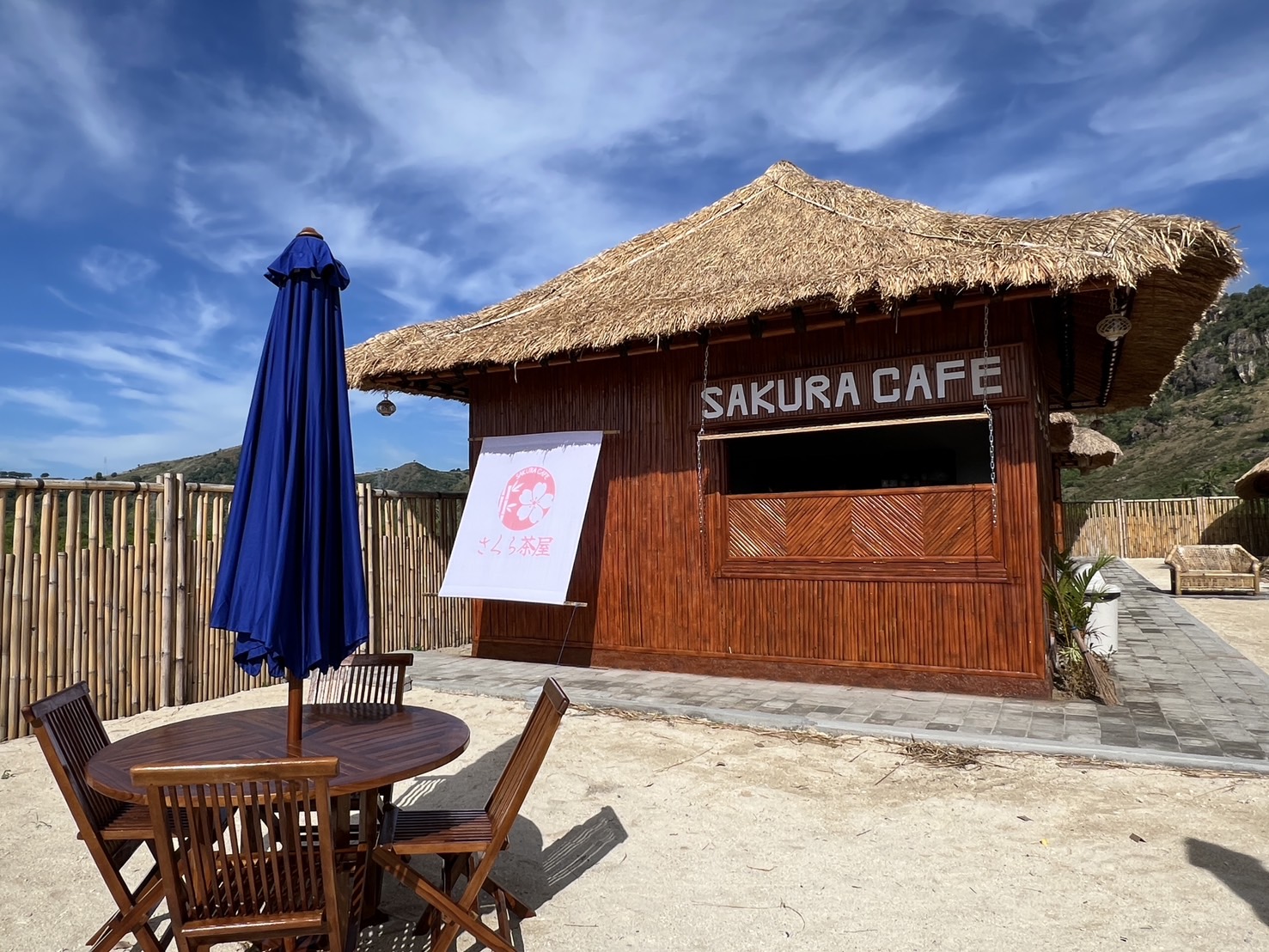
SEMELAR BEACH VILLAGE
Come and spend some time in the Sekotong village we call home
About 1 hour 10 minutes by car from Lombok International Airport. We offer a stay programme of 3 nights/4 days or more, with island trips by local boat and sunsets at SAKURA CAFE. The villas are due to be completed in stages from 2027.
Sources for this article
- Decree of the Minister of Marine Affairs and Fisheries No. 57 of 2014, management and zoning plan for the Gili Ayer, Gili Meno and Gili Trawangan marine tourism park (2014 to 2034), regulations database (Indonesian)https://peraturan.bpk.go.id/Download/152520/Kepmen%20KKP%20Nomor%2057%20Tahun%202014.pdf
- Gili Eco Trust, “Animal Welfare” (Proyek Penyu)https://www.gilieco.com/animal-welfare
- GlobalGiving, “Save the Gili Turtles and Help to Build a Hatchery” (Gili Eco Trust fundraising page)https://www.globalgiving.org/projects/save-gili-endangered-turtles/
- GlobalGiving, project reports (March, August and December 2025)https://www.globalgiving.org/projects/save-gili-endangered-turtles/reports/?pageNo=1
- Ministry of Tourism destination directory, “Gili Nanggu” (no publication date given, Indonesian)https://direktoripariwisata.id/pdf/836
- detikBali, “Penyu Hijau, Ikan, dan Patung Sepasang Kekasih di Gili Tramena” (13 May 2025)https://www.detik.com/bali/wisata/d-7911368/penyu-hijau-ikan-dan-patung-sepasang-kekasih-di-gili-tramena
- JPNN, “Turis Prancis Tenggelam di Gili Trawangan” (24 December 2022)https://www.jpnn.com/news/turis-prancis-tenggelam-di-gili-trawangan
- Good News From Indonesia, “Melihat Status dan Upaya Konservasi Penyu di Indonesia” (legal basis for protection)https://www.goodnewsfromindonesia.id/2021/11/12/melihat-status-dan-upaya-konservasi-penyu-di-indonesia
- Snorkeling Report, “Snorkeling Gili Trawangan”https://snorkeling-report.com/spot/snorkeling-gili-trawangan
- Frommer’s, “Things To Do in Gili Meno”https://www.frommers.com/destinations/gili-meno/things-to-do/
- Travelfish, “Snorkelling on Gili Meno”https://www.travelfish.org/sight_profile/indonesia/west_nusa_tenggara/gili_islands/gili_meno/1183
- Travelfish, “Snorkelling on Gili Air”https://www.travelfish.org/sight_profile/indonesia/west_nusa_tenggara/gili_islands/gili_air/1186
- dive.site, “Turtle Point” (dive site off northeast Gili Meno)https://dive.site/explore/site/turtle-point-pgPX?page=2
- Jalan Jalan Sebentar, “Public Snorkeling Gili Trawangan” (shared-tour operator; prices, times and routes, updated 30 July 2026)https://jalanjalansebentar.com/eng/public-snorkeling-gili-trawangan/
- Snorkeling Gili (private-tour prices and times)https://snorkelinggili.com/
- Viator, “Gili Islands Glass-Bottom Boat Snorkeling (Shared or Private)” (participation requirements, reviews)https://www.viator.com/tours/Gili-Trawangan/Snorkeling-trip-3-gilis-island/d50505-212447P2
- PADI Blog, “The Sustainable Guide to Snorkeling and Diving with Turtles” (24 August 2018)https://blog.padi.com/sustainable-guide-snorkeling-diving-turtles/
- BASK Gili Meno, “Sea Turtles Gili Meno” (hotel guide; season, distance, flash and sunscreen)https://baskgilimeno.com/blog/sea-turtles-gili-meno