If you plan to snorkel in the South Gilis off Sekotong, in southwest Lombok (they are also called the Secret Gilis), you cross from the mainland by boat. Once you arrive, some islands let you walk into the sea from the beach, and at others you get in from the boat. As a rough guide: Gili Nanggu and Gili Tangkong for coral and fish, Gili Sudak or Gili Layar to get used to shallow water, and Gili Asahan or Gili Gede for the sea in front of your accommodation.
For diving, there are sites around the South Gili islands where beginners can dive. Belongas Bay, on the open-ocean side of southwest Lombok, has strong currents and is a different sea, for experienced divers.
This article is based on Indonesia’s official tourism site, documents from the Ministry of Marine Affairs and Fisheries (KKP), a PADI article and other sources, together with this site’s guides to the islands and boats, as of October 2026. We could not confirm the names and prices of dive operators on their official sites, so we do not list them. Instead, we list what to check when you choose one.
As of October 2026
What this article covers
- ✓What you can see in the sea around each of the eight South Gili islands
- ✓Which islands you can enter from the beach, and which from the boat
- ✓Where you can dive, and why Belongas Bay is seen as a site for experienced divers
- ✓Where boats leave from, rough boat prices and a sample day
- ✓Tides and time of day, protecting the coral, and getting in if you cannot swim
In short
Snorkeling in the South Gilis usually means a half day to a full day centred on Gili Nanggu, about 15 to 20 minutes by boat from Tawun harbour in Sekotong, with stops at nearby Gili Tangkong, Gili Sudak and Gili Kedis. Boats are hired per boat, and a half-day trip to three islands costs roughly Rp350,000 to 600,000 (about US$20 to 34, October 2026). Gili Nanggu and Gili Tangkong are said to have coral in good condition. For diving, the South Gilis have some sites for beginners, but Belongas Bay, which faces the open ocean, is for experienced divers.
What can you see around each South Gili island?
The South Gili islands fall into two groups: four islands off Tawun harbour (Gili Nanggu, Gili Tangkong, Gili Sudak and Gili Kedis), and the islands further west around Gili Gede, Gili Asahan, Gili Layar and Gili Rengit. According to Indonesia’s official tourism site, Gili Tangkong, Gili Nanggu and Gili Sudak lie a few hundred metres apart, and you can move between them by motorboat in about 10 to 15 minutes.
Gili Nanggu is the centre of snorkeling in the South Gilis. The official tourism site describes it as an island where you walk from the beach into shallow water and see colourful fish among the coral. The snorkeling site Snorkel Around The World (updated June 2025) says the coral is relatively healthy, schools of fish are always there, and there is no current, so it is safe for beginners. It also mentions structures for growing coral. As our Gili Nanggu guide says, you may meet sea turtles, but it is not guaranteed.
Gili Tangkong lies between Gili Nanggu and Gili Sudak and has no shops or accommodation. Snorkel Around The World says its coral is “nearly as impressive as Nanggu’s”, but that boats often pass it by unless you ask the boatman to stop. You stop there by boat and get into the water from the boat.
Gili Sudak has a shallow sea over white sand. The official tourism site says the water at Sudak is so clear that you can see the coral with the naked eye from several metres away. According to Snorkel Around The World, the reef runs parallel to the shore in front of the bungalows. The coral is less colourful than at Nanggu, and on some days the tide makes visibility poor, but people new to snorkeling can enjoy it. Of the three islands, only Sudak is said to have a food stall (warung), and it is used as the lunch stop.
Gili Kedis, according to the official tourism site, is a small sandy island you can walk around in about 5 minutes, about 10 minutes by boat from Gili Sudak. It is popular for the view, but Snorkel Around The World says much of the coral around it has been damaged by boat traffic, and there are only small fish where live coral remains. If snorkeling is your aim, spend more of your time at Nanggu and Tangkong.
Gili Layar and Gili Rengit are small islands in western Sekotong. The official tourism site describes Gili Layar as having clear, calm water with coral still in its natural state. It describes Gili Rengit as rich in marine life and often used for snorkeling, though the island has few facilities so far. As our guide to Gili Layar and Gili Rengit explains, Layar has a beach with shallow water, and at Rengit the boat stops offshore and you wade across the shallows to the island.
Gili Asahan and Gili Gede are islands with places to stay. Snorkel Around The World recommends the reef in front of the accommodation on Gili Asahan, where you can see sea turtles, moray eels, nudibranchs and seahorses among the seagrass. For Gili Gede, our Gili Gede guide says there are places to snorkel from the beach or in front of the accommodation, and that the dive shops are mostly around the jetties.
Figure: Snorkeling at the eight South Gili islands at a glance
Can you walk in from the beach, or do you need a boat?
You reach every island by boat. The usual way is to hire one through your accommodation or by negotiating at the harbour.
Once you arrive, there are three ways into the water. First, you land on the beach and walk into the sea. This is how it works at Gili Nanggu, Gili Sudak, Gili Layar, and in front of the accommodation on Gili Asahan or Gili Gede. Second, the boat stops off the island and you get in over the side. This applies at Gili Tangkong, or when the boat takes you right above the coral, and you are out of your depth from the start. Third, as at Gili Rengit, the water depth means the boat stops offshore and you wade across the shallows to the island. Reef shoes help.
If you are not a confident swimmer, plan your day around islands you can enter from the beach. Where you get in from the boat, check that there is a ladder to climb back on board.
Can you dive? The South Gilis and Belongas Bay are different seas
Yes. A 2019 article by the diver training organisation PADI names Gili Asahan, Gili Gede, Gili Rengit and Gili Layar as the four main South Gili islands and describes dive sites there. At “Batu Putih” (white rock) there is a mix of hard and soft coral, and crustaceans and ghost pipefish shelter behind schools of glassfish. At “Wave Corner” you can see nudibranchs, frogfish and resident moray eels. This is a sea for small creatures rather than big animals.
Our guide to snorkeling and diving in Lombok notes that the South Gilis have terrain suited to beginners, such as gentle sandy slopes that start at around 5 m, while some sites are drift dives. Without a certification, you would start with a try dive in shallow water, with an instructor at your side. For how to get certified, and how that differs from a try dive, see our guide to getting your diving certification on Lombok.
Belongas Bay, on the open-ocean side of southwest Lombok, is a different kind of sea from the South Gilis. The PADI article says “The Magnet”, an offshore pinnacle in the bay, is a site for experienced divers, and that in some seasons schools of hammerhead sharks (scalloped and great hammerheads) arrive. It says that at “The Cathedral” you can see resting sharks and mobula rays. A record by the dive company Two Fish Divers of a 2017 scouting trip for technical diving describes descents to 55 m and strong currents.
We could not confirm operators’ names and prices on their official sites, so we do not list them. Before you book, check whether the operator is registered with a training organisation such as PADI or SSI, how many divers there are per guide, the maximum depth for try dives, whether gear and the boat are included in the price, and whether you have insurance that covers diving.
Figure: Diving in the South Gilis and in Belongas Bay
Where do boats leave from, and what do they cost?
For Gili Nanggu, Gili Tangkong, Gili Sudak and Gili Kedis, boats usually leave from around Tawun harbour in Sekotong. Gili Nanggu is about 15 to 20 minutes by boat (the official tourism site says 15 minutes), the three islands lie within about 15 to 40 minutes of Tawun, and you can move between islands in about 10 to 15 minutes. For Gili Gede, a small boat from Tembowong harbour in the Pelangan area takes about 10 to 30 minutes. For Gili Asahan, allow about 10 to 20 minutes from a jetty on the Sekotong side. Gili Layar and Gili Rengit are said to be about 15 to 30 minutes from the harbours in Sekotong.
Prices are set per boat. Our boat charter guide gives about Rp350,000 to 600,000 per boat (about US$20 to 34) for a half-day trip around Gili Nanggu, Gili Sudak and Gili Kedis. Day-trip packages with transfers, meals and gear are sometimes offered at about Rp300,000 to 450,000 per person (about US$17 to 25). Gear hire may cost several tens of thousands of rupiah per person on top. For the landing fee when you go ashore, our boat charter guide says a few thousand rupiah per island, and our Gili Nanggu guide says about Rp5,000 per person. detikBali (March 2024) also reported the Gili Nanggu entry fee as Rp5,000 per person, but we could not confirm an officially set amount. All figures are rough guides as of October 2026. US$ amounts use US$1 = about Rp17,800 (September 2026).
Figure: A sample day to four islands from Tawun harbour
How do tides, time of day and season change the sea?
Off Sekotong, the wind tends to pick up in the afternoon and the waves get higher, so the sea is usually calmer in the morning, and visibility for snorkeling is often better. Snorkel Around The World also says it is better to visit Gili Nanggu as early as possible, and that visibility can drop with the tide and the number of boats.
The tide makes a big difference here. Gili Kedis gets even smaller at high tide, and at Gili Rengit the size of the visible beach changes a lot with the tide. Over shallow coral, at low tide there is almost no space left between your body and the coral. Ask the boatman for the tide times, and ask them to plan the shallow spots for when the tide is in.
By season, the dry season (April to October) brings calmer seas and is the easier time to visit. In the rainy season (November to March) there are days with high waves, and boats may not go out, so keep a spare day for your time in the water.
Rules to protect the coral, and dealing with the sun
Gili Tangkong, Gili Nanggu, Gili Sudak and the waters around them are named in documents from the Ministry of Marine Affairs and Fisheries (KKP) as the area for the “Gita Nada” marine tourism park, a conservation area. The 2018 draft decision gives an area of about 21,332 hectares. It divides the area into a core zone, where coral reefs and other habitats are strictly protected, a use zone for tourism and similar activities, a fisheries zone and a port zone, and gives management to the West Nusa Tenggara provincial government. However, we could not confirm the text of the final decision, or any specific rules for visitors.
A 2025 paper on this sea lists coral damage from snorkeling, tourist boats dropping anchor wherever they like, and the lack of rules for mooring boats as problems. It also points out that there are no written rules or guidance for visitors.
There are four things to keep to. Do not stand on, hold on to or step on the coral. In shallow water, keep your body level so your fins do not kick up sand or hit the coral. Do not chase or touch fish or turtles. Take your rubbish back to the boat. The official tourism site also asks adults to stay close when they show children sea life in the shallows, so that the ecosystem is not damaged. You can also ask the boatman to drop anchor on sand rather than on coral.
Prepare for the sun as well. The small islands have almost no shade, and while you float on the surface, your back and the backs of your legs are in the sun the whole time. Snorkel Around The World recommends reef-safe sunscreen and clothing that covers your skin. A rash guard and leggings help.
If you cannot swim, or are travelling with children
You can snorkel without being able to swim, as long as a life jacket keeps you afloat. In the South Gilis, start at Gili Sudak or Gili Layar, which are shallow and can be entered from the beach, or on the beach side of Gili Nanggu, where there is said to be no current. Get used to breathing with your face in the water where you can stand, then move a little deeper, step by step.
At places like Gili Tangkong, where you get in from the boat, you are out of your depth from the start. If you cannot swim, do not push yourself: decide whether to watch from the boat, or to go in wearing a life jacket, one to one with a guide. With children, always stay within arm’s reach, even in shallow water, and have them wear reef shoes when wading across the shallows at Gili Rengit.
Note
- The islands often have no shop: bring water and snacks from the Sekotong side. There is no ATM, and payment is usually in cash.
- ✓Have you told the boatman which islands you want, and where you want to spend longer (such as Gili Nanggu and Gili Tangkong)?
- ✓Is the price per boat, and does it include gear and landing fees?
- ✓Are there life jackets for everyone, in sizes that fit?
- ✓Have you set a morning departure, and asked for the tide times?
- ✓Have you packed water, snacks, small cash, a rash guard and reef shoes?
A word from Sekotong
When you hire a boat, tell them first where you want to get in the water and for roughly how long, rather than how many islands you want to visit. That avoids misunderstandings. The more islands you visit, the less time you have in the sea. A mask that does not fit your face lets water in, so it helps to bring one from home that fits you. We also plan to start kayaking at our village on 7 November 2026.
The downsides of the South Gilis, and who they suit
The downsides first. Unlike the three northern Gili islands (Gili Trawangan, Gili Air and Gili Meno), the South Gilis do not have dive shops lined up along the beach where you can walk in and book. You need to arrange a boat, the islands have hardly any shops or shade, and visibility changes from day to day. Dive operators are also hard to compare using official information. If convenience comes first, the three northern Gilis will suit you better.
On the other hand, there is coral about 15 to 20 minutes by boat from the harbour, and if you hire a boat, you decide where and for how long to get in the water. For people who want to see small creatures in a quiet sea, or families who want to start in the shallows, it is one option. We compare the two areas in Gili 3 vs South Gili, and give an overview of the islands in our guide to the South Gilis off Sekotong.
We are Semelar Beach Village. We run a beach cafe and a market in a fishing village in Sekotong together with local Sasak people. The village is about 1 hour 10 minutes by car from Lombok International Airport and about 40 minutes from Lembar Port. Our stay programme (3 nights 4 days to 5 nights 6 days, Rp4,800,000 per person, about US$270, flights and accommodation not included) includes airport transfers, transport during your stay and a guide, and you can ask about island hopping when you enquire.
Frequently asked questions
Q. Which South Gili island has the most to see when snorkeling?
For coral and fish, Gili Nanggu, where the coral is said to be relatively healthy, and Gili Tangkong, which is said to come close. Boats often pass Gili Tangkong by unless asked, so tell them you want to stop there when you hire the boat. If you are staying on an island, Gili Asahan and Gili Gede let you snorkel in front of your accommodation.
Q. Can I snorkel from the beach on mainland Sekotong?
We could not confirm any official information on beaches on mainland Sekotong that suit snorkeling. All the places in this article are ones you reach by boat before getting in.
Q. Can I dive without a certification?
Yes, on a try dive with an instructor at your side. The South Gilis are said to have some terrain suited to beginners. Belongas Bay is a sea for experienced divers, so it is not a place for try dives.
Summary
Snorkeling in the South Gilis usually means a half day to a full day centred on Gili Nanggu, about 15 to 20 minutes from Tawun harbour, together with Gili Tangkong, Gili Sudak and Gili Kedis. For coral, go to Nanggu and Tangkong. To get used to the water, try Sudak or Layar. To stay, look at Asahan and Gede. Boats are hired per boat, at about Rp350,000 to 600,000 for three islands and a half day (October 2026).
For diving, you can start with a try dive in the South Gilis, while Belongas Bay is for experienced divers. Leave in the morning, ask for the tide times, do not stand on the coral, and check the life jackets. Keep these four things in mind.
Related reading
- Sekotong boat charter guideHow to hire a boat, how prices work, and what happens on the day
- Gili Nanggu guideA closer look at the island at the centre of South Gili snorkeling
- Gili Sudak, Gili Kedis and Gili TangkongHow the three islets you combine with Gili Nanggu differ
If you are staying in Senggigi or Kuta and want one day of snorkelling in the South Gilis, South Gili day trips compares the times and prices of tours with pickup.
What to check before you swim, first aid for urchin and jellyfish stings, and life jackets on boats are covered in Sea Safety in Lombok.
SEMELAR BEACH VILLAGE
Come and spend some time in the Sekotong village we call home
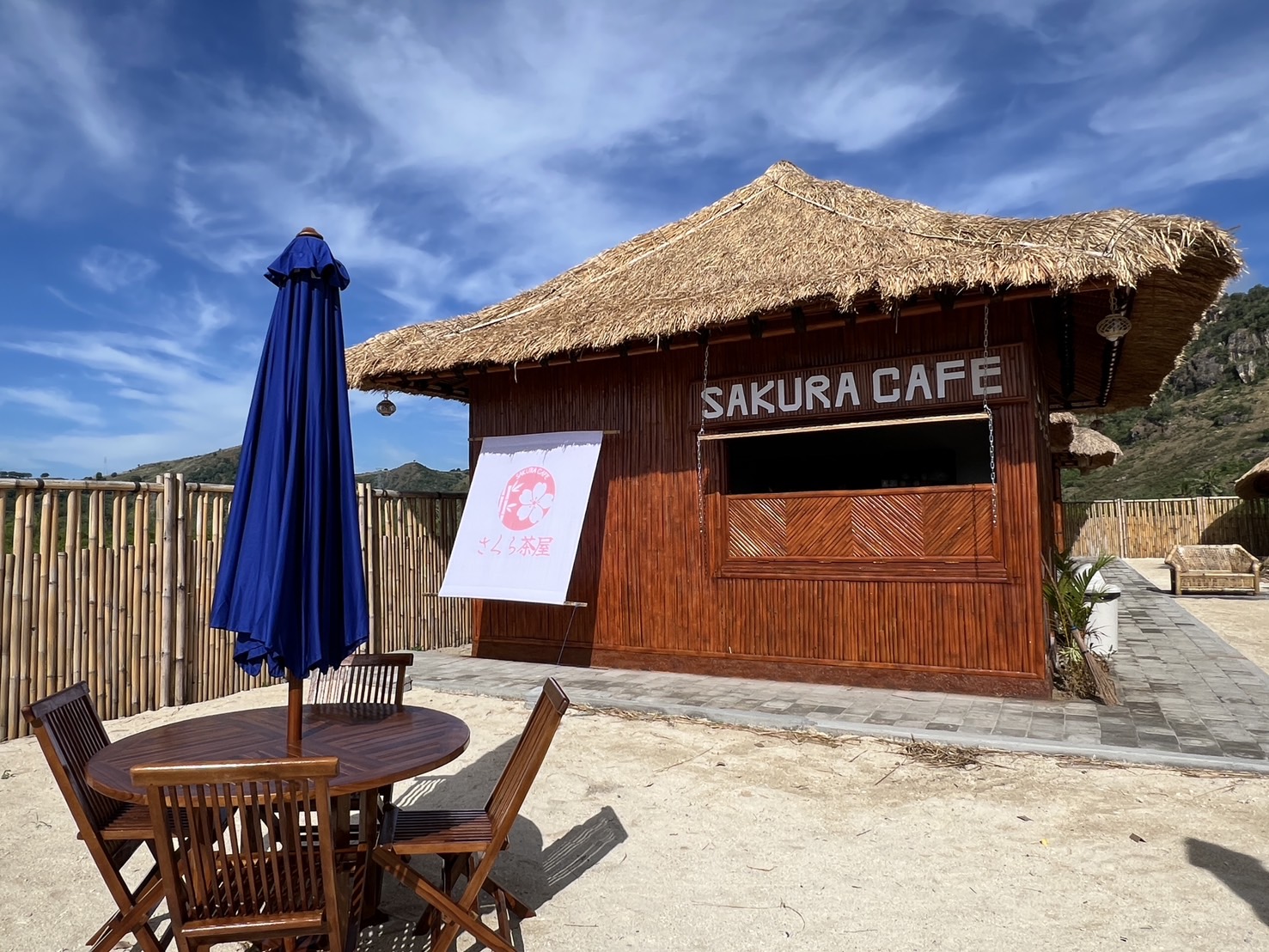
About 1 hour 10 minutes by car from Lombok International Airport. We offer a stay programme of 3 nights/4 days or more, with island trips by local boat and sunsets at SAKURA CAFE. The villas are due to be completed in stages from 2027.
Sources for this article
- Indonesia’s official tourism site (Wonderful Indonesia), “Beautiful Gili Islands of Sekotong Barat Village”https://www.indonesia.travel/gb/en/travel-ideas/marine/gugusan-gili-cantik-desa-sekotong-barat-surga-keindahan-bahari-di-lombok-barat/
- Indonesia’s official tourism site, “Gili Layar”https://www.indonesia.travel/au-en/destination/bali-nusa-tenggara/west-nusa-tenggara/gili-layar
- Indonesia’s official tourism site, “Gili Rengit”https://www.indonesia.travel/us/en/destination/bali-nusa-tenggara/west-nusa-tenggara/gili-rengit/
- Ministry of Marine Affairs and Fisheries (KKP) legal documents, draft ministerial decision on the conservation area of Gili Tangkong, Gili Nanggu, Gili Sudak and the surrounding waters (2018)https://jdih.kkp.go.id/bahanrapat/RKEPMEN-KP%20ttg%20….Gili%20Tangkong,%20Gili%20Nanggu…..pdf
- BEST Journal, “Pemanfaatan Taman Wisata Perairan (TWP) Gita Nada Lombok Barat Sebagai Laboratorium Ekologi Alami” (2025)https://jurnal.uisu.ac.id/index.php/best/article/view/11578
- PADI Blog, “Amazing Must-Dive Sites in Lombok, Indonesia” (8 May 2019)https://blog.padi.com/amazing-must-dive-sites-in-lombok-indonesia/
- Two Fish Divers, “Belongas Bay Lombok” (10 December 2017)https://oldsite.twofishdivers.com/blog/belongas-bay-lombok/
- Snorkel Around The World, “Snorkeling Spots Around Gili Nanggu, Gili Sudak and Gili Kedis” (updated 1 June 2025)https://snorkelaroundtheworld.com/?p=12769
- Snorkel Around The World, “Gili Asahan Guide”https://snorkelaroundtheworld.com/?p=12345
- Semelar Village, Sekotong boat charter guidehttps://semelarvillage.com/en/sekotong-boat-charter-guide-en/
- Semelar Village, guides to each South Gili island and complete guide to snorkeling and diving in Lombokhttps://semelarvillage.com/en/south-gili-islands-hidden-gems-en/
- detikBali, “Gili Nanggu di Lombok: Daya Tarik, Tarif, hingga Rutenya” (22 March 2024; Gili Nanggu entry fee, boat fares and crossing times)https://www.detik.com/bali/wisata/d-7256702/gili-nanggu-di-lombok-daya-tarik-tarif-hingga-rutenya