Lombok is often described as a halal tourism destination. In 2015 it was named the world’s best halal tourism destination at an international awards event, and in 2016 the province of West Nusa Tenggara, which includes Lombok, passed a regional regulation on halal tourism. Halal tourism means arranging travel so that Muslim visitors can eat and pray without difficulty.
Some travellers worry that a halal island means alcohol or swimwear is banned. In the text of the regulation and the explanation we read, we found no provision banning alcohol for tourists or setting a dress code. For this article we read, on 9 November 2026, the regulation, a legal explanation and news reports, and summarised what the rules say and how they affect travellers.
It is written for both Muslim and non-Muslim travellers heading to Lombok.
Information as of November 2026
What this article covers
- ✓Why Lombok is called a halal tourism destination
- ✓What the provincial regulation (No. 2 of 2016) covers
- ✓Rules for hotels, food businesses, spas and travel agents
- ✓What Muslim travellers can check
- ✓What changes for non-Muslim travellers
In short
Halal tourism on Lombok is set out in West Nusa Tenggara’s Regional Regulation No. 2 of 2016. It asks tourism businesses to provide prayer facilities and halal food for Muslim travellers. Halal hotels and spas must meet specific standards, and conventional hotels are asked to show the qibla (prayer direction) in rooms. In the text we read, we found no provision banning alcohol for tourists or setting a dress code.
Why is Lombok called a halal tourism destination?
According to The Jakarta Post (22 October 2015), Lombok was named both the world’s best halal tourism destination and the world’s best halal honeymoon destination at the 2015 World Halal Travel Awards, announced at the Emirates Palace in Abu Dhabi as part of the World Halal Travel Summit. The same report said West Nusa Tenggara had 4.7 million people, about 65% of them on Lombok, and that up to 93% of Lombok’s residents are Muslim.
CrescentRating, which publishes indexes for Muslim travel, says West Nusa Tenggara (Lombok) has been in the top three of its Indonesia Muslim Travel Index (IMTI) since the first edition in 2018. For religion on the island more broadly, see religion on Lombok.
What does the provincial regulation say?
West Nusa Tenggara Regional Regulation No. 2 of 2016 on Halal Tourism was enacted on 21 June 2016 (text on pasal.id). According to hukumonline (9 April 2019), it divides tourism businesses into conventional and halal, and lists accommodation, travel agencies, restaurants and other food businesses, and spas as halal tourism businesses. Halal standards follow those of the National Sharia Council of the Indonesian Ulema Council (DSN-MUI). Article 1 defines halal tourism operators as those providing accommodation, food and drink, travel agency or spa services “at halal destinations”, but the text and commentary we read do not make clear which places count as halal destinations.
For destinations, it asks for places of worship and washing facilities that meet sharia standards. Conventional tourism businesses are also asked to provide the qibla direction in hotel rooms, information on nearby mosques, prayer facilities and separate washing areas for men and women (Article 11(2)).
← Scroll sideways to see the whole table
| Who | What the regulation asks |
|---|---|
| Halal accommodation | Meet sharia standards; at minimum provide washing facilities, a place to pray, and halal food and drink |
| Conventional accommodation and tourism businesses | Qibla direction in rooms, nearby mosque information, prayer facilities, separate washing areas (Art. 11(2)) |
| Food businesses with halal certification | Guarantee halal status from raw ingredients to serving |
| Food businesses without certification | Label each dish and drink as halal or non-halal |
| Halal spas | Separate treatment rooms for men and women, therapist of the same sex as the client, a place to pray, products with an official halal logo |
| Halal travel agencies | Run itineraries meeting halal criteria and give travellers information |
Summary based on the text on pasal.id and hukumonline’s explanation (2019). Check the official text for the exact scope of each provision.
Figure: Outline of the halal tourism regulation (No. 2 of 2016)
What can Muslim travellers check?
Under the regulation, certified halal food businesses guarantee halal status from ingredients to serving, and uncertified ones label each item as halal or non-halal. When choosing where to eat, look for the certification and the menu labels. For food on Lombok generally, see our Lombok food guide.
At hotels, it helps to ask before booking about the qibla direction in rooms, prayer mats and the nearest mosque. What a property provides depends on whether it presents itself as a halal hotel or a conventional one. Shops in town may close during Friday midday prayers (see Friday prayers and holidays on Lombok).
Figure: What Muslim travellers can check, in order
What changes for non-Muslim travellers?
In the regulation text and explanation we read, we found no provision banning alcohol for tourists or setting rules on swimwear or dress. The regulation mainly sets out what businesses should provide, such as prayer facilities and halal labelling. For where you can drink and buy alcohol, see alcohol on Lombok.
Spas are the one area to watch. Under the regulation, halal spas have separate treatment rooms for men and women, with a therapist of the same sex as the client. If you want a couple’s treatment in the same room, or have a preference about the therapist, ask before booking. Prices are covered in massage and spa prices on Lombok.
Take care
- Even places labelled halal differ in what they provide
- Separate from the regulation, dress modestly in villages and near mosques out of respect for local custom
- For the exact scope of the rules, check the official text and provincial information
A note from Sekotong
Whether or not you are Muslim, if there are things you cannot eat, the surest way is to ask about ingredients when you order. A small card in Indonesian listing what you avoid, such as pork, alcohol, shrimp or nuts, makes this easier at small eateries. Our list of Indonesian phrases for travel can help.
Limitations, and who it suits
First, the limitations. We have not checked how far the regulation applies in practice or how well it is followed. Whether a place has halal certification varies, and small eateries may have no labels. The 2015 award is more than ten years old, so it is worth looking at other indexes for a current view.
For Muslim travellers, the regulation’s requirements on prayer facilities and halal labelling give you a starting point when asking hotels and restaurants. For non-Muslim travellers, nothing we read in the regulation suggests your trip will change much. For how to behave at places of worship, see religion on Lombok.
Semelar Beach Village is on the shore of a fishing village in Sekotong, south-west Lombok, about 1 hour 10 minutes by car from Lombok International Airport. What you can book now is our stay programme: 3 nights/4 days to 5 nights/6 days at Rp4,800,000 per person (about US$270). It includes airport transfers, transport during your stay, a guide, a welcome dinner and a massage; flights and accommodation are not included. All 13 villas are under construction, and the first is due to be completed in early 2027 (plan as of August 2026).
Frequently asked questions
Q. What is halal tourism on Lombok?
Arranging accommodation, food, spas, travel agencies and destinations so that Muslim travellers can eat and pray without difficulty. West Nusa Tenggara set this out in Regional Regulation No. 2 of 2016.
Q. Is alcohol banned on Lombok?
We found no provision in the regulation banning alcohol for tourists. Places to drink are limited, so check our alcohol guide.
Q. Can I wear swimwear on the beach?
We found no provision in the regulation setting a dress code for tourists. In villages and near mosques, covering shoulders and thighs is a sign of respect for local custom.
Q. What is different about a halal spa?
The regulation requires separate treatment rooms for men and women, a therapist of the same sex as the client, a place to pray and products with an official halal logo.
Q. When was Lombok named a halal tourism destination?
At the 2015 World Halal Travel Awards, where it was named the world’s best halal tourism destination and best halal honeymoon destination.
Summary
Lombok was named the world’s best halal tourism destination in 2015, and West Nusa Tenggara set out rules for halal tourism in a 2016 regulation. The regulation asks for prayer facilities at destinations, qibla directions and halal food at hotels, halal labelling at food businesses and separate rooms at halal spas.
Muslim travellers can check certification, labels and prayer facilities. For non-Muslim travellers, the regulation does not set rules on alcohol or dress, but it is worth asking spas before booking and dressing modestly in villages.
Related reading
- Lombok food guideSpice, hygiene and halal food
- Alcohol on LombokWhere to drink and buy
- Religion on LombokThe island of a thousand mosques
More on this topic: Lombok Travel Essentials. Sample 3- to 5-night itineraries in Sekotong, with the cost per person: Stay Programme Itineraries.
SEMELAR BEACH VILLAGE
Come and spend some time in the Sekotong village we call home
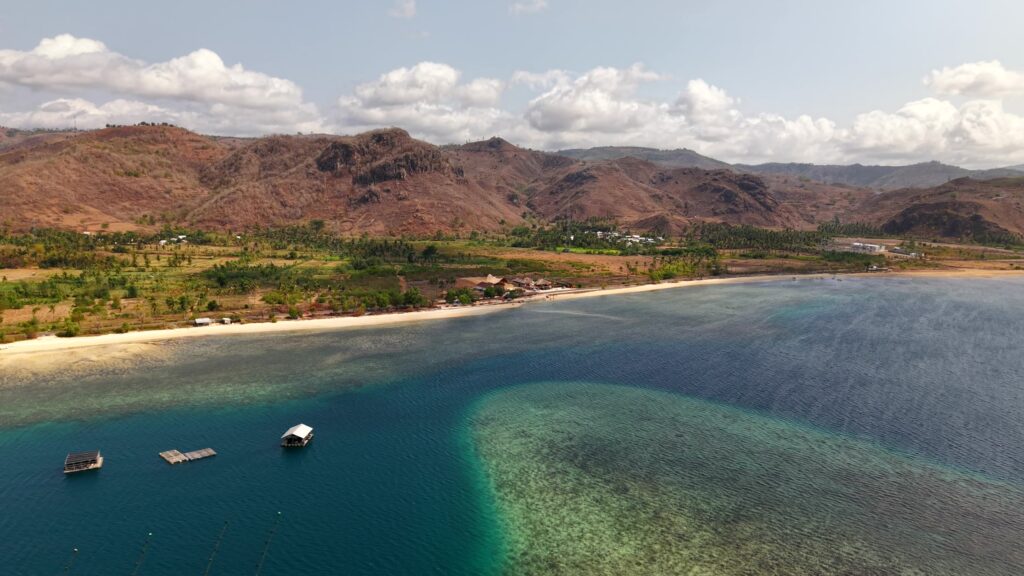
About 1 hour 10 minutes by car from Lombok International Airport. We offer a stay programme of 3 nights/4 days or more, with island trips by local boat and sunsets at SAKURA CAFE. The villas are due to be completed in stages from 2027.
Sources used for this article
- pasal.id, “Perda Provinsi Nusa Tenggara Barat No. 2 Tahun 2016” (text of the halal tourism regulation, enacted 21 June 2016)https://pasal.id/peraturan/perda/perda-provinsi-nusa-tenggara-barat-no-2-tahun-2016
- hukumonline, “Dasar Hukum Pariwisata Halal di Lombok” (explanation of the regulation, types of business, DSN-MUI; 9 April 2019)https://www.hukumonline.com/klinik/a/dasar-hukum-pariwisata-halal-di-lombok-lt5caabc012e6ee/
- The Jakarta Post, “Lombok named best halal tourism destination” (2015 award, population and share of Muslims; 22 October 2015)https://www.thejakartapost.com/news/2015/10/22/lombok-named-best-halal-tourism-destination.html
- CNN Indonesia, “Lombok Mulai Garap Wisata Halal” (provincial tourism office on the regulation being prepared; 15 December 2015)https://www.cnnindonesia.com/gaya-hidup/20151215041627-269-98242/lombok-mulai-garap-wisata-halal/
- CrescentRating, “Indonesia Muslim Travel Index” (West Nusa Tenggara in the top three since the first IMTI; page released 16 October 2026)https://crescentrating.com/reports/indonesia-muslim-travel-index-2023.html