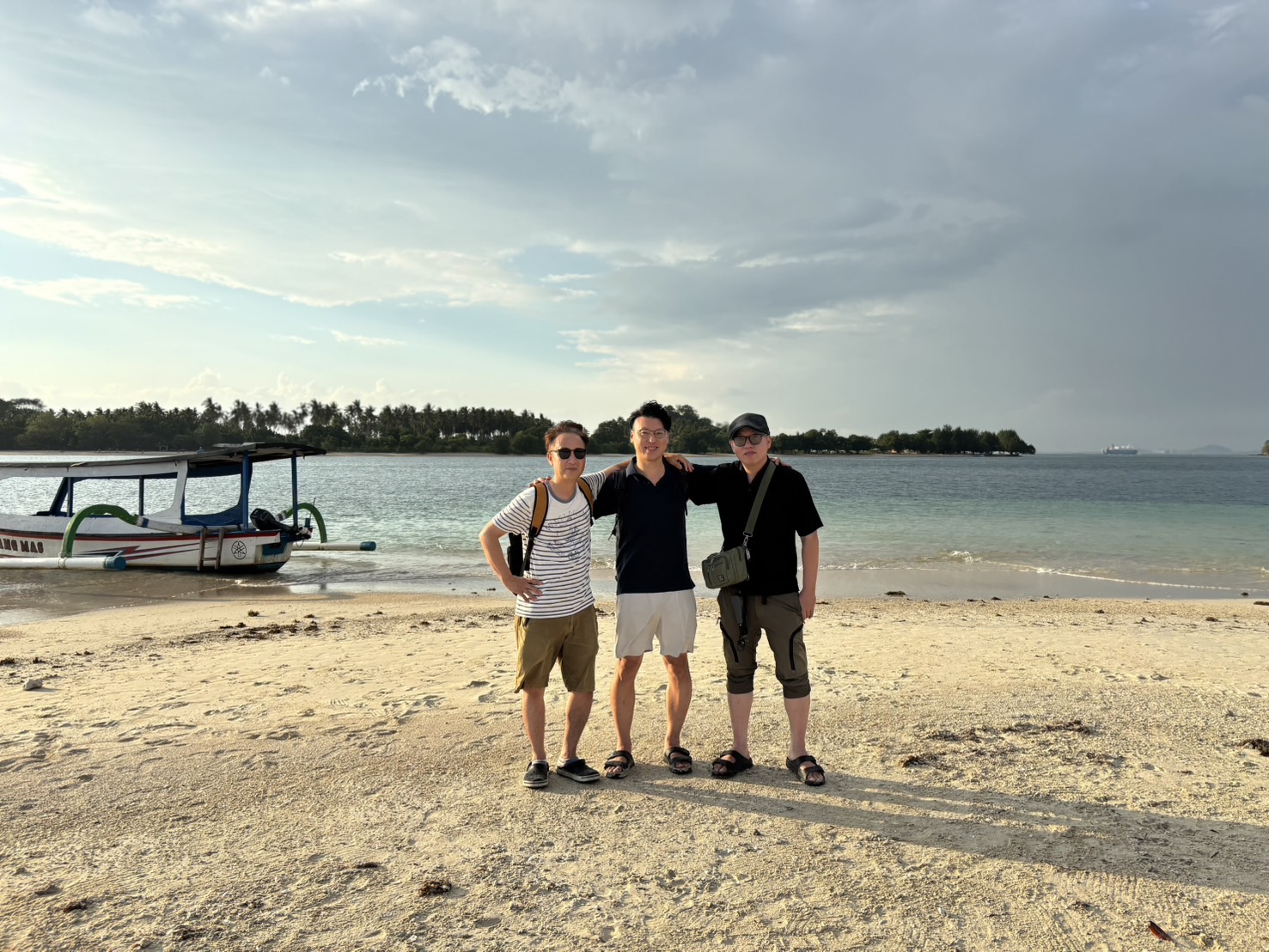
Information as of November 2026
Swimming alongside a sea turtle is one of the reasons people choose a beach trip in Southeast Asia. Three places come up again and again: the Gili Islands off Lombok in Indonesia, Sipadan off Sabah in Malaysian Borneo, and Apo Island in the central Philippines. This guide explains why turtles gather in places like these, what each one is like and what it asks of you, and the rules for being in the water with them.
We run a stay programme in Sekotong, in southwest Lombok, and the Gili Islands are a short trip from the island’s northwest coast. For Sipadan and Apo Island we rely on the official and published sources listed at the end. No source we found gives comparable sighting rates for the three, so we do not rank them.
What this article covers
- ✓What sea turtles need: food, reefs and nesting beaches
- ✓The Gili Islands: what a 2024 survey found
- ✓Sipadan: permits and diving certification
- ✓Apo Island: a marine protected area since 1994
- ✓Rules for swimming near turtles
In short
For snorkellers, the Gili Islands are the easiest of the three: a 2024 survey recorded green and hawksbill turtles at several dive sites. Sipadan is for certified divers only, with 252 permits a day and at least Advanced Open Water certification. Apo Island has been a protected landscape and seascape since 1994. Wherever you go, do not touch, chase or block a turtle.
Why turtles gather where they do
According to NOAA Fisheries, the US agency for marine life, green turtles are the only herbivorous sea turtle, feeding mainly on algae and seagrass in coastal foraging areas. Adult females usually return to a beach in the general area where they hatched, often decades later, and nest every two weeks or so over several months; adults migrate between feeding grounds and nesting beaches every 2 to 5 years. Places with healthy reefs, seagrass and nearby beaches, protected from fishing and disturbance, are therefore where turtles are most often seen.
Figure: What a place needs for turtles to be seen
Indonesia is home to six of the world’s seven species of sea turtle, and all six are protected by law under Government Regulation 7 of 1999 and the Environment and Forestry Ministry’s protected species list (Regulation P.20 of 2018, as amended by P.106 of 2018), as summarised by Good News From Indonesia.
The three places
Figure: Gili Islands, Sipadan and Apo Island at a glance
The Gili Islands, Lombok
Gili Trawangan, Gili Meno and Gili Air form the Gili Matra marine protected area. A study by researchers at the University of Mataram and others, published in June 2025, surveyed turtles underwater in September and October 2024 and recorded both green and hawksbill turtles at depths of 9 to 16 metres across several dive sites, mostly near coral reef structures, with females making up most of the turtles seen. The study describes the area as having high potential for turtle conservation.
Snorkelling trips around the three islands often look for turtles; our guide to swimming with sea turtles in the Gili Islands covers where boats go, prices and local rules. Off Sekotong, the small South Gili islands have calm water and few boats, but we found no published turtle survey for them, so we make no claims about sightings there; see snorkelling and diving in the South Gilis.
Sipadan, Sabah
Sabah Tourism describes Sipadan as an island where green and hawksbill turtles gather to mate and nest, and says it is not unusual for divers to see more than 20 turtles on a dive. Access is tightly controlled: the daily quota is 252 permits, divers need at least Advanced Open Water certification, and permits are issued only through licensed operators registered with Sabah Parks. There is no longer any accommodation on Sipadan, so divers stay on nearby islands or on the mainland at Semporna. It is not a destination for beginners or snorkel-only trips.
Apo Island, Negros Oriental
Apo Island and its surrounding waters were declared the Apo Island Protected Landscape/Seascape by Presidential Proclamation No. 438 on 9 August 1994, with 691.45 hectares set aside as a marine protected area, in the municipality of Zamboanguita, Negros Oriental. We did not find an official count of turtles there, so check current visitor fees, rules and which sites suit snorkelling when you book.
When to go
Turtles live in these waters year-round, but sea conditions decide whether boats can go out. On Lombok, Indonesia’s weather agency BMKG forecast in March 2026 that the dry season would begin in April and peak in August; the wet season usually runs from about November to March and brings rougher seas on some days. In the Philippines, PAGASA puts the peak typhoon season at July to October. Plan at least two sea days so that one cancellation does not end your chance.
Rules for swimming near turtles
The Great Barrier Reef Marine Park Authority’s guidance is a good standard anywhere: never touch, grab or lean on turtles, hatchlings or eggs; do not pursue a turtle that is trying to avoid you; leave it an escape route; and keep flash photography to a minimum around nesting turtles. In Indonesia, all six sea turtle species found there are legally protected.
Figure: Around turtles in the water
Keep in mind
- Choose a reef-safe sunscreen or a rash guard to reduce what goes into the water
- Ask about life jackets if you are not a strong swimmer; currents can be strong around small islands
- Remote islands have limited medical care: for diving, make sure your insurance covers decompression treatment and evacuation
A note from Sekotong
Sekotong is about 1 hour 10 minutes by car from Lombok International Airport. We run a stay programme there of 3 nights/4 days to 5 nights/6 days, at Rp4,800,000 per person, including airport transfers, transport, a guide, a welcome dinner and a massage, with island trips by local boat; flights and accommodation are booked separately.
Frequently asked questions
Q. Can I see turtles in the Gili Islands without diving?
Many snorkelling trips around the Gili Islands look for turtles. The 2024 survey recorded them at 9 to 16 metres on dives, so sightings from the surface depend on the day and the site.
Q. Can beginners visit Sipadan?
Not to dive there. Sabah Tourism says divers need at least Advanced Open Water certification, and permits are limited to 252 a day.
Q. Are sea turtles protected in Indonesia?
Yes. Six species occur in Indonesian waters and all are protected under Government Regulation 7 of 1999 and the protected species list in Regulation P.20 of 2018, as amended by P.106 of 2018.
Q. Which suits snorkellers?
Of the three, the Gili Islands are the easiest for snorkellers. Diving at Sipadan needs certification; for Apo Island, ask operators which sites suit snorkelling.
Summary
Turtles gather where there is food, reef and protection. The Gili Islands are the easiest of the three for snorkellers and a short trip within Lombok, Sipadan rewards certified divers who can secure a permit, and Apo Island has three decades of protection behind it. Whichever you choose, give turtles space.
Related reading
- Swimming with sea turtles in the Gili IslandsTurtle Point, snorkel tour prices and rules
- Snorkelling and diving in LombokSpots and how to choose
- Lombok wildlifeMonkeys, turtles, mantas and sharks
Lombok as a destination: Lombok Travel Guide.
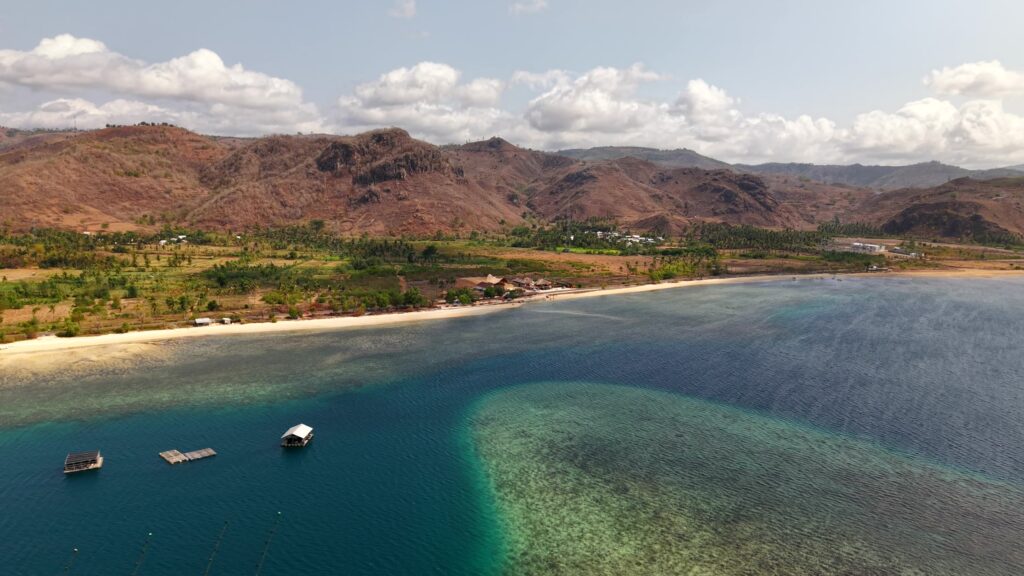
SEMELAR BEACH VILLAGE
Come and spend some time in the Sekotong village we call home
About 1 hour 10 minutes by car from Lombok International Airport. We offer a stay programme of 3 nights/4 days or more, with island trips by local boat and sunsets at SAKURA CAFE. The villas are due to be completed in stages from 2027.
Sources used for this article
- NOAA Fisheries, “Green Turtle” (diet, nesting, migration, ESA status)https://www.fisheries.noaa.gov/species/green-turtle
- Lestariningsih et al., study of green and hawksbill turtles in the Gili Matra marine protected area, Jurnal Sains Teknologi Lingkungan (30 June 2025)https://jstl.unram.ac.id/index.php/jstl/article/view/869
- Good News From Indonesia, “Melihat Status dan Upaya Konservasi Penyu di Indonesia” (12 November 2021; six species, legal protection)https://www.goodnewsfromindonesia.id/2021/11/12/melihat-status-dan-upaya-konservasi-penyu-di-indonesia
- Sabah Tourism Board, “Sipadan Island” (252 permits a day, Advanced Open Water, no accommodation, turtles)https://sabahtourism.com/destination/sipadan-island/
- Proclamation No. 438, s. 1994 (Apo Island Protected Landscape/Seascape, 9 August 1994), via Lawphilhttps://lawphil.net/executive/proc/proc1994/proc_438_1994.html
- Great Barrier Reef Marine Park Authority, “Around turtles” (responsible reef practices)https://www2.gbrmpa.gov.au/visit/responsible-reef-practices/around-turtles
- BMKG, “Musim Kemarau 2026 Datang Lebih Awal, Puncak Terjadi Agustus Mendatang” (4 March 2026)https://www.bmkg.go.id/siaran-pers/bmkg-musim-kemarau-2026-datang-lebih-awal-puncak-terjadi-agustus-mendatang
- PAGASA, “Tropical Cyclone Information” (peak July to October)https://www.pagasa.dost.gov.ph/climate/tropical-cyclone-information