As of August 2026, based on official information
On a first trip to Bali, surfing at Kuta, going round stylish cafes in Seminyak and gazing at the rice terraces in Ubud is plenty to feel satisfied. Yet when it comes to planning a second trip, many people seem to get stuck. “Going round the same places again doesn’t feel right.” “But I don’t know what else there is.” If that is where you are, this guide was written for you.
The short answer: a second trip to Bali works better if you decide what to change before you decide where to go. There are only three things to change: the area, the way you travel, or the island itself. Choosing just one of these makes for a completely different trip from the first. We run Semelar Beach Village in Sekotong on Lombok, and from that position we also write honestly about the third option, leaving Bali for another island.
What this guide covers
- ✓How to think about a second Bali trip along three lines: area, way of travelling and other islands
- ✓How east Bali (Amed, Candidasa), north Bali (Lovina) and west Bali (Menjangan) differ, and their drawbacks
- ✓How to get to Nusa Penida, Nusa Lembongan, Lombok and the Gili Islands, and roughly how long it takes
- ✓What official data alone says about whether Bali has really become more expensive
Here is the conclusion first.
In short
If you want to travel light, change the area. If you want to slow down, change the way you travel. If you want clear water and quiet, go to another island. If you do not want to repeat the regrets of your first trip, start by deciding which of these three you are not willing to give up.
What most second-trip advice for Bali misses
Before writing this, we searched for phrases such as “where to go on a second trip to Bali” and “Bali recommendations for repeat visitors” and read the top-ranking articles (in Japanese, as of August 2026). What we found was that the top results came from mid-sized sites rather than major travel media, and that their suggestions almost without exception stayed within Bali. “A hidden cafe outside Ubud”, “a new beach club in the south”: none of these are bad, but they only vary the view on the same island, and the idea that there are options beyond Bali hardly comes up.
Because we run a place in Sekotong on Lombok, we naturally have a stake in the “another island” option. We say so openly. Even so, the point of this guide is to help you avoid repeating the same mistakes as on your first trip, not to sell Lombok. In fact, for some people leaving Bali is not the right answer. So we start with what you can do within Bali.
One more thing about where our information comes from. What this guide says about Bali is based only on published primary sources, such as official information from the Bali provincial tourism office, Statistics Bali (BPS) and port and boat operators. We do not run a business on Bali, so we do not present anything as something we have checked on the ground there. On the other hand, what we say about Lombok, the Gili Islands and Sekotong is first-hand information from running accommodation there. Please read with this difference in sources in mind. Where we write on the Bali side that something “cannot be confirmed”, it is because we really could not verify it from official sources.
Option 1: change the area, from the classic south to the east, north or west
On a first trip, most people stay in the south and centre of the island: Kuta, Seminyak and Ubud. These areas are close to the airport, restaurants, shops and beach clubs are concentrated there, and they are easy to find your way around even the first time. The first thing to consider for a second trip is changing this choice of area. Bali has areas to the east, north and west that each have a completely different character from the south.
Figure: the classic first-trip areas and candidate areas for a second trip (simplified)
* This is a simplified diagram to show where the areas are in relation to each other, not a map with exact directions or distances.
East Bali (Amed, Candidasa) is a quiet area that keeps the feel of a fishing village. Many beaches have black sand, and it is known as a base for diving and snorkelling. At nearby Tulamben lies the wreck of the US Army transport USAT Liberty, which was torpedoed by a Japanese submarine in 1942, beached on the shore, and slid into the sea during the 1963 eruption of Mount Agung. It lies in shallow water about 25m from the shore, which has made it known worldwide as a rare wreck you can reach from the beach. There are almost no beach clubs or nightlife, which suits people tired of the bustle of the south but will feel thin to anyone who wants to go out at night.
North Bali (Lovina) is quieter still. It is known for early-morning dolphin-watching tours, and its black-sand beaches are largely untouched by tourism. Because it is far from the south, there are few visitors, and time passes closer to the pace of local life. On the other hand, the choice of restaurants and shops is far more limited than in the south.
West Bali (Menjangan) is an island within West Bali National Park (Taman Nasional Bali Barat), and people go there for diving and snorkelling in very clear water. Because it lies inside the national park, unlike an ordinary beach area you need to pay the park entrance fee, and the usual way across is by boat from Labuhan Lalang harbour or similar points on the opposite shore. Entrance fees can change when the rules are revised, so check the amount with official or local sources before you go (this guide does not give an amount, because we could not confirm one). It is far from the airport, and there is little choice of places to stay or eat nearby.
← Scroll the table sideways
| Area | Travel time from the south (rough guide) | How it differs from a first trip | Honest drawbacks |
|---|---|---|---|
| South (Kuta, Seminyak, Ubud) | Starting point | The first-trip classic. Shops, beach clubs and nightlife are concentrated here | Heavy traffic; on a second trip it can feel like déjà vu |
| East (Amed, Candidasa) | About 2 to 3 hours by car (rough guide) | A quiet fishing-village feel. Mainly diving and snorkelling | Almost no nightlife. Getting there itself takes time |
| North (Lovina) | About 3 to 4 hours by car (rough guide) | Dolphin watching. A quiet that tourism has not changed | Limited tourist infrastructure and little choice of facilities |
| West (Menjangan) | About 3 hours by car (rough guide) | Inside West Bali National Park. Diving in very clear water | Far from the airport, little choice of facilities and places to eat |
* Travel times are general guides (as of August 2026; they vary with road conditions and time of day). Check exact times with a local car charter company or similar.
Here we give an honest verdict. If your trip is four or five days or less and you are travelling with someone who has never been to Bali, Option 1 (changing area within Bali) is the least likely to go wrong. Because you do not change islands, you do not use up spare days, and if someone falls ill you can be back at a hospital in the south within a few hours. We run a business on Lombok, but in this situation we do not recommend Lombok. Spending half a day travelling and then taking a boat that depends on sea conditions does not pay off on a short trip.
One more point: for the sheer range of diving, including wrecks, equipment rental and the number of dive shops, the area from Tulamben to Amed in east Bali comes out ahead. The water around Lombok and the Gili Islands is certainly very clear, but in the variety of dive sites and the depth of the dive-shop scene, east Bali, where people have been diving for a long time, is ahead.
Note
- We do not recommend driving yourself. Roads in the east, north and west are narrow with few street lights, so almost everyone uses a car with a driver.
- ATMs and money changers are scarce. It is safer to get cash while you are still in the south.
- Medical facilities are limited too. If you have a medical condition or are travelling with young children, allow for the fact that access to medical care is poorer than in the south.
Option 2: change the way you travel, from moving around to staying put
Apart from changing the area, you can also stay in the same area and change how you spend your time. Many first trips become a matter of going from one sight to the next, seeing as many places as possible in a limited number of days. A different restaurant every day, a different view every day: that is fun in its own way, but we often hear from people who felt the trip ended up being all transfers and schedules. For a second trip, one option is to switch deliberately to staying in one place for a long time.
In practice, that might mean renting a villa with a kitchen and cooking some of your own meals, looking for accommodation on the assumption of a long stay of seven nights or more, or, if you can work from a laptop, staying several weeks and working remotely. Many villas and hotels offer discounted plans for long stays. Because you are not cramming in transfers, you gain time that is not driven by a schedule: reading by the pool, going back to the same warung (local eatery) in the neighbourhood. This is also how we suggest guests spend their time in Sekotong on Lombok, and the same approach works just as well on Bali. We explain how to plan a long stay in more detail in how to start a long stay or two-base life.
The honest drawback of this option is that not going round the sights can feel unsettling at first. Whether you can let go of the urge to fill the days “because we have come all this way” is what decides it.
Option 3: go to another island: the Nusa islands, then Lombok and the Gili Islands
The third option is to travel on from Bali itself. In order of distance, first come Nusa Penida and Nusa Lembongan, which are part of Bali province, and further east is a separate island, Lombok, with the Gili Islands.
Nusa Penida and Nusa Lembongan are administratively part of Bali province, but they feel very different from the main island. Nusa Penida is known for its cliff-lined coast and for dive sites where you can see manta rays, while Nusa Lembongan has a more relaxed island pace. Both can be reached by fast boat from Sanur harbour in the south. According to the operators’ official information, the journey takes roughly 30 to 35 minutes from Sanur to Nusa Lembongan and 40 to 45 minutes from Sanur to Nusa Penida (as of August 2026). A day trip is possible, but depending on the number of sailings and the sea you may not get back as planned, so it is safer to leave slack in your return or to plan on staying one night.
Further still is Lombok, with the Gili Islands, a different island from Bali. While Bali is an island of Hindu culture, Lombok is the island of the Sasak people, most of whom are Muslim, and the feel of the towns themselves is different. We set out how Bali and Lombok differ in Bali or Lombok? A comparison, and give the overall picture of Lombok in our complete guide to Lombok. For details of the ways to cross (flights, fast boats and the public ferry compared), see how to get from Bali to Lombok, and for the Gili Islands see our complete guide to the three Gili Islands.
Here are the rough travel times (all as of August 2026). By air, Denpasar (DPS) to Lombok International Airport (LOP) takes about 30 to 50 minutes in the air. By fast boat to the Gili Islands, it takes about 1 hour 45 minutes from Padang Bai in the east of Bali, but 3 to 5 hours from Sanur or Serangan in the south. Even among “fast boats from Bali”, the time more than doubles depending on the departure harbour, so unless you plan your accommodation and departure harbour together, you will spend an extra 1 to 2 hours on the road in the morning.
Figure: getting to other islands, by mode of transport and rough travel time
* General guides as of August 2026; they vary with sea conditions, season and the number of sailings. For details of how to get to Lombok and the Gili Islands, see how to get from Bali to Lombok.
To be honest, going to another island has the appeal that the journey itself becomes part of finding where you want to be, but without slack in your schedule it can feel rushed. If you only make a day trip, you can fit it in as an extension of a first-style trip, but if you want a proper stay on Lombok or the Gili Islands, allowing at least two nights is realistic.
With that in mind, here is what people who choose this option actually have to put up with, written by those of us who live on this island. The worst outcome is coming without reading this and finding it was not what you expected.
What you actually have to put up with on another island
- Boats stop when the sea is rough. The Lombok Strait has strong currents, and fast boats are cancelled or delayed, especially in the rainy season (roughly November to March). Do not plan to return by boat the day before your flight home. If you cannot keep a spare day, flying is safer.
- There is less to do at night. Apart from parts of the Gili Islands, most areas of Lombok go quiet after dark. If you want bars and clubs, south Bali comes out ahead. We admit that honestly.
- Access to medical care is poorer. Large hospitals are concentrated around Mataram, so from the Gili Islands or the villages of the southwest you need to travel. If you have a medical condition or are travelling with young children, check your travel insurance and whether cashless treatment is available before you go.
- Travel depends on the road more than the distance. Places that look close on the map can take longer because roads are narrow and times vary with the hour. On this island, itineraries that cram two or more moves into one day rarely work.
Put the other way round, if you can accept these four things, going to another island is clearly worth it. The clarity of the water and the absence of crowds in particular are not things we take from published information but things we see every day.
A word from Sekotong
Sekotong, where we are, is in the southwest of Lombok, facing the small islands scattered off the south coast, which are separate from the Gili Islands (the three islands in the northwest). Many of the guests who come here have spent a few days on Bali first. What they say again and again is: “At first the lack of people threw me, then from about the third day it started to feel good.” The flip side is that if you come looking for excitement, you will be bored in two days. Honestly, we do not recommend this place to people who came because they love the bustle of Bali.
Which second trip suits you? Choosing from the three options
Here is how to choose between the three options in practice. The key is to ask yourself again what you got tired of and what you do not want to put up with.
Figure: choosing the right second trip from the three options
Some people will find all three apply. In that case there is no need to force yourself to choose one; you can spread them over several trips to Bali, changing the area this time and going to another island next time. You do not have to try everything on your second trip.
Has Bali really become more expensive? What official data shows
Many people also search for whether prices in Bali have gone up. Here we answer only as far as official sources allow, not from impressions or rumours. What we can say for certain is that from 14 February 2024 a provincial levy on foreign tourists (Pungutan Wisatawan Asing, PWA) was introduced, and each person now has to pay Rp150,000 per entry. According to the Bali provincial tourism office, the levy is intended to protect Bali’s culture and natural environment and to improve the quality of tourism services, and it is paid through the dedicated Love Bali app. This is a clearly new item of spending that did not exist on many people’s first trips to Bali.
The other thing we can say for certain is that the number of visitors is rising. According to official statistics released by Statistics Bali (BPS Provinsi Bali) in February 2026, 6,948,754 foreign tourists visited Bali in 2025 as a whole, up 9.72% on the previous year (2024). As the number of people rises, it is natural that how easy it is to book popular areas, and how crowded they are, changes too.
Foreign tourist levy (PWA)
Rp150,000
Introduced February 2024, per entry
Foreign visitors in 2025
6.95 million
+9.72% year on year
Star-rated hotel room occupancy
56.67%
January 2026: -3.61 points year on year
Sources: Bali provincial tourism office (PWA), Statistics Bali (BPS) official statistics (checked as of August 2026)
On the other hand, within what we were able to check, we found no official statistics showing by how many per cent room rates or meal prices themselves have risen. Statistics Bali’s occupancy rate for star-rated hotels was 56.67% in January 2026, actually lower than a year earlier (60.28%), so the rise in visitor numbers and the movement in occupancy do not simply line up. You often see people on social media saying prices have gone up, but since there is no official data to support a specific size of increase, this guide does not state one as fact. What we can say for certain is two things: a new item of spending, the tourist levy, has been added, and visitor numbers are rising. When you budget for a second trip, it is enough to add this levy (Rp150,000 per person) for each person at the start; there is no need to change destination because of a rumour that Bali has become expensive. If you are considering another island for cost reasons, Bali or Lombok? A comparison, which also covers how crowded it feels and the level of costs during a stay, will give you more to go on.
Frequently asked questions
Q. Is it all right to rent a scooter and drive myself in the east, north and west?
Roads are narrow with few street lights, so most travellers use a car with a driver. If you are not used to driving there, it is safer not to insist on driving yourself.
Q. Can I visit Nusa Penida as a day trip?
A day trip by fast boat from Sanur harbour is possible, but depending on the number of sailings and the sea you may not get back as planned. It is safer to leave slack in your return or to plan on staying one night.
Q. When and where do I pay the foreign tourist levy (PWA)?
You pay online through the official Love Bali app or website (Rp150,000 as of August 2026). You can pay before or after entering Bali, but paying before you travel saves time there.
Q. Can Lombok or the Gili Islands fit into a second Bali trip?
It depends on your dates. By air a day trip is possible in theory, but given the travel and connections, including at least one night is more realistic. For details on how to get there, see how to get from Bali to Lombok.
Summary: the good side of Bali that you see on a second trip
This guide has focused on what to change, but to avoid any misunderstanding, one thing needs saying: Bali is a fine place to visit a second time. A first trip tends to be busy chasing what you are supposed to see, but on a second trip you can relax, find a warung you go back to, return to the same beach again and again, and change plans with the weather. That is a way of enjoying the island that a first trip does not offer, and looking for what comes next does not mean you have stopped liking it.
Whether you change the area, the way you travel, or the island, what matters is having your own way of choosing so that you do not repeat the regrets of your first trip. If the third option, going to another island, caught your interest, take a look at Sekotong on Lombok, where we are based, as one of the candidates.
Read next
- Lombok: the complete guideOur main guide to Lombok’s climate, safety and areas.
- Bali or Lombok? A comparisonThe two islands compared, by what matters to you.
- How to get from Bali to LombokJourney times and fares by plane, fast boat and public ferry compared.
- The three Gili Islands: complete guideHow Trawangan, Air and Meno differ, and how to get there.
If you would like to know more about the other-island option, let us introduce Sekotong, the part of Lombok where we are based.
More on this topic: Bali and Lombok. Adding three nights on Lombok to a Bali trip: Stay Programme Itineraries.
SEMELAR BEACH VILLAGE
Come and spend some time in the Sekotong village we call home
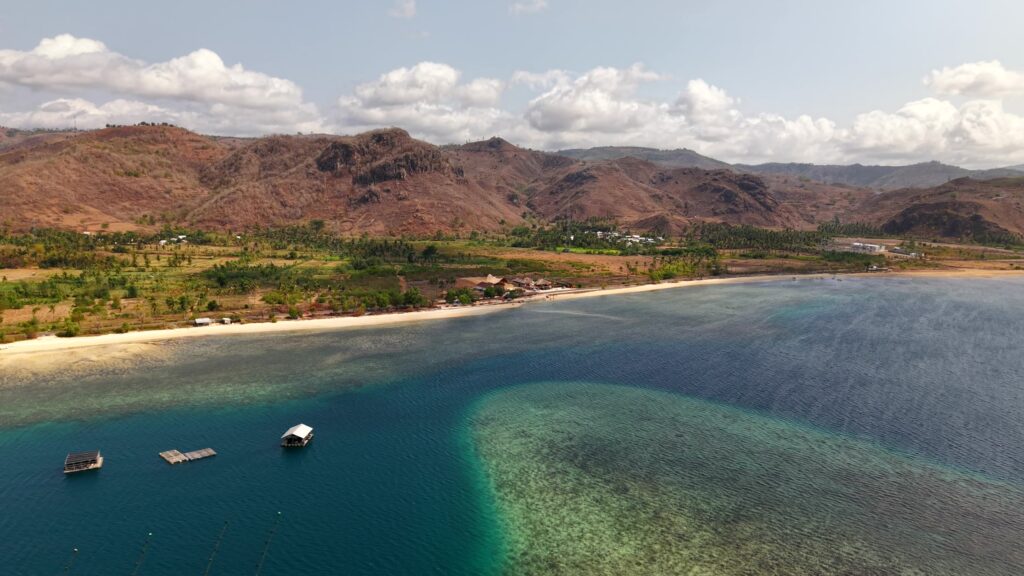
About 1 hour 10 minutes by car from Lombok International Airport. We offer a stay programme of 3 nights/4 days or more, with island trips by local boat and sunsets at SAKURA CAFE. The villas are due to be completed in stages from 2027.
Finally, a few words about who we are.
Semelar Beach Village (Sekotong, Lombok)
We wrote and checked this guide as people who run accommodation in Sekotong on Lombok. Information about Bali is based on statistics and announcements from official and public bodies, and our policy was not to write anything we could not state with confidence.
The sources we used are listed below.
Sources for this article
- Bali provincial tourism office, official announcement “Pungutan Wisatawan Asing Rp 150 Ribu per Orang” (February 2024)https://disparda.baliprov.go.id/pungutan-wisatawan-asing-rp-150-ribu-per-orang-untuk-pelindungan-alam-budaya-dan-tingkatkan-kualitas-kepariwisataan-bali/2024/02/
- Love Bali official website (the Bali provincial government’s portal for the foreign tourist levy)https://lovebali.baliprov.go.id/
- Bali Governor Regulation No. 2 of 2024 (the legal basis for the foreign tourist levy)https://lovebali.baliprov.go.id/gubernur/v4/9._Bali%20Governor_Regulation_Number_2_of_2024.pdf
- Statistics Bali (BPS), “Kunjungan wisman langsung ke Bali Jan–Des 2025 naik” (released 2 February 2026)https://bali.bps.go.id/id/news/2026/02/02/347/kunjungan-wisman-langsung-ke-bali-jan-des-2025-naik–dengan-australia-menjadi-negara-asal-terbanyak-.html
- Statistics Bali (BPS), “Perkembangan Pariwisata Provinsi Bali Januari 2026” (star-rated hotel room occupancy 56.67%, 60.28% a year earlier; the page could no longer be opened in October 2026)https://bali.bps.go.id/id/pressrelease/2026/03/02/718022/tourism-overview-of-bali-province–december-2026.html
- Indonesian Government Regulation (PP) No. 36 of 2024 (the legal basis for revised national park entrance fees)https://www.peraturan.go.id/id/pp-no-36-tahun-2024
- Sanur Port official website (departure port for fast boats to the Nusa islands and the Gili Islands)https://www.sanurport.co.id/
- Bali Ferries (Sanur to Nusa Penida about 40–45 minutes, to Nusa Lembongan about 30–35 minutes; to the Gilis and Lombok 3–5 hours)https://www.baliferries.com/sanur
- Gili Ferries (average fast-boat time from Padang Bai to Gili Trawangan about 1 hour 45 minutes)https://www.giliferries.com/fast-boat/padangbai/gili-trawangan
- Published information on the history of the USAT Liberty (the Tulamben wreck)https://en.wikipedia.org/wiki/Tulamben
- Flight times between Denpasar (DPS) and Lombok (LOP) are guides based on airlines’ official timetables, as summarised in our article “How to get from Bali to Lombok” (as of August 2026)
- What we say about Lombok, the Gili Islands and Sekotong is first-hand information from Semelar Beach Village (PT Lombok Next Partner) operating on site (as of August 2026)