“I saw magic mushroom signs and menus on Gili Trawangan.” “Are cannabis and mushrooms tolerated on the Gili Islands?” If you read up on the Gilis, you will come across talk like this. The short answer is that in Indonesia both the active substances in magic mushrooms and cannabis are “Category 1” narcotics, the category with the heaviest penalties. The Gili Islands are not treated any differently: in 2024 people selling mushroom drinks on Gili Trawangan were arrested, and in 2026 people supplying mushrooms to the island were arrested too.
This guide brings together only what we could confirm as of October 2026, from Indonesia’s health ministry regulation, the texts of the narcotics law and the criminal code, explanatory articles published by the Supreme Court, local reports of police arrests, and public information from government travel advisories. It is a safety guide for travellers, so it does not cover how to use or obtain drugs in any way.
Indonesia’s drug penalties were reorganised in January 2026, and which article applies to a given case is decided by investigators and the courts. Please read the sentences in this guide as “the maximum written in the law”. Where we could not fully confirm something on official pages, we say so at that point.
It is written for people heading to the Gili Islands or Lombok, often via Bali, especially those planning to go out to bars or parties at night, and for family and friends seeing someone off to the Gilis.
Information as of October 2026
What this guide covers
- ✓Why you see magic mushroom signs and menus on the Gilis, and the arrests that have actually happened
- ✓How Indonesian law treats them, and the maximum sentences (after the January 2026 changes)
- ✓Reports of foreigners being arrested, and how your home country’s law can also reach acts abroad
- ✓How to say no if you are offered drugs, and how to guard against spiked drinks
- ✓Who to contact if you feel unwell or get into trouble
IN SHORT
As of October 2026, the active substances in magic mushrooms (psilocin and psilocybin) and cannabis are “Category 1” narcotics under Indonesian law, the category with the heaviest penalties. Using them yourself carries up to 4 years, possessing them up to 12 years, and selling, buying or acting as a go-between up to 20 years or life, with the death penalty set out for cases such as large quantities. The same law applies on the Gili Islands, and people selling mushrooms on Gili Trawangan were arrested in both 2024 and 2026. Your home country’s law may also apply to what you do abroad, so check it before you travel. If you are offered drugs, say no briefly and walk away, and do not drink anything when you do not know what is in it.
Why do you see magic mushroom signs and menus on the Gilis?
Because there are shops and people who sell to tourists knowing it is illegal, not because it is legal. According to local reports, in February 2024 West Nusa Tenggara provincial police arrested two young men who were selling magic mushrooms mixed into pineapple juice at a cafe on Gili Trawangan. The police said that while sellers used to work in secret using code words, in this case they were selling openly (Inside Lombok, 4 April 2024).
In August of the same year, the owner of a shop on the island was arrested for selling mushrooms to foreign tourists as fruit-flavoured juice. In connection with this case, bar staff and a manager, and a shop cashier, had also been arrested in February and June 2024. The articles applied to the shop owner included Article 114 of the narcotics law (detikTravel, 19 September 2024).
In September 2026, a seller was arrested in a rented room on Gili Trawangan, which led police to a growing site in Bentek village, Gangga district, North Lombok. The 407.63 grams of mushrooms seized were reportedly destined for small bars and entertainment venues on the island. Reports put the number arrested at five (Metro TV) or six (detikBali), and police said the mushrooms contained a substance classed as a Category 1 narcotic (both 16 September 2026).
Being on a sign or a menu does not mean there is no enforcement. The US State Department’s travel advisory for Indonesia (July 2026) says drug use, possession and trafficking can bring heavy fines, long prison sentences and the death penalty, and that cannabis and products containing CBD or THC are illegal even with a medical prescription. Other governments say the same: the safety guide of Japan’s Consulate-General in Denpasar (January 2025), for example, warns that even if a dealer says something is “legal”, it often is not, and notes that police carry out sting operations and enforce the law strictly against foreigners.
How does Indonesian law treat magic mushrooms and cannabis?
Both are Category 1 narcotics. Indonesia’s narcotics law (Law No. 35 of 2009) divides narcotics into Categories 1 to 3, and the list of specific substances is set by health ministry regulation. In the list in Health Minister Regulation No. 20 of 2018, psilocin (psilosina) and psilocybin (psilosibina), the substances in magic mushrooms, and cannabis (all parts of the plant, including seeds and fruit) are all in Category 1.
The penalties differ by category, with Category 1 the heaviest. For example, the maximum for using a narcotic yourself is 4 years for Category 1, 2 years for Category 2 and 1 year for Category 3 (Article 127 of the narcotics law). The articles applied differ from case to case: in the 2024 shop owner case, Article 114 (selling, buying and similar) and Article 112 (possession of non-plant forms) were cited; in the September 2026 case, Article 114 and Article 111 (plant forms).
On 2 January 2026, Law No. 1 of 2026 on the adjustment of criminal penalties took effect, and together with the new criminal code (Law No. 1 of 2023), some narcotics offences moved into the criminal code. According to an explanatory article on the Supreme Court’s news site (MARINews), the minimum sentences that used to apply to offences such as possession, such as “at least 4 years”, have been removed, so judges can set sentences according to the circumstances. The maximums, however, remain heavy, as the table below shows.
← Scroll the table sideways
| Act (Category 1) | Article | Maximum sentence |
|---|---|---|
| Using it yourself | Narcotics law, Article 127(1) | 4 years in prison |
| Possessing or growing plant forms | Narcotics law, Article 111(1) | 12 years in prison, fine |
| As above, over 1kg or more than 5 plants | Narcotics law, Article 111(2) | Life or 20 years in prison |
| Possessing non-plant forms | Criminal code, Article 609 (as amended by Law No. 1 of 2026) | 12 years in prison, fine |
| Selling, buying or acting as a go-between | Narcotics law, Article 114(1) | Life or 20 years in prison, fine |
| Selling and similar, in cases such as large quantities | Narcotics law, Article 114(2) | Death, life or 20 years in prison |
*As of October 2026. Articles checked in the legal database Pasal.id and in explanatory articles from the Supreme Court and judicial sources. Minimum sentences were removed by Law No. 1 of 2026, leaving only the maximums. Fines may be imposed together with or instead of prison; the fine bands are not shown.
Figure: Category 1 narcotics offences and maximum sentences (as of October 2026)
Are foreign travellers arrested too?
Yes. In 2017 a foreign man was arrested at a hotel in Senggigi on Lombok. He was on holiday, and the drugs seized were small amounts: 0.56 grams of ecstasy, 0.29 grams of cocaine and 0.62 grams of methamphetamine. He reportedly said he had obtained them on Gili Trawangan (JPNN, 1 May 2017).
In March 2019, a search on Gili Trawangan led to the arrest of two people, including a US citizen. About 1.21kg of cannabis and magic mushrooms, among other things, were seized, and the suspects were investigated under Article 114 of the narcotics law (Tempo, 31 March 2019).
Government travel advice is consistent on this. The US State Department warns that even small quantities may bring penalties far beyond what visitors would expect at home. Japan’s Ministry of Foreign Affairs (safety information updated 30 September 2025) likewise says Indonesian courts take a very strict line on drug offences, handing down prison sentences and even the death penalty to foreigners, and the Japanese Consulate-General’s safety guide mentions sentences of death and life imprisonment handed down to foreigners.
The Australian government’s travel advice (Smartraveller) notes that using or possessing even small amounts, including cannabis, can lead to heavy fines or prison, and that Australians have got into trouble with local police after taking magic mushrooms (especially in Bali).
It is also risky to assume that “if I only used it, I will just get rehab”. Article 127 of the narcotics law requires medical and social rehabilitation for people proven to be victims of drug abuse, but that is decided after the matter has been dealt with as a case; it does not mean you avoid arrest.
Good to know
- “It’s fine on this island” is not a basis for anything: people dealing in mushrooms were arrested on Gili Trawangan in both 2024 and 2026.
- Buying is an offence too: Article 114(1) of the narcotics law covers not only selling but also buying and acting as a go-between.
- Do not believe anyone who says it is legal: the US State Department says cannabis and CBD products are illegal in Indonesia even with a prescription, and Japan’s Consulate-General in Denpasar warns travellers not to trust what dealers say.
Can your home country’s law apply to what you do abroad?
For some nationalities, yes. Some countries apply their drug laws to acts committed outside their borders, so possessing or buying cannabis in Indonesia could be an offence under your own country’s law as well as under Indonesia’s. Japan is one example: its narcotics law, which has covered cannabis since December 2024, applies the offence of possessing or receiving narcotics to acts committed abroad (Articles 66 and 69-6 of the Narcotics and Psychotropics Control Act, and Article 2 of the Penal Code).
Rules differ from country to country, so check your own country’s law before you travel. Either way, because these substances are Category 1 narcotics under Indonesian law, the starting point is not to touch them while you are there.
If you are offered drugs, how do you say no and leave?
Say no briefly and clearly, then leave. There is no need to explain why, or to ask about prices or what it is. “No, thank you” is enough, or in Indonesian, “Tidak, terima kasih”.
Japan’s Consulate-General in Denpasar, in its safety guide, advises not buying drugs out of curiosity, staying away from places where drugs seem to circulate, and ignoring pushy sellers (including those pushing drugs) and touts. Do not order a drink that the menu says contains mushrooms, even in the form of a juice or shake. In the 2024 arrests, mushrooms were being sold mixed into pineapple and other fruit juices.
If someone you are travelling with shows interest, share what this guide says about the law and leave, for example by moving to another place or going back to your accommodation. It is also wise not to keep talking to the seller, or to pick things up and take photos.
Figure: What to do if you are offered drugs
Spiked drinks and methanol in bootleg alcohol
Even if you do not order anything, there is a risk of taking something without knowing it. Smartraveller says drink spiking can happen anywhere and asks travellers not to leave food and drinks unattended. It also says methanol, which can be produced by poor-quality alcohol production, is highly toxic and even one drink can be fatal, and recommends drinking only sealed, branded drinks.
On Gili Trawangan on New Year’s Eve 2012, a 19-year-old Australian fell ill after drinking cocktails at a bar and later died of methanol poisoning, according to reports (ABC, 10 January 2013). The US State Department’s travel advisory (July 2026) also warns of drinks mixed with methanol or other deadly chemicals in tourist-area nightlife, and says drink spiking has been reported in Bali, Lombok and the Gili Islands. For where you can drink, see our guide to alcohol on Lombok.
A word, too, on the health risks of magic mushrooms themselves. The Indonesian health information site Alodokter (September 2026) lists hallucinations and difficulty telling what is real, strong anxiety and panic, dangerous behaviour caused by impaired judgement (going to dangerous places, driving and so on), nausea and a racing heart, and says the effects vary from person to person and are hard to predict. On a small island surrounded by sea and jetties, impaired judgement can lead to accidents on its own.
Who to contact if you feel unwell or get into trouble
If you feel something is wrong with your body, put medical care first. Ask the staff at your accommodation or people around you for help, and tell the doctor exactly what you consumed; it helps them decide on treatment. In the article reporting the methanol case above, the family stressed the importance of early treatment. For hospitals and travel insurance on Lombok, see our guide to hospitals, medical care and insurance.
- ✓Police 110 (or 112 from a mobile), ambulance 118 or 119, fire 113 (the numbers listed on Indonesia’s official tourism website)
- ✓Have you noted the contact details of your country’s embassy or consulate that covers Lombok and the Gilis?
- ✓Have you written down the address and phone number of your accommodation and your travel insurance contact on paper, separately from your phone?
These are national numbers, but we could not confirm whether they connect in the same way from the Gili Islands. When you arrive on the Gilis, it is reassuring to ask your accommodation where the nearest clinic is. For safety in general, see also our guide to safety on Lombok.
A word from us in Sekotong
When you go out for a drink at night, agree on a time to head back and where you are staying with the people you are with before you go, and do not go along with invitations from strangers on your own. You cannot see what goes into juices, shakes and cocktails made at the bar. If you feel at all unsure, choosing drinks in sealed bottles or cans keeps things simple. Write your embassy’s number and your accommodation’s address on paper and keep it in your wallet, so you can still get in touch if you lose your phone.
Nights on the Gilis, and options if you want somewhere quiet
The downside first: Gili Trawangan is the liveliest of the three islands at night, with plenty of bars and parties, and as this guide has shown, there have been venues caught selling mushroom drinks. If you are where the nightlife is, you may well be offered something. If you are not confident you can say no on the spot, or are unsure about the people you are travelling with, it is safer to decide how you will spend your evenings from the start.
That said, the Gilis are not only about the nights. If your days revolve around snorkelling or cycling round the island, Gili Trawangan has plenty to offer, and Gili Air and Gili Meno are calmer islands. You can compare the islands in our Gili Trawangan guide.
If quiet is your priority, another option is the Secret Gilis (South Gilis) off Sekotong in southwest Lombok. They are far less touristy than the three northern Gilis, with quiet seas where fishing-village life comes first. We cover the differences in Gili Islands vs the Secret Gilis and in our guide to the Secret Gilis. We run a beach cafe and a market with local Sasak people in a fishing village in Sekotong.
Frequently asked questions
Q. Are magic mushrooms legal on the Gili Islands?
No. Psilocin and psilocybin, the substances in the mushrooms, are Category 1 narcotics under Health Minister Regulation No. 20 of 2018. The same law applies on the Gilis, and people selling them on Gili Trawangan were arrested in 2024 and 2026. Appearing on a sign or a menu does not mean something is legal.
Q. Is it an offence if it is only a small amount, or only once?
Yes. The maximum for using a Category 1 narcotic yourself is 4 years in prison (Article 127 of the narcotics law). In 2017 a foreigner holding very small amounts of drugs was arrested at a hotel in Senggigi. Smartraveller also says using or possessing even small amounts can lead to heavy fines or prison.
Q. I am worried about my drink being spiked without my knowing.
Smartraveller says drink spiking can happen anywhere and asks travellers not to leave food and drinks unattended. Do not order juices or shakes described as containing mushrooms, and if you are unsure, choose sealed, branded bottles or cans. The same approach also helps you avoid the risk of methanol.
Q. Who should I contact if I feel unwell?
First ask the staff at your accommodation or people around you for help, and put medical care first. Indonesia’s official tourism website lists ambulance 118 or 119 and police 110 (or 112 from a mobile). If you need help as a foreign national, contact your country’s embassy or consulate.
Summary
Magic mushroom signs and menus on the Gili Islands are not there because it is legal. In Indonesia both the substances in the mushrooms and cannabis are Category 1 narcotics, and as of October 2026 the maximum sentences are 4 years for using them yourself, 12 years for possession, and 20 years or life for selling, buying or acting as a go-between, with the death penalty for cases such as large quantities. Minimum sentences were removed in January 2026, but arrests on Gili Trawangan continued in both 2024 and 2026.
Your home country’s law may also apply to what you do abroad. If you are offered drugs, say no briefly and walk away, and do not drink anything when you do not know what is in it. If you feel unwell, put medical care first, and if you get into trouble, contact your embassy or consulate. Laws and how they are enforced can change, so check your government’s latest travel advice before you go.
Related reading
- Is Lombok Dangerous? An Honest Look at Safety from a Local PerspectiveCrime, earthquakes and areas to be careful in, honestly summarised from the ground
SEMELAR BEACH VILLAGE
Come and spend some time in the Sekotong village we call home
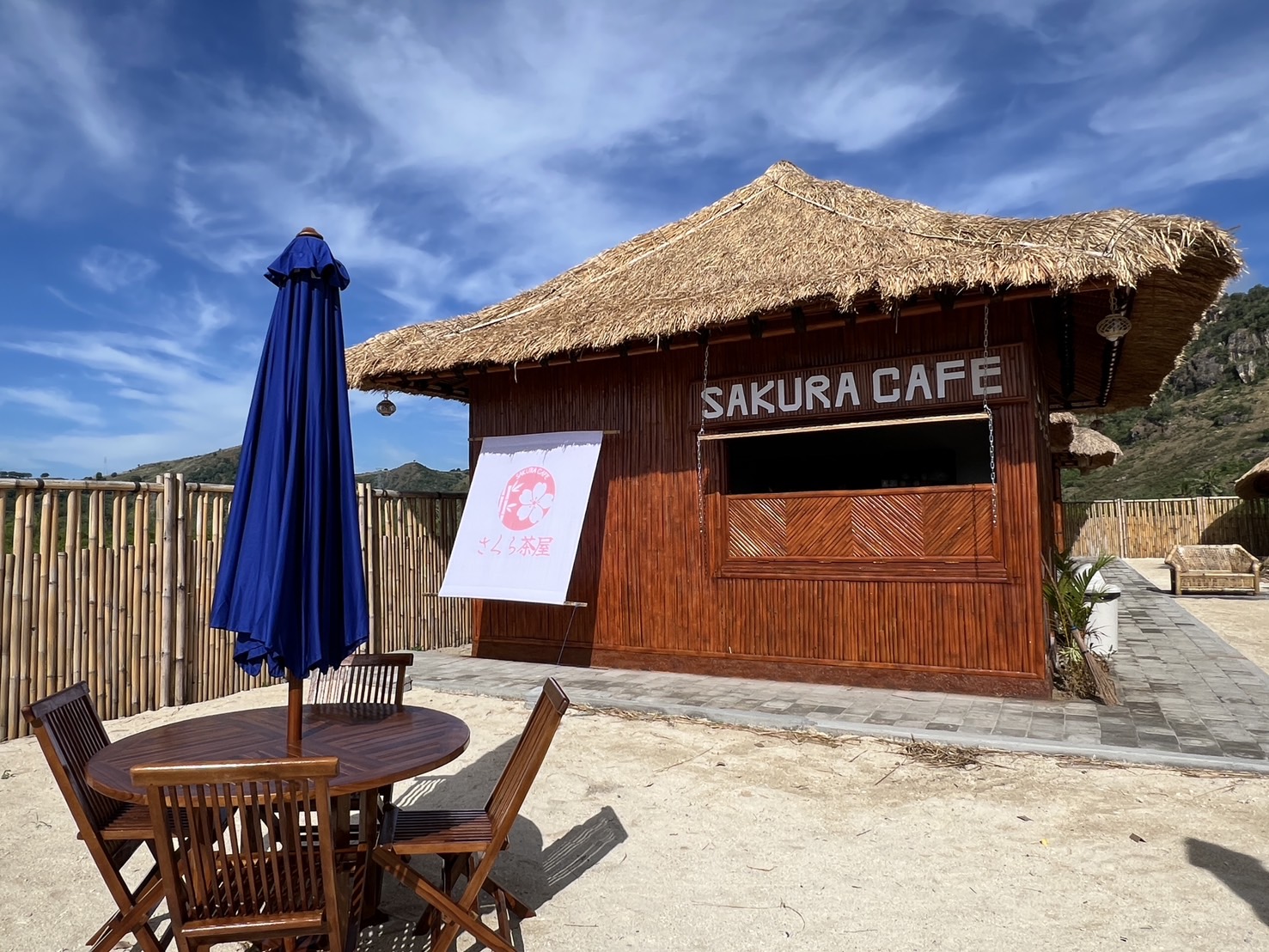
About 1 hour 10 minutes by car from Lombok International Airport. We offer a stay programme of 3 nights/4 days or more, with island trips by local boat and sunsets at SAKURA CAFE. The villas are due to be completed in stages from 2027.
Sources for this guide
- Indonesian Ministry of Health, Health Minister Regulation No. 20 of 2018 on changes to the classification of narcotics (lists psilocin, psilocybin and cannabis in Category 1)https://regulasi.bkpk.kemkes.go.id/detail/d4abd41e-9982-4186-801b-e82b8d22ebda/unduh
- Pasal.id, Narcotics Law (Law No. 35 of 2009), Article 127https://pasal.id/peraturan/uu/uu-no-35-tahun-2009/pasal-127
- Pasal.id, Narcotics Law (Law No. 35 of 2009), Article 111https://pasal.id/peraturan/uu/uu-no-35-tahun-2009/pasal-111
- Pasal.id, Criminal Code Article 609 under Law No. 1 of 2026 (adjustment of penalties)https://pasal.id/peraturan/uu/uu-no-1-tahun-2026/pasal-609
- Supreme Court of Indonesia, MARINews, “Implications of the penalty adjustment law for narcotics offences and the removal of special minimum sentences” (28 January 2026)https://marinews.mahkamahagung.go.id/artikel/implikasi-uu-penyesuaian-pidana-terhadap-perbuatan-pidana-0NL
- Dandapala (magazine of the Supreme Court’s Directorate General of General Courts), “The removal of special minimum sentences in narcotics offences” (9 January 2026)https://dandapala.com/article/detail/hilangnya-ancaman-minimum-khusus-dalam-tindak-pidana-narkotika
- Hukumonline, “Understanding the penalty adjustment law (part 2)” (9 January 2026)https://www.hukumonline.com/berita/a/uu-penyesuaian-pidana–bagaimana-memahaminya-bagian-kedua-lt69607e3e6aa09
- detikBali, “Six magic mushroom growers and sellers supplying Gili Trawangan arrested” (16 September 2026)https://www.detik.com/bali/hukum-dan-kriminal/d-8666079/6-pembudi-daya-pengedar-magic-mushroom-ke-gili-trawangan-ditangkap-polisi
- Metro TV, “Police uncover magic mushroom growing in North Lombok” (16 September 2026)https://www.metrotvnews.com/read/bJECjd4A-polisi-bongkar-budi-daya-magic-mushroom-di-lombok-utara
- Inside Lombok, “Two young men selling magic mushroom juice on Gili Trawangan arrested by provincial police” (4 April 2024)https://insidelombok.id/berita-utama/jual-jus-magic-mushroom-di-gili-trawangan-dua-pemuda-diciduk-polda-ntb/
- detikTravel, “Shop owner arrested for selling mushrooms to tourists on Gili Trawangan” (19 September 2024)https://travel.detik.com/travel-news/d-7548060/jualan-mushroom-ke-turis-gili-trawangan-pemilik-minimarket-diciduk-polisi
- JPNN, “New Zealand national arrested by police” (1 May 2017)https://www.jpnn.com/news/warga-negara-selandia-baru-diciduk-polisi
- Tempo English, “Police Nab American National for Alleged Drug Trafficking” (31 March 2019)https://en.tempo.co/amp/1191051/police-nab-american-national-for-alleged-drug-trafficking
- US Department of State, “Indonesia Travel Advisory” (Level 2, issued 7 July 2026; drugs, drink spiking and methanol)https://travel.state.gov/en/international-travel/travel-advisories/indonesia.html
- Indonesia.travel (Indonesia’s official tourism website), “Staying safe in Indonesia” (emergency numbers)https://www.indonesia.travel/gb/en/general-information/staying-safe-in-indonesia
- Japan Ministry of Foreign Affairs, Overseas Safety website, “Indonesia: basic safety information” (in Japanese, updated 30 September 2025)https://www.anzen.mofa.go.jp/info/pcsafetymeasure_002.html
- Consulate-General of Japan in Denpasar, safety guide (in Japanese, January 2025)https://www.denpasar.id.emb-japan.go.jp/files/100628602.pdf
- e-Gov (Japan), Narcotics and Psychotropics Control Act, Article 66https://laws.e-gov.go.jp/api/1/articles;lawId=328AC0000000014;article=66
- e-Gov (Japan), Narcotics and Psychotropics Control Act, Article 69-6https://laws.e-gov.go.jp/api/1/articles;lawId=328AC0000000014;article=69_6
- e-Gov (Japan), Penal Code, Article 2 (crimes committed outside Japan by anyone)https://laws.e-gov.go.jp/api/1/articles;lawId=140AC0000000045;article=2
- Japan Ministry of Health, Labour and Welfare, notice on the entry into force of the amended Cannabis Control Act and Narcotics and Psychotropics Control Act (in Japanese, 11 September 2024; in force 12 December 2024)https://www.mhlw.go.jp/content/11120000/001302699.pdf
- Smartraveller (Australian Government), “Indonesia”https://www.smartraveller.gov.au/destinations/asia/indonesia
- ABC News, “Parents warning over methanol death” (10 January 2013)https://www.abc.net.au/news/2013-01-10/parents-warning-over-methanol-death/4459746
- Alodokter, “Magic mushrooms, the hallucination-inducing fungi to watch out for” (9 September 2026)https://www.alodokter.com/magic-mushroom-jamur-pemicu-halusinasi-yang-perlu-diwaspadai