“Is everyone on Lombok Muslim?” “Lombok is right next to Bali, so why isn’t it a Hindu island?” “I keep seeing the term Wetu Telu. What is it?” Questions like these come up as soon as you start reading about religion before a trip to Lombok.
In short, the great majority of people on Lombok are Muslim, and Balinese Hindus live together in the west, in Mataram and West Lombok Regency. In Bayan in the north, a distinctive form of belief tied to local custom, known as Wetu Telu, has been handed down.
This article draws only on sources we opened and checked: news reports compiling government statistics, academic journals and theses, Indonesian and international media, and the Indonesian tourism board’s pages. We could not find official figures for religion on Lombok alone, so we use the figures for the whole province and the number of Hindus in each regency and city. Researchers and the people of Bayan themselves see Wetu Telu differently, and we set out those differences as they are.
This guide is for people thinking about a trip to Lombok or the Gili Islands who want to understand the local religions. The focus is on the religions themselves rather than the finer points of etiquette.
As of October 2026
What this article covers
- ✓The religious make-up of West Nusa Tenggara province, which includes Lombok, and where Hindus live
- ✓Why Lombok is called the island of a thousand mosques, and how Islam arrived
- ✓What Wetu Telu is, and how outside accounts differ from those of its own people
- ✓Hindu temples in the west, such as Pura Meru and Pura Lingsar, and their history
- ✓How Lombok differs from Bali, and what travellers should keep in mind
In short
In West Nusa Tenggara, the province that includes Lombok, 2024 government data show 96.91% of residents are Muslim and 2.36% Hindu. Most Hindus live in Mataram City and West Lombok Regency, where temples survive from the time of the Balinese royal house that ruled here in the 18th century. Wetu Telu in Bayan, in the north, has been described in research as a mix of Islam and indigenous beliefs, while people from Bayan say it is a way of thinking rather than a religion and that they keep the pillars of Islam, so it cannot be summed up in a word. If travellers pay attention to dress, mosque visits, the adhan (call to prayer), Ramadan and alcohol, they will rarely run into problems.
What religions do people on Lombok follow?
The great majority of people on Lombok are Muslim. Because we could not find official figures for Lombok alone, we look at the province it belongs to, West Nusa Tenggara (Lombok and Sumbawa). According to 2024 figures that the Indonesian data journalism site Databoks reported from Ministry of Religious Affairs data, of the province’s roughly 5.67 million people, 96.91% (about 5.49 million) were Muslim, 2.36% (about 134,000) Hindu, 0.3% Buddhist, 0.25% Protestant and 0.18% Catholic.
Figure: Religion in West Nusa Tenggara province (2024)
Where Hindus live becomes clear from the Ministry of Home Affairs civil registry (Dukcapil) figures for each regency and city. In figures reported by Databoks as of 31 December 2024, the Hindu population in Lombok’s five regencies and city was 63,067 in Mataram City, 38,656 in West Lombok Regency, 9,078 in North Lombok Regency, 2,996 in Central Lombok Regency and 681 in East Lombok Regency. That is about 114,000 in total, of whom about 90% live in Mataram City and West Lombok Regency. By contrast, in East Lombok Regency 99.94% of its roughly 1.43 million people are Muslim.
Figure: Hindu population by regency and city on Lombok (as of 31 December 2024)
By ethnic group, most of the island’s people are Sasak, with Balinese in the west, Sumbawans in the east and Chinese Indonesians in Mataram (Encyclopaedia Britannica). The great majority of Sasak people are Muslim, and most Balinese are Hindu.
Why is Lombok called the island of a thousand mosques?
In Indonesian, Lombok is called Pulau Seribu Masjid, the island of a thousand mosques. The Indonesian Cabinet Secretariat’s website also used the name to describe the island in a 2015 article about Lombok winning international awards. The “thousand” is not an exact count; it simply means a great many.
On the origin of the name, an explainer on the Indonesian news site Good News From Indonesia (January 2026) says it began in the 1970s when the Ministry of Religious Affairs’ Director General for Islamic Community Guidance visited the island and noticed how many mosques there were, but we could not find a primary source to confirm this.
The same article cites 2014 Statistics Indonesia figures of 5,348 mosques in the province, 1,460 of them in Central Lombok Regency (we could not see the original table, and the figures are more than ten years old). It explains that mosques also serve as places where children learn the Quran and where villagers meet to discuss local matters.
The mosque travellers are most likely to see is the Hubbul Wathan Grand Mosque (Masjid Hubbul Wathan) at the NTB Islamic Center in Mataram, the provincial capital. According to NU Online (March 2018), it opened to the public on 16 December 2016, and its 99-metre tower, named the Asmaul Husna tower after the 99 beautiful names of God, can be climbed by lift.
The same report said non-Muslims could enter the second floor of the mosque, wearing a robe that covers the body. In 2018 the tower cost Rp10,000 (about US$0.56) for foreigners and Rp5,000 for Indonesian visitors, but we could not confirm the current fee or visiting conditions.
In 2015, at the World Halal Travel Summit in Abu Dhabi in the United Arab Emirates, Lombok won first place as World’s Best Halal Tourism Destination and World’s Best Halal Honeymoon Destination (Cabinet Secretariat website, October 2015).
The Cabinet Secretariat article named Muslim-friendly hotels and airport, prayer facilities and halal food as the island’s strengths.
When and from where did Islam come to Lombok?
There are several theories about when and how Islam arrived. An article on the Indonesian news site tirto.id (April 2023), drawing on researchers’ summaries, presents three: that it came through trade with Muslim merchants in the 13th to 14th centuries; that Sunan Prapen from eastern Java brought it in the late 16th to early 17th century; and that merchants and sailors from Makassar brought it from the east via Sumbawa in the 16th century.
According to the same article, the first to come under Islamic influence, and the largest Islamic kingdom, was Selaparang in the east, which became Muslim in the late 16th century and declined in the 18th. Bayan in the north is described in a 2005 paper in the Indonesian journal Ulumuna as the traditional gateway through which Islam entered. In Lingsar in the west, ceremonies continue that are linked to Raden Mas Sumilir, a scholar said to have brought Islam from Demak in central Java in the 15th century (The Jakarta Post, 2010). Different parts of the island have their own stories of how Islam came.
What is Wetu Telu?
Wetu Telu (also written Waktu Telu) is a form of belief and custom handed down mainly among the people of Bayan in the north. Mainstream Islamic practice, with prayer five times a day, is called Waktu Lima by contrast. However, descriptions of Wetu Telu differ greatly between researchers and the people themselves.
A typical scholarly description can be found in the 2005 Ulumuna paper. It describes Wetu Telu as combining elements of Islam, Hinduism and indigenous belief. For the origin of the name, besides the theory that only three pillars are practised (the declaration of faith, prayer and fasting), it lists the theory of the three ways life comes into being (birth, eggs and seeds) and the theory of three sources (the Quran, the hadith and consensus).
The same paper says religious duties are carried out mainly by religious leaders called kyai, and lists the prayers they perform as the prayers for the end of the fast and for the Festival of Sacrifice, and funeral prayers. It also says the name became prominent after 1890 under Dutch rule, tied to a policy of separating it from orthodox Islam.
The people themselves put it differently. In a VICE article (2017), a leader in Bayan says telu (three) refers not to the number of prayers but to three places: the mother’s womb, this world and the next. He rejects the outside view that they fast for only one day.
In the same article, a young resident of Bayan says Wetu Telu is not a religion but a way of thinking, and a man acting as guide says that, like many Sunni Muslims in Indonesia, they keep the pillars of Islam, practising religion and custom both, but separately. The anthropologist Erni Budiwanti says the people of Bayan now pray five times a day but have not abandoned their old customs.
A 2024 master’s thesis at the International Islamic University Malaysia reports that practitioners are divided between seeing it as a Muslim tradition and as a form of Islam, and that some say they observe all five pillars. It argues that the Wetu Telu versus Waktu Lima division dating from Dutch times lacked the practitioners’ own perspective, and that their culture is under pressure from a trend towards making Muslims more uniform. Sources describe present-day practice differently, and this article does not try to settle the question.
A contributed article on an Indonesian news site (2024) also notes that some Sasak people still keep beliefs that predate Islam. None of these forms of belief is a tourist show. When visiting Bayan or similar places, go with a local guide and ask on the spot whether you may photograph ceremonies or enter. How to visit traditional Sasak villages is covered in our article on the Sasak people and traditional villages.
Why are there more Hindus in the west? Pura Meru and Pura Lingsar
There are more Hindus in the west because Balinese royal houses ruled the area for a long time. The tirto.id article cites the view of researchers that Selaparang was defeated in a war in 1723 and Lombok came under Balinese political influence. According to Encyclopaedia Britannica, the Balinese set up four kingdoms on the island, and Balinese rule ended when the Dutch intervened in 1894. Temples and gardens from that era survive around Cakranegara in Mataram.
The era of Balinese rule, the 1894 Lombok War and what came before and after are set out in two timelines, from the 13th century to 2018, in our article on Lombok’s history.
Pura Meru is the largest Hindu temple on Lombok. The Indonesian tourism board dates it to the 18th century and describes its three meru (multi-tiered towers) representing the three gods of the Trimurti. CNN Indonesia (2018) reports that Anak Agung Ngurah Karangasem built it in 1720, and that the same man created the nearby Mayura Garden (Taman Mayura) in 1744.
Pura Lingsar, in Lingsar about 9 km east of Mataram, is an unusual place where a Hindu temple (Pura Gaduh) and the Kemaliq, where Sasak Muslims hold their rituals, stand side by side in the same grounds. According to The Jakarta Post (2010), the temple was built in 1759 in the reign of King Anak Agung Gede Ngurah, and the area around it has been a protected heritage site since the 1990s.
Every year an event called Perang Topat is held here. According to The Jakarta Post (2010), from about 4pm on the 15th day of the seventh month of the Sasak calendar (the 15th day of the sixth month in the Balinese Hindu calendar), Hindus on the Gaduh side and Muslims on the Kemaliq side throw rice cakes wrapped in palm leaves (topat) at each other. The thrown cakes are scattered on rice fields or taken to shops and markets as a prayer for a good harvest and good business (Hindu Press International reported the same in 2011).
According to The Jakarta Post, the procession uses water buffalo, out of respect for both faiths: cows are sacred to Hindus and Muslims do not eat pork. The date follows the calendar and changes every year, and we could not confirm the date for 2026.
How is Lombok different from Bali?
Bali is a majority-Hindu island where roadside offerings are part of everyday life. On Lombok, the mosque is at the centre of the village and the adhan sounds five times a day. There are Hindu temples in the west, but the island as a whole looks and feels like an Islamic island.
The calendar is what most often affects travel plans. In the Indonesian government’s 2027 public holidays (announced on 15 September 2026), Nyepi, the Balinese Hindu new year, falls on 8 March, and Lebaran, the end of the fast, on 10 and 11 March. Ramadan begins on 8 February 2027 according to the calendar of the Islamic organisation Muhammadiyah. The government’s start date is set by decision of the Minister of Religious Affairs, and we could not confirm it as of October 2026.
On Nyepi, Bali’s airport closes and people may not go out, but that is a Bali rule; as we have summarised on this site, shops and transport on mostly Muslim Lombok usually run as normal. How to plan when the two occasions fall close together is covered in our article on travelling during Ramadan and Nyepi.
What should travellers keep in mind?
Travellers do not have to follow Islamic rules, but they are expected to respect local life. The table below gives the main points by situation. Closing times on Fridays and during Ramadan are covered in our guide to Friday prayer, holidays and Ramadan in Lombok.
← Scroll the table sideways
| Situation | What to keep in mind |
|---|---|
| Dress | In villages and near mosques, wear clothes that cover your shoulders and thighs. Swimwear is usually fine on the beach and inside resorts |
| Visiting a mosque | Take off your shoes at the entrance. Women should bring a scarf to cover their hair (some mosques lend them). Do not photograph people at prayer. Ask the staff where you may go |
| Adhan | Sounds five times a day, including before dawn. If noise bothers you, bring earplugs |
| Friday midday | During prayer time, local eateries, small shops and money changers may close for one to two hours |
| Ramadan | Travellers do not have to fast. Keep eating and drinking in public low-key during the day, and do not offer food to people who are fasting |
| Alcohol | Drink at bars and hotels in tourist areas. Do not drink in public places, such as near places of worship |
| Hindu temples | Check at the entrance where you may go and what to wear. During ceremonies, do not walk in front of worshippers, and ask before taking photos |
A rough guide based on our existing articles, as of October 2026. Rules may differ from one mosque or temple to another.
Caution
- Holiday and fasting dates can shift by a day: in 2027, Lebaran falls on 9 March by the Muhammadiyah calendar and on 10 and 11 March as government holidays. If you are travelling around then, allow a day either side.
- Do not argue about religion: people may ask about your faith, but it is wise to avoid anything that sounds like judging someone else’s beliefs.
A note from Sekotong
At midday on Fridays, and around sunset during Ramadan (when the fast is broken), drivers and boatmen can be hard to book. If an airport transfer or island trip falls in those hours, agree an exact time by the day before so there is no rush on the day. When walking through the village, put on something that covers your shoulders and thighs once you are off the beach.
Who will enjoy time on an Islamic island, and who may not
The downsides first. Lombok is not an island where you walk around watching temple rituals and offerings every day, as in Bali. The pre-dawn adhan may wake you, local eateries in rural areas close at midday during Ramadan, and places to drink are limited to tourist areas. If you want to bar-hop late into the night or tour temple rituals and festivals, Bali will suit you better.
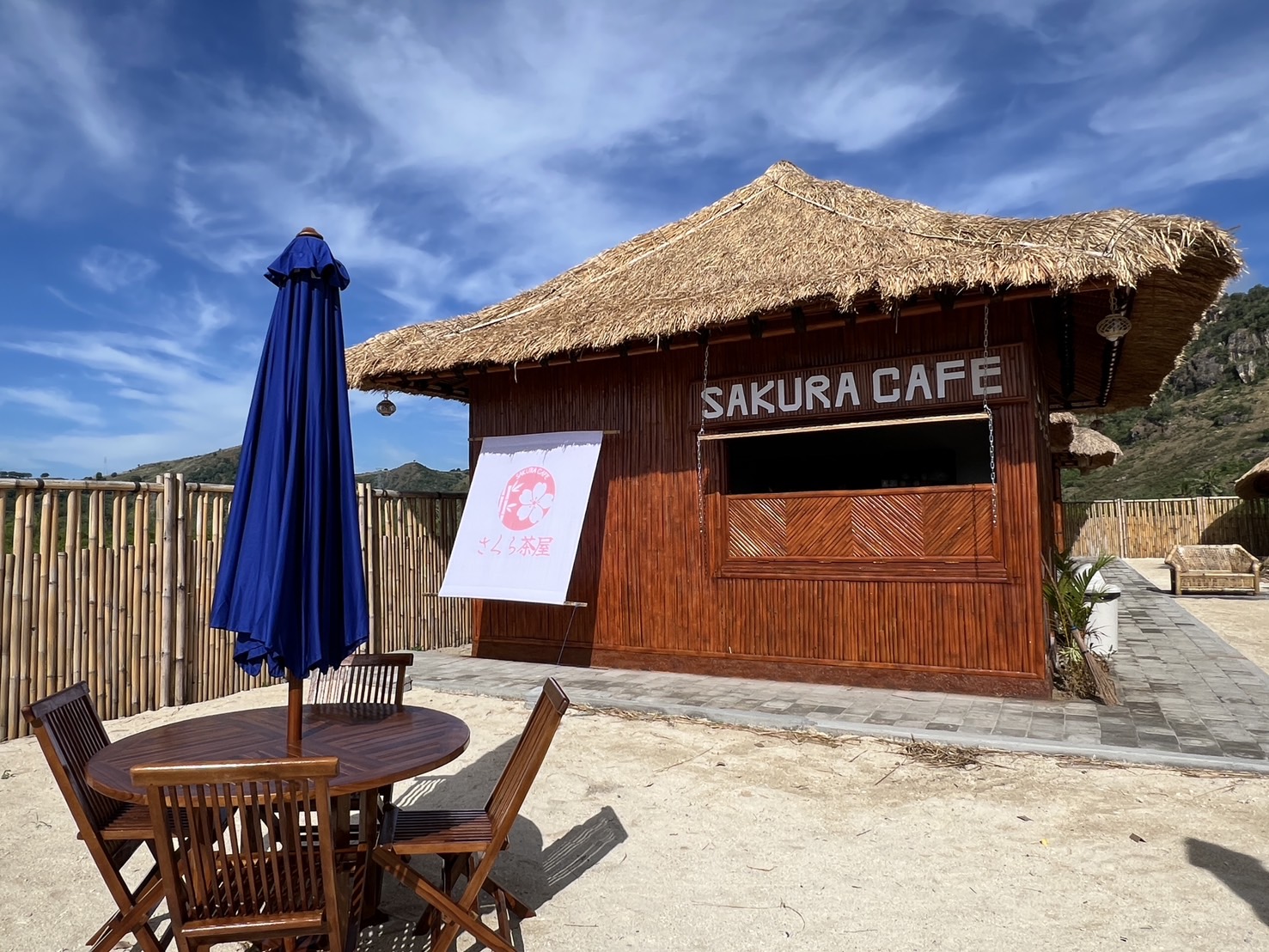
On the other hand, Lombok suits people interested in an Indonesian way of life different from Bali’s and in the quiet daily rhythm of Sasak villages. Sekotong in the southwest is a fishing village where local Sasak people live. In this village, Semelar Beach Village runs a beach cafe (SAKURA CAFE, 10:00 to 22:00, closed Mondays), a market and a beach club together with Sasak villagers. What you can book now is a stay programme of three to five nights.
Frequently asked questions
Q. Is everyone on Lombok Muslim?
No. Across the province in 2024, 96.91% were Muslim and 2.36% Hindu. Lombok has about 114,000 Hindus, about 90% of whom live in Mataram City and West Lombok Regency.
Q. Are Wetu Telu people Muslim?
Reports and research quote people who say they keep the pillars of Islam, and people who see Wetu Telu as a Muslim tradition; others say it is a way of thinking rather than a religion. Research has described it as a mix of Islam and indigenous beliefs, but some studies point out that the division dating from Dutch times lacked the practitioners’ own perspective. How present-day practice is described varies by person and source.
Q. Can non-Muslims enter mosques?
Some mosques allow it. At the Islamic Center in Mataram, a 2018 report said non-Muslims could enter the second floor wearing a robe that covers the body. We could not confirm the current conditions, so ask the staff at the entrance. It is best to avoid prayer times.
Q. Can I go out on Lombok on Nyepi?
The ban on going out is a Bali rule; on Lombok, shops and transport usually run as normal. However, Bali’s airport closes, so travel via Bali is affected. In 2027 Nyepi falls on 8 March.
Q. Is it all right to travel during Ramadan?
Yes. Travellers do not have to fast, and hotels and businesses in tourist areas usually open as normal. Local eateries in rural areas may close at midday, and you should keep eating and drinking in public low-key during the day. In 2027 Ramadan begins on 8 February by the Muhammadiyah calendar, and Lebaran falls on 10 and 11 March as government holidays.
Summary
Lombok is the island of a thousand mosques, where the great majority of people are Muslim. In West Nusa Tenggara, the province that includes Lombok, 2024 government data show 96.91% Muslim and 2.36% Hindu, and most Hindus live in Mataram and West Lombok, ruled by the Balinese royal house in the 18th century. Pura Meru and Pura Lingsar are temples from that era, and at Lingsar, Hindus and Muslims still hold a ceremony together.
Accounts of Wetu Telu in Bayan in the north differ greatly between researchers and the people themselves. Holiday and fasting dates change every year, so check the latest calendar before you travel.
Related reading
- Friday prayer, holidays and Ramadan in LombokA calendar of closures and how they affect your trip
- Can you drink alcohol in Lombok?Beer prices, where to buy it, and where you can’t drink
- Bali or Lombok: which is better?Sights, prices and culture compared
SEMELAR BEACH VILLAGE
Come and spend some time in the Sekotong village we call home
About 1 hour 10 minutes by car from Lombok International Airport. We offer a stay programme of 3 nights/4 days or more, with island trips by local boat and sunsets at SAKURA CAFE. The villas are due to be completed in stages from 2027.
Sources for this article
- Databoks, “96.9% of the Population in West Nusa Tenggara is Muslim” (Ministry of Religious Affairs data, 2024)https://databoks.katadata.co.id/en/demographics/statistics/b15a687e8437d5b/969-of-the-population-in-west-nusa-tenggara-is-muslim
- Databoks, “0,05% Penduduk di Kabupaten Lombok Timur Beragama Hindu” (civil registry as of 31 December 2024; Hindu population by regency and city)https://databoks.katadata.co.id/demografi/statistik/82dfe3ceb756e1a/0-05-penduduk-di-kabupaten-lombok-timur-beragama-hindu
- Encyclopaedia Britannica, “Lombok” (population, Balinese rule and the Dutch intervention of 1894)https://www.britannica.com/place/Lombok
- Cabinet Secretariat of Indonesia, “Kedepankan Keramahan Islami, Lombok Raih Gelar Destinasi Halal Terbaik Dunia” (22 October 2015)https://setkab.go.id/kedepankan-keramahan-islami-lombok-raih-gelar-destinasi-halal-terbaik-dunia/
- Good News From Indonesia, “Mengapa Lombok Dijuluki sebagai Pulau Seribu Masjid” (23 January 2026; origin of the name and number of mosques)https://www.goodnewsfromindonesia.id/2026/01/23/mengapa-lombok-dijuluki-sebagai-pulau-seribu-masjid
- NU Online, “Mataram’s religious destinations attract international tourists” (March 2018; Islamic Center)https://www.nu.or.id/regional/matarams-religious-destinantions-attract-international-tourists-gRERD
- tirto.id, “Pemakaman Kuno Selaparang, Jejak Kerajaan Islam di Pulau Lombok” (13 April 2023)https://tirto.id/pemakaman-kuno-selaparang-jejak-kerajaan-islam-di-pulau-lombok-gEMs
- Zaki Yamani Athhar, “Kearifan Lokal dalam Ajaran Islam Wetu Telu di Lombok”, Ulumuna Vol. IX No. 15 (2005)https://ulumuna.or.id/index.php/ujis/article/download/27/18
- VICE, “Is This Man the Leader of One of Indonesia’s Most Misunderstood People?” (3 August 2017)https://vice.com/en/article/is-this-man-the-leader-of-one-of-indonesias-most-misunderstood-people
- International Islamic University Malaysia, master’s thesis, “Islam wetu telu or wetu telu Muslims? : an analysis of the practitioners’ perspective” (2024)https://studentrepo.iium.edu.my/entities/publication/388eec4e-4081-4a69-9001-e077c16587a0/full
- Good News From Indonesia, “Perkembangan dan Persebaran Agama Kelompok Masyarakat Suku Sasak Lombok” (16 October 2024; contributed article; people who keep pre-Islamic beliefs)https://www.goodnewsfromindonesia.id/2024/10/16/inilah-perkembangan-dan-persebaran-agama-kelompok-masyarakat-suku-sasak-lombok
- Indonesian tourism board, “Pura Meru Cakranegara”https://www.indonesia.travel/gb-en/destination/bali-nusa-tenggara/west-nusa-tenggara/pura-meru-cakranegara/
- CNN Indonesia, “Destinasi Wisata Mataram Siap Sambut Obor Asian Games” (22 July 2018; Pura Meru, Mayura Garden)https://www.cnnindonesia.com/gaya-hidup/20180722170317-269-316105/destinasi-wisata-mataram-siap-sambut-obor-asian-games
- The Jakarta Post, “The battle of rice cakes” (22 January 2010; Pura Lingsar and Perang Topat)https://www.thejakartapost.com/news/2010/01/22/the-battle-rice-cakes.html
- Hindu Press International, “Perang Topat” (31 December 2011)https://www.hinduismtoday.com/hpi/?p=10735
- Ministry of State Secretariat of Indonesia, “Inilah SKB 3 Menteri Libur Nasional dan Cuti Bersama 2027” (15 September 2026)https://www.setneg.go.id/baca/index/inilah_skb_3_menteri_libur_nasional_dan_cuti_bersama_2027
- detikNews, “Muhammadiyah Tetapkan Ramadan dan Idul Fitri 2027, Ini Tanggalnya” (20 September 2026)https://news.detik.com/berita/d-8670916/muhammadiyah-tetapkan-ramadan-dan-idul-fitri-2027-ini-tanggalnya