Information current as of August 2026
If you’ve heard Lombok mentioned as a source of South Sea pearls, you might be wondering how to tell a genuine pearl from an imitation, and where you can buy one without regret. There’s actually a pearl farm just near Sekotong, where we at Semelar Beach Village are based, and the rafts floating offshore are simply part of everyday scenery here. In this article we cover Lombok’s connection to pearls, how they differ from freshwater pearls, the range of colors and types, general tips for spotting the real thing, and what to expect from different places to buy — all from the perspective of people living here.
What this article covers
- ✓Why Lombok is known as a source of South Sea pearls
- ✓How freshwater pearls differ from South Sea (saltwater) pearls
- ✓General points for telling real pearls from imitations
- ✓Where to buy (specialist shops, the airport, farm outlets) and how to think about price
In short
Lombok is one of the sources of South Sea pearls, and pearl-farming rafts float along the coast of West Lombok, including Sekotong. If you’re buying, the basics are to understand the type of pearl (freshwater or South Sea) first, choose a reputable shop, and be wary of anything priced too cheaply.
Why is Lombok known as the “Island of Pearls”?
Indonesia is, alongside Australia and the Philippines, one of the world’s major sources of South Sea pearls. South Sea pearls come from a large oyster, the silver-lipped or gold-lipped pearl oyster (Pinctada maxima), and waters close to the equator with stable temperature and water quality are well suited to farming them. The waters off western Lombok fit these conditions exactly, and several companies have farmed pearls there since the 1990s.
Farming is especially active along the coast of West Lombok, including Sekotong, where our base is. This area has many sheltered bays with calm water, well suited to floating rafts of hanging pearl oysters. The center for processing and selling the pearls, though, is a little further away in the Sekarbela district of Mataram City — long known as the “pearl village,” and home to a cluster of pearl artisans and jewelry shops. In short, Lombok pearls follow a division of labor: raised in the waters of West Lombok, and polished and sold in Mataram. Most of what travelers picture when they hear “Lombok pearls” is South Sea pearl raised in these western waters, then processed there.
The pearl-farming rafts off the coast of Sekotong
Driving along the Sekotong coast, you’ll sometimes spot buoys and rafts lined up neatly offshore. Many of these are fish-farming rafts, but in the quieter, more sheltered bays you’ll also see pearl-oyster rafts dotted about, with net cages suspended from the shells floating near the surface. Sekotong’s terrain, with its many calm inlets, seems well suited to raising pearl oysters without excess stress.
To us, this isn’t a special tourist attraction so much as one of the industries carried out here day to day, alongside fishing and seaweed farming. Pearl oysters take several years to slowly form a pearl, so passing the rafts by boat, you won’t always see people at work. There’s no showy facility here — just quiet rafts floating on the water, with a work boat visible from time to time, forming part of the everyday scenery. If you’re interested in this kind of fishing and farming life as part of what Sekotong is, our complete guide to Sekotong covers the area as a whole, and is worth a look.
Freshwater pearls vs. South Sea (saltwater) pearls — what’s the difference?
Souvenir stores and jewelers often lump everything together under “pearls,” but there are actually several types depending on the oyster and where it’s from. Two of the most common are “freshwater pearls” and “South Sea (saltwater) pearls,” and the two look quite different. Lombok mainly deals in South Sea pearls, but many shops also carry imported or processed freshwater pearls, so it helps to know the difference when choosing.
← This table scrolls horizontally
| Feature | Freshwater pearls | South Sea (saltwater) pearls |
|---|---|---|
| Host oyster | Freshwater mussels, such as the triangle-shell mussel | Large saltwater oysters near the equator, such as the silver/gold-lipped pearl oyster |
| Main sources | Mainly China | Waters near the equator, including Indonesia, Australia, and the Philippines |
| Pearls per oyster | Often several pearls farmed in one oyster at once | Generally one pearl per oyster |
| Typical size | Mostly small (roughly 4–9mm) | Tends to be larger (roughly 9–20mm) |
| Typical colors | Mostly soft tones — white, pink, lavender | White, silver, gold, with a distinctive deep lustre |
| Typical price range | Generally more affordable | A premium item, with large price differences based on size, lustre, and blemishes |
*General guidance based on standard pearl classification (as of August 2026). An individual pearl’s value depends on multiple factors — lustre, nacre thickness, blemishes — so actual pricing varies.
Diagram: Typical size range (freshwater vs. South Sea)
Put simply, South Sea pearls offer “large size, deep lustre,” while freshwater pearls offer “affordability, a wide range of colors.” It’s not so much that one is better than the other — the right choice depends on whether it’s a gift or a souvenir for yourself, and your budget. In Mataram shops, both types are often displayed on the same shelf, so it’s worth simply asking staff “is this South Sea or freshwater?” — it makes the price difference much easier to understand.
What colors do South Sea pearls come in?
When people think of South Sea pearls, they often picture pure white, but the color actually varies depending on the species of host oyster. The two main types are the “White South Sea pearl,” with a white-to-silver lustre, and the “Golden South Sea pearl,” grown by oysters with gold-edged shells — Indonesia and the Philippines are known as sources of this golden variety in particular. Even among South Sea pearls, color and lustre can give a very different impression, so when putting together a necklace, checking that the color and shine are consistent across pearls is worth paying attention to.
How do you tell real from fake? Things worth knowing before you buy
When you’re browsing for pearls as a souvenir, you’ll often find genuine pearls displayed alongside imitations — pearls made of glass or resin coated with a pearl-like layer, in the same case. Proper appraisal needs specialist equipment, but there are some commonly cited general points to look out for.
Note
- Surface smoothness: a real pearl has very slight irregularities or texture on the surface — anything that feels too perfectly smooth may be a glass imitation.
- Weight and coolness: a real pearl tends to feel heavier than a similarly-sized imitation, and cool to the touch at first.
- Consistency of color and lustre: naturally formed pearls have slight variation in color and lustre from pearl to pearl. If every single pearl looks perfectly identical, it may be a mass-produced imitation.
- Condition around the drill hole: peeling coating around the edge of the hole, or an interior color that doesn’t match the surface, is a sign of an imitation.
- An unnaturally low price: if a South Sea pearl necklace seems unrealistically cheap, it may be mixed with freshwater pearls or imitations, or processed very differently than expected.
Diagram: Real or fake? First steps for telling them apart
These are only general guides, and if you want certainty, the surest route is to buy from a reputable shop that can show you a grading certificate. Don’t judge on price alone — don’t hesitate to ask staff about the type of pearl (South Sea or freshwater), how it was farmed, and whether a certificate is available. Rather than deciding on the spot in the excitement of travel, giving yourself the room to step away and compare with another shop before coming back tends to lead to fewer regrets.
Where to buy — specialist shops, the airport, and farm outlets, and how to think about price
Pearl specialist shops in Mataram (the Sekarbela district)
If you’re buying pearls in Lombok, the first place to consider is the Sekarbela district of Mataram City. Known as the “pearl town,” home to a cluster of pearl artisans and jewelry shops, it carries everything from loose pearls to finished necklaces and bracelets. Because the selection is so wide, quality and pricing vary a lot from shop to shop, which is also an advantage — you can compare several shops and negotiate the price as you take your time choosing. For notes on payment methods and thinking in local currency when negotiating, see our money and payment guide.
Souvenir shops at the airport
If you want to pick up souvenirs all at once right before heading home, the souvenir shops at Lombok International Airport are an option too. It’s convenient, but the selection is limited and prices tend to run higher than specialist shops in town. It’s fine for a small, casual souvenir, but for an expensive piece you want to compare carefully, you’ll have more options buying in town.
Farm outlet showrooms
Some of the pearl-farming companies in West Lombok let you buy directly from an on-site showroom at the end of a farm tour. There’s a reassurance in buying after seeing the farming process firsthand, but the number of such shops is limited, and most require booking a visit in advance.
As for pricing, South Sea pearl values swing widely based on size, lustre, and how few blemishes there are, so it’s impossible to name a single “price per pearl.” Prices range from affordable small pieces to a large, high-lustre one-off item, and vary further with season and negotiation. When buying, it’s reassuring to compare prices for similar-looking pieces across several shops, and to check whether there’s a reason (freshwater pearls or imitations mixed in, for example) if something seems unusually cheap. Deciding on a budget in advance and comparing size against lustre within that range tends to make the choice easier.
Diagram: Where to buy pearls in Lombok
Can you visit or tour a pearl farm?
Some of the pearl-farming companies in West Lombok offer public tours covering everything from collecting oysters, seeding, and harvesting. These typically run around an hour, taking you by boat or boardwalk past the floating rafts, and usually end with the chance to buy at a showroom. Many visitors find that seeing how a pearl is actually grown before buying makes the purchase feel more meaningful than simply choosing one at a souvenir shop.
That said, the number of facilities accepting visitors is limited, and most require booking ahead. Turning up unannounced may mean you can’t be accommodated, so it’s best to either join a tour through a travel agency, or contact the facility in advance to confirm whether a visit is possible, how long it takes, and the cost. We sometimes get asked about arranging this kind of tour as part of our own stay program, but whether it’s possible depends on the facility’s own availability at the time, so please do get in touch with us to check first. If you’d like to fit it into your schedule, it helps to plan early alongside other activities, such as visiting a traditional Sasak village.
The basics of caring for pearls after you buy
Unlike other gemstones, a pearl is an organic gem made mainly of calcium carbonate, and it’s sensitive to chemicals in sweat, perfume, and cosmetics. To keep a pearl you’ve fallen for on your trip looking good for years to come, it helps to know some basic care that needs no special expertise.
A few simple habits go a long way for everyday wear: apply perfume and antiperspirant before putting your pearls on, so they go on last while dry; gently wipe off sweat and oils with a soft cloth after wearing; and store pearls in their own pouch or compartment so they don’t get scratched rubbing against other jewelry. On days you’ve worn them for a long time in Lombok’s hot, humid climate, it’s worth making a habit of wiping them down once you’re home.
🏝️ A note from Sekotong
Looking out at the water in Sekotong, we honestly couldn’t tell pearl-farming rafts apart from fish and seaweed rafts at first — they share the same bays. A local had to point out “that one’s pearls, that one’s fish” before it clicked. Pearl farming here isn’t dressed up for tourists at all; it’s simply one of the industries that the people who live off this sea rely on. Lombok tends to bring to mind beaches and the Gili islands first, but glimpses of an industry like this add a little more depth to how you see life on the island.
Frequently asked questions
Q. Can I assume Lombok pearls are basically all genuine?
Lombok is a source of South Sea pearls and home to a cluster of shops specializing in pearl processing, so most sellers deal in genuine, farmed pearls. That said, some souvenir shops do mix in cheap imitations or freshwater pearls, so if something is being sold as a “South Sea pearl,” it’s safer to confirm the type and whether a grading certificate is available before buying.
Q. Should I buy pearls in Mataram or at the airport?
If you want to compare quality carefully, the Sekarbela district in Mataram City, with its cluster of specialist shops, is the recommended choice. Airport souvenir shops have a more limited selection and tend to run more expensive, so they’re better suited to a quick, casual purchase.
Q. Can I buy pearls near Sekotong?
Sekotong itself doesn’t have a cluster of major pearl specialist shops. Buying centers around Mataram City, the hub for processing and sales, or a farm’s own outlet showroom for those accepting visitors. For more on what to see and do around Sekotong, see our complete guide to Sekotong.
Q. I’d like to tour a pearl farm — can I just show up on the day?
Some facilities require booking in advance, and a walk-in visit may not be accommodated. If you’d like to tour one, we recommend either joining a travel agency’s tour, or contacting the facility ahead of time to confirm whether a visit is possible.
Q. Besides size, what else should I look for when choosing a pearl?
Beyond size, lustre — the strength of the surface shine — how few blemishes or irregularities there are, and how well-matched the pearls are in color and size within a set are all important. A pearl with strong lustre tends to be valued more highly even at the same size, so it’s worth comparing several pearls in bright light.
Related reading
- Sekotong Complete GuideThe area where the pearl-farming rafts float: access, sights and where to stay.
- Sekotong Hotels and VillasWhere to stay in southwest Lombok and how to choose.
In summary
Lombok is known as a source of South Sea pearls, and the waters of West Lombok — including Sekotong, where we’re based — hold farming rafts quietly growing pearls beneath the surface. Freshwater and South Sea pearls differ in host oyster, size, and how to think about price, and even within South Sea pearls, the White and Golden varieties differ in tone. Understanding these differences first, and then choosing what fits your own budget and quality expectations, is the key to a purchase you won’t regret.
When buying, keep the general signs — surface smoothness, weight — in mind, but the surest route is ultimately a reputable shop that can confirm a grading certificate. Specialist shops in Mataram, airport souvenir shops, and farm outlet showrooms each have their pros and cons, so choose based on your itinerary and budget. If you’re interested in touring a farm, plan early with the understanding that advance booking is usually required.
SEMELAR BEACH VILLAGE
Stay in the Sekotong village we call home
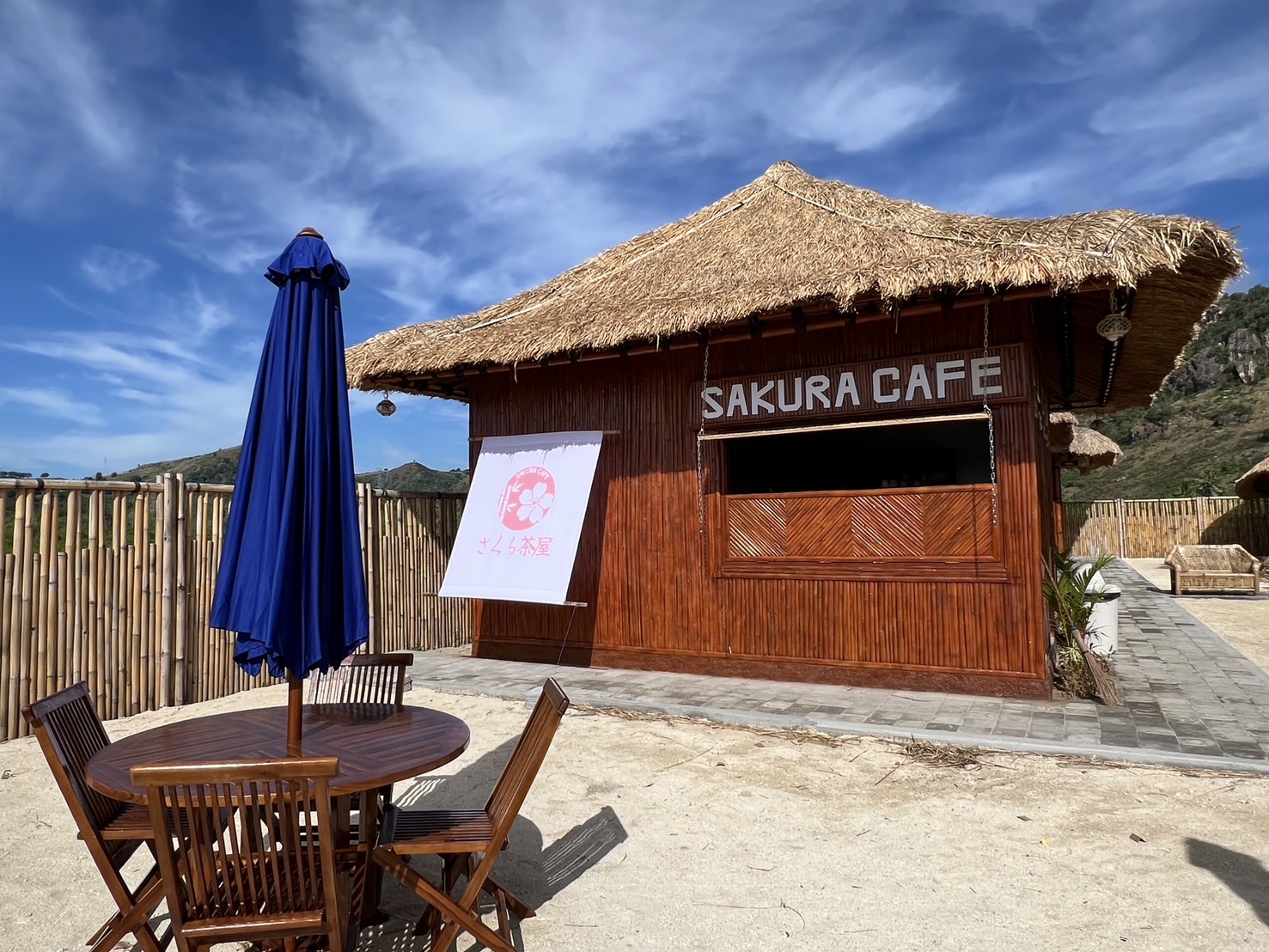
About 1 hour 10 minutes by car from Lombok International Airport. A stay program where you sleep in a seaside villa, explore the islands by local boat, and watch the sunset at SAKURA CAFE.
Sources for this article
- The Spot Lombok, “Visit a Pearl Farm” (overview of pearl farming near Sekotong and West Lombok, tour content)https://thespotlombok.com/blog/visit-a-pearl-farm
- Forever Vacation, “Sekarbela Pearl Market” (location, hours, and products available in Sekarbela)https://forevervacation.com/lombok/sekarbela-pearl-market
- Lombok Journey, “Lombok Pearls: The Beauty and Vibrant Business of Pearls in Sekarbela District” (pearl types, the farming process, general authenticity checks)https://www.lombokjourney.com/en/lombok-pearls/
- General jewelry-industry knowledge on freshwater vs. South Sea pearl classification, South Sea pearl color varieties (White and Golden), and general authentication and care methods
- Our own observations living in Sekotong, Semelar Beach Village