You do not need to speak Indonesian to enjoy a trip to Bali or Lombok, but about 30 words and phrases will change how your days go. “Terima kasih” (thank you), a greeting that fits the time of day, the numbers for paying, and a way to ask for the bill are enough to get a smile at a market stall, a warung (a small local eatery) or your guesthouse. You do not need grammar for this; you need a few phrases you can say without thinking.
This guide gives ten greetings, the numbers and phrases for shopping, what to say at a warung, phrases for when you are stuck, and a few pronunciation tips, each with a rough English sound guide and the situation where you would use it. Pick two or three you are likely to need, say them out loud a few times before you go, and use them on your first day.
Indonesian (Bahasa Indonesia) is written in the Latin alphabet and is mostly read as it is spelled, so you can usually pronounce a word you see on a menu or sign. Verbs do not change for tense or person, and many everyday phrases are just a few words strung together. In tourist areas English is widely used, but in markets, warungs and villages a word of Indonesian goes a long way.
Information as of November 2026
What this article covers
- ✓Ten greetings, and which one to use at what time of day
- ✓Numbers 1 to 10, how prices are said, and phrases for markets
- ✓Ordering, saying it is delicious and asking for the bill at a warung
- ✓Phrases for when you do not understand or need help
- ✓Five pronunciation tips, and a word of Sasak for Lombok
In short
Learn “terima kasih” (thank you) first. Greetings change with the time of day: selamat pagi in the morning, selamat siang around midday, selamat sore in the afternoon and selamat malam after sunset. For prices, ask “berapa harganya?” (how much is it?), and at a warung ask for the bill with “minta bon” or “tolong bonnya”.
Ten greetings
Start with these ten. The sound guides are approximate; say each syllable clearly and evenly, without the strong stresses of English. Indonesian greetings change with the time of day, and using the right one is noticed. Babbel’s travel cheat sheet gives the usual ranges: selamat pagi until 11 a.m., selamat siang from 11 a.m. to 3 p.m., selamat sore from 3 p.m. until sunset and selamat malam after sunset.
← Scroll sideways to see the whole table
| Phrase | Sounds like | Meaning | When to use it |
|---|---|---|---|
| Selamat pagi | suh-LAH-mat PAH-gee | Good morning | Until about 11 a.m. |
| Selamat siang | suh-LAH-mat SEE-ahng | Good day | About 11 a.m. to 3 p.m. |
| Selamat sore | suh-LAH-mat SOH-ray | Good afternoon | About 3 p.m. to sunset |
| Selamat malam | suh-LAH-mat MAH-lahm | Good evening | After sunset |
| Terima kasih | tuh-REE-mah KAH-see | Thank you | Any time someone helps you |
| Sama-sama | SAH-mah SAH-mah | You are welcome | When someone thanks you |
| Permisi | pur-MEE-see | Excuse me | To get attention or pass someone |
| Maaf | mah-AHF | Sorry | To apologise, or for a small bump |
| Apa kabar? | AH-pah KAH-bar | How are you? | A friendly opener |
| Sampai jumpa | SAHM-pie JOOM-pah | See you | When leaving |
“Terima kasih” is the phrase you will use most: after shopping, when someone gives directions, when someone takes your photo. If you are not sure which time-of-day greeting fits, “selamat siang” is a safe choice during the day. “Permisi” is the all-purpose way to get past someone in a narrow lane or to call a member of staff. When someone asks “apa kabar?”, the usual answer is “baik” (fine), which gives you a two-line conversation straight away.
With older people, or staff older than you, add “Bapak” (sir) or “Ibu” (madam), often shortened to “Pak” and “Bu”. “Terima kasih, Bu” is a thank-you with a touch of respect, and it is noticed. “Permisi” and “maaf” can both be translated “excuse me”, but “permisi” is for getting attention or passing by, while “maaf” is for apologising.
On Lombok, many people speak Sasak, the island’s own language, at home. Good News From Indonesia (December 2024) gives the polite Sasak for thank you as “matur tampiasih”, with “tampiasih” as the casual form, and “selamat kelemak” for good morning. Indonesian is understood everywhere on the island, so “terima kasih” works fine; a word of Sasak is a way to start a conversation in a village.
Numbers and shopping
At markets and small shops many items have no price tag, so numbers 1 to 10 and a way to ask the price are worth learning. Being able to catch a number makes paying much easier.
← Scroll sideways to see the whole table
| Number | Indonesian | Sounds like |
|---|---|---|
| 1 | Satu | SAH-too |
| 2 | Dua | DOO-ah |
| 3 | Tiga | TEE-gah |
| 4 | Empat | um-PAHT |
| 5 | Lima | LEE-mah |
| 6 | Enam | uh-NAHM |
| 7 | Tujuh | TOO-joo |
| 8 | Delapan | duh-LAH-pahn |
| 9 | Sembilan | sum-BEE-lahn |
| 10 | Sepuluh | suh-POO-loo |
Prices are usually said in thousands: “ribu” means thousand, so “lima puluh ribu” is 50 thousand, Rp50,000 (“puluh” makes tens: dua puluh is 20, lima puluh is 50). Backpack Moments lists “seribu” for 1,000 and “dua ribu” for 2,000. You will not always catch the whole number, and that is fine: a calculator app or the price typed on a phone screen fills the gap. The same numbers help when agreeing a fare with a driver or checking an amount at a money changer.
← Scroll sideways to see the whole table
| Phrase | Sounds like | Meaning | When to use it |
|---|---|---|---|
| Berapa harganya? | buh-RAH-pah har-GAH-nyah | How much is it? | Asking a price |
| Boleh kurang? | BOH-leh KOO-rahng | Can you go lower? | Opening a bargain |
| Mahal | MAH-hahl | Expensive | When the price seems high |
| Saya mau ini | SAH-yah MAH-oo EE-nee | I would like this | Pointing at an item |
“Boleh kurang?” is the standard way to ask for a lower price. At markets, bargaining is part of the exchange, and asking with a smile often turns into a short conversation. If the first price seems high, a light “mahal” may bring a better offer. Do not bargain in supermarkets, convenience stores or restaurants with fixed prices; the rules for markets and for shops are different.
Figure: Bargaining at a market, in four phrases
When buying several items, point and say “saya mau ini” (I would like this), then add a number such as “dua” (two). To practise ordering at a market stall, try our market ordering game, where you pick the replies in Indonesian.
At a warung
A warung is a small local eatery or shop, found on almost every street and in every village. Prices are lower than in tourist restaurants and the food is home cooking. It is also one of the easiest places to talk to people: a word of Indonesian about the food often brings a smile from the kitchen.
← Scroll sideways to see the whole table
| Phrase | Sounds like | Meaning | When to use it |
|---|---|---|---|
| Enak | EH-nahk | Delicious | After eating |
| Pedas | puh-DAHS | Spicy | Talking about chilli |
| Tidak pedas | TEE-dahk puh-DAHS | Not spicy | When ordering |
| Air putih | AH-eer POO-tee | Plain water | Ordering a drink |
| Minta bon / Tolong bonnya | MIN-tah bon / TOH-long BON-nyah | The bill, please | When you want to pay |
| Berapa semuanya? | buh-RAH-pah suh-MOO-ah-nyah | How much altogether? | Where there is no bill |
“Enak” is the easiest compliment: a thumbs-up and “enak” towards the kitchen says it all. If you do not eat chilli, say “tidak pedas” when you order; Backpack Moments also gives “kurang pedas” for less spicy and “lebih pedas” for more spicy. Dish names such as nasi goreng (fried rice), mie goreng (fried noodles) and sate (skewers) are read as written, so you can order by pointing at the menu and saying the name.
Many warungs have no printed bill, so “berapa semuanya?” gets you the total. Indonesia is a Muslim-majority country and most eateries follow halal practice, so dishes without pork are the norm; if you need to check, ask “ada babi?” (is there pork in it?). Tap water is not safe to drink in many areas, so when you order “air putih”, check that it comes in a sealed bottle. For more on food, see our Lombok food guide.
When you are stuck
A few phrases for when communication breaks down:
← Scroll sideways to see the whole table
| Phrase | Sounds like | Meaning | When to use it |
|---|---|---|---|
| Tolong | TOH-long | Please / Help | Asking for help or a favour |
| Saya tidak mengerti | SAH-yah TEE-dahk mung-ER-tee | I do not understand | When you cannot follow |
| Bisa bahasa Inggris? | BEE-sah bah-HAH-sah ING-gris | Do you speak English? | When you need English |
| Di mana toilet? | dee MAH-nah TOY-let | Where is the toilet? | Asking where something is |
“Tolong” works both as “help” and as the “please” at the start of a request: “tolong bantu saya” means “please help me”. “Di mana …?” (where is …?) works with any noun, so swap “toilet” for “ATM” or a place name. If the conversation still stalls, there is no need to struggle on in Indonesian; a translation app on your phone, ideally one that works offline, covers the rest.
Pronunciation tips
A few rules make Indonesian much easier to be understood in:
Five pronunciation tips
- ✓Vowels stay the same: a as in “father”, i as in “machine”, u as in “rule”, o as in “for”. The letter e is often a short “uh” (as in “selamat”) and sometimes “eh” (as in “enak”)
- ✓c is always “ch”: “cari” (to look for) sounds like “chah-ree”, never “kah-ree”
- ✓Final consonants are light: the k at the end of “enak” is barely released. Do not force it
- ✓Keep an even rhythm: there is no strong stress as in English. Speak each syllable clearly and evenly
- ✓ng is one sound: as in English “singer”, not “finger”, even at the start of a syllable
Figure: Five pronunciation tips
Do not worry about getting it perfect. Even with an imperfect accent, people usually work out what you mean from the situation, your expression and your gestures, and the effort itself is appreciated. A good way to practise is to listen to a phrase in a translation app and repeat it straight after; going through the ten greetings a few times on the way to the airport makes your first “selamat pagi” much easier.
Frequently asked questions
Q. Can I travel in Indonesia without speaking Indonesian?
Yes. English is used at hotels and in tourist areas, but in markets, warungs and villages it may not be. A few greetings and the numbers make those places much easier, and the 30 or so phrases here cover most travel situations.
Q. Are Indonesian and Malay the same?
They are closely related and share much basic vocabulary and grammar, but they are not identical: some words and expressions differ. The phrases here are standard Indonesian and are understood across Indonesia. Bali and Lombok also have their own languages, Balinese and Sasak, but visitors can get by in Indonesian.
Q. Is it rude to mispronounce something?
No. Effort to use the local language is usually welcomed, and a mistake is rarely taken badly. If you are not understood, smile and say it again more slowly.
Q. How do you say thank you on Lombok?
In Indonesian, “terima kasih”, understood everywhere. In Sasak, Lombok’s own language, the polite form is “matur tampiasih” (Good News From Indonesia, 2024).
Summary
You do not need fluent Indonesian. “Terima kasih”, a greeting that fits the time of day, the numbers and around 30 phrases for markets and warungs are enough to start conversations wherever you go. Because Indonesian is written in the Latin alphabet and read largely as it is spelled, most visitors can say these phrases from the first day. Save a few favourites in your phone’s notes so you can look them up on the spot.
Try your phrases on the first people you meet, at the airport or your accommodation. Once a first “terima kasih” or “selamat pagi” lands, it becomes natural to use more. For local customs around tipping and the right hand, see tipping and manners in Indonesia.
Related reading
- Tipping in IndonesiaWhen to tip, how much in rupiah, and manners
- Lombok’s local dishesAyam taliwang, plecing kangkung and how to order
- The Sasak people and traditional villagesLombok’s culture and visiting villages
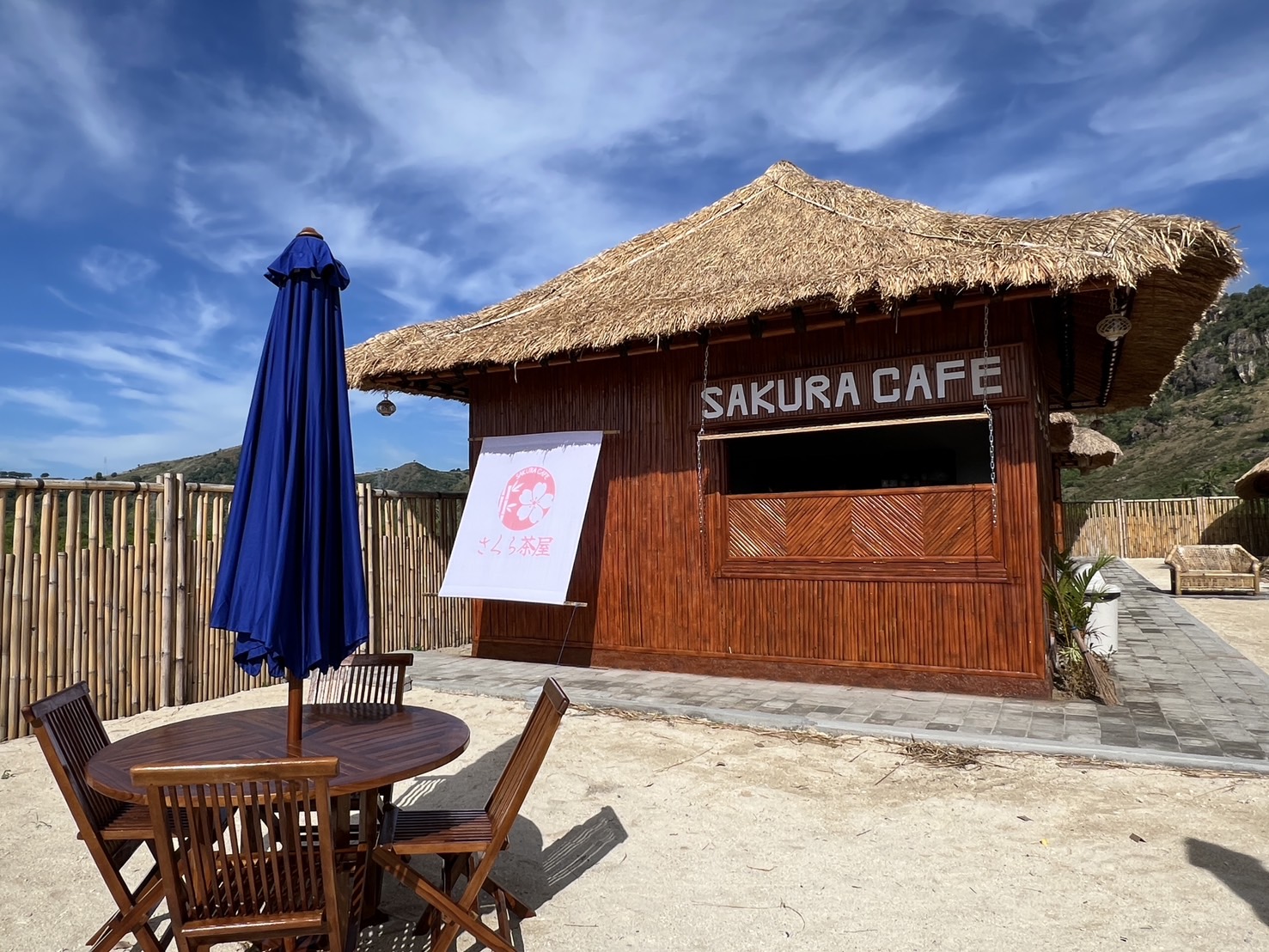
SEMELAR BEACH VILLAGE
Come and spend some time in the Sekotong village we call home
About 1 hour 10 minutes by car from Lombok International Airport. We offer a stay programme of 3 nights/4 days or more, with island trips by local boat and sunsets at SAKURA CAFE. The villas are due to be completed in stages from 2027.
Sources used for this article
- Babbel Magazine, “Vacation Cheat Sheet: Indonesian Phrases You Need To Know” (greetings by time of day: pagi until 11 a.m., siang 11 a.m. to 3 p.m., sore 3 p.m. to sunset, malam after sunset; terima kasih, maaf, tolong bonnya)https://se.babbel.com/en/magazine/indonesian-travel-cheat-sheet
- Backpack Moments, “46+ Useful Indonesian Phrases for Travelers (A local’s pick)” (published 13 January 2024, updated 9 February 2025; sama-sama, permisi, apa kabar, sampai jumpa, boleh kurang, mahal, enak, kurang and lebih pedas, tolong, saya tidak mengerti, di mana toilet, numbers, seribu)https://backpackmoments.com/indonesian-phrases/
- Good News From Indonesia, “10 Ungkapan Bahasa Sasak di Lombok yang Harus Kawan Tahu” (27 December 2024; matur tampiasih, tampiasih, selamat kelemak, aik putek for air putih)https://www.goodnewsfromindonesia.id/2024/12/27/10-ungkapan-bahasa-sasak-di-lombok-yang-harus-kawan-tahu