Do you have to tip in Indonesia? The short answer is no: tipping is not an obligation here. Many restaurants and hotels add a service charge to the bill, and there is generally no custom of working out a percentage and adding it after you pay, as in the United States. But for services aimed at visitors, where someone spends time looking after you personally, such as a private driver, a spa therapist or a tour guide, giving a small tip has become common, especially in tourist areas. This guide covers when a tip is and is not expected, how much, and the manners of a Muslim-majority society, with a stay in Sekotong on Lombok in mind.
First-time visitors usually worry about two things: whether not tipping is rude, and how much to give without overdoing it or looking mean. In practice there are no strict rules as in some Western countries, and it varies by area, place and relationship. Rather than hunting for the one right answer, it is more useful to know where tips are and are not expected and the basic manners of handing one over.
Information as of November 2026
What this article covers
- ✓Where a tip is expected and where it is not
- ✓How much: rupiah amounts quoted by tipping guides
- ✓How to hand a tip over naturally
- ✓Manners in a Muslim-majority society, and what not to do
In short
Tipping is optional in Indonesia. Check whether the bill already includes a service charge; if it does, no tip is needed. A small tip is appreciated when a person has given you their time: a driver for the day, a spa therapist, a guide, a porter. Hand it over with your right hand.
When to tip and when not to
There are almost no situations where you must tip, but there are clearly some where a tip is welcome. The table below gives five common situations as a guide. None of these is an obligation.
Tipping has spread in Indonesia with the growth of tourism. In local eateries and shops the idea barely exists, because pricing has long included the service. In areas where foreign visitors increased, travellers used to tipping at home left small amounts, and this gradually became a loose custom in services for tourists. It is closer to a habit that came with tourism than an old tradition, and seeing it that way makes the decision easier. A guide published in June 2026 by the Indonesian co-living company Rukita describes tipping as “a sign of appreciation rather than an obligation”, more common in places that serve foreign visitors such as Jakarta and Bali.
← Scroll sideways to see the whole table
| Situation | Tip? | How to think about it |
|---|---|---|
| Restaurants | Usually not needed | Mid-range and upscale places often add a service charge and tax to the bill, so an extra tip is not assumed. At a local warung (eatery) there is almost no custom of tipping. If staff at a tourist restaurant looked after you especially well, leaving the small change is enough. |
| Hotels | A nice touch in some cases | Small tips for a porter who carried your bags or for housekeeping are customary. Staff at larger resorts tend to be used to this. At small guesthouses and villas it is not expected. |
| Drivers | Customary for private hire | Many people tip a driver after an airport transfer or a day of driving. For short trips booked through a ride-hailing app it is usually not expected. |
| Spa and massage | Many people tip | From small local places to high-end spas, a small tip after the treatment is fairly common. At high-end spas that add a service charge it is not necessary. |
| Tour guides | Customary | A tip on top of the tour price is usual for a guide who spent half a day or a day with you. On group tours people often pool a little each. |
As the table shows, two questions decide it: is a service charge already on the bill, and did a person give their own time to look after you? If the first, no tip is needed; if the second, a small tip is appreciated.
On the bill itself: restaurant tax is set by each region under Law 1/2022 and is capped at 10%, and many restaurants add a service charge of around 5 to 10% on top. A “++” after menu prices means both are added at the end, according to Rukita, and Travelling King notes that bills in Bali often include 17% or 21% in tax and service.
Figure: No tip needed, and where a small tip is appreciated
Beyond these five, there are small moments when you may wonder whether to tip: staff who set up and clear your beach umbrella or lounger, a passer-by who took your photo, an attendant at a public toilet. Here a word of thanks with a small note handed over lightly matters more than the amount. On the other hand, there is no custom of tipping supermarket cashiers, convenience store staff or public transport drivers. There is no need to look for chances to tip; for everyday shopping you need not think about it at all.
How much it matters also depends on how you travel. On package tours, tips for guides are often included in the price or a suggested amount is given, in which case you do not need to tip separately. If you travel independently to Lombok or Sekotong and arrange drivers and guides yourself, you will be deciding more often. Either way, if you get into the habit of checking whether a service charge is included, the worry of tipping too much or forgetting to tip largely goes away.
How much: getting a feel for rupiah amounts
Rupiah amounts have many digits: 10,000, 100,000 and 1,000,000 come up every day, so it takes a moment to get a feel for them. As a rough anchor, Rp10,000 is about the price of a small drink, or about US$0.56 at US$1 ≈ Rp17,800 (September 2026). Rates change, so check the current rate before you travel. For money and payment in general, see our guide to money and payments on Lombok.
The amounts below are what two tipping guides suggest: Rukita (June 2026) and Travelling King’s Bali tipping guide (updated January 2025). They are suggestions, not rules, and you can adjust them to the service, the grade of the place and how satisfied you were. When unsure, giving a little less is more natural than giving too much.
← Scroll sideways to see the whole table
| Situation | Suggested amount | Source |
|---|---|---|
| Private driver (full day) or airport transfer | Rp50,000–100,000 | Rukita (June 2026) |
| Tour guide, half day | Rp50,000–100,000 (per person in Travelling King) | Rukita; Travelling King |
| Tour guide, full day | Rp100,000–200,000 (per person in Travelling King) | Rukita; Travelling King |
| Spa or massage | Rp20,000–50,000; Rp50,000–100,000 or more for luxury or longer treatments (Travelling King: 10–20% of the price) | Rukita; Travelling King |
| Hotel porter | Rp10,000–20,000 per bag | Rukita; Travelling King |
| Housekeeping | Rp10,000–20,000 a day (Travelling King) or Rp20,000–50,000 a day (Rukita) | Travelling King; Rukita |
| Restaurant without a service charge | 5–10% of the bill; at a warung, round up | Rukita |
Suggested amounts from tipping guides, not fixed rates.
Figure: Suggested tips by situation (rupiah)
How you hand it over matters a little too. Counting notes in front of people or making a show of it looks awkward. Leaving the change when you pay, or passing a small folded note discreetly, is natural. There is no need for an envelope or any formality, but see below about which hand to use. Small notes build up naturally from change after exchanging money or shopping in larger stores, so keep some aside early in your trip.
Plan your money exchange with tips in mind. Airport exchange counters are convenient but often give slightly worse rates, so change a larger amount at a reliable place in town and set aside some small notes from it. Changing small amounts many times costs time and money; simply keeping small notes in a separate pocket or pouch early in the trip makes these moments much smoother. Even if you pay mostly by card, carry a little cash for tips.
Manners in a Muslim-majority society
Indonesia has the largest Muslim population in the world, and Lombok is known for its devout Muslim community. Knowing a few manners beyond tipping makes everyday contact with people much smoother. For the life and traditional villages of the Sasak, Lombok’s main ethnic group, see Sasak culture and traditional villages.
It also helps to know the idea of halal, food that follows Islamic rules. Dishes without pork or alcohol are the norm for this reason, and most eateries and restaurants naturally follow halal practice. Travellers rarely have to think about it, but knowing why menus look the way they do deepens your understanding of local food. Our Lombok food guide covers spice levels and hygiene too.
Points to keep in mind
- The left hand: the left hand is traditionally considered unclean. When giving or receiving anything, including a tip, use your right hand or both hands
- Clothing: showing shoulders and knees is often fine at city tourist sites, but in villages and near mosques modest clothes are safer. Even at a beach resort, carry something to cover up when walking through a village
- Mosques: take off your shoes and cover up when you enter. Be quiet during prayer times, and look around before taking photos
- Ramadan: during the fasting month, avoid eating and drinking in public in the daytime; Smartraveller notes that it may be illegal in places. Restaurant hours may change, so check if your trip falls in Ramadan
- Greetings and touch: some devout people avoid shaking hands with the opposite sex. If a hand is not offered, a slight bow with your hand on your chest is a safe response
- Prayer times: the call to prayer sounds from mosques five times a day. Staff may step away or pause work then; it is a matter of faith, so wait without hurrying them
- Alcohol: you can drink at some tourist venues and restaurants, but Islam forbids alcohol. Drinking in villages or where locals gather, or being loud and drunk, causes real discomfort
There are regional differences within Indonesia, and Lombok is generally said to be more conservative than Bali. Bali has a Hindu majority and the open atmosphere of a long-established tourist island, while on Lombok Islamic tradition and village custom are more visible, so it is natural to adjust a little between the two neighbouring islands. In a fishing village area such as Sekotong, what is fine inside a resort may differ from what is expected one step outside in the village. Beachwear may be fine at the resort, but carrying a light layer to cover shoulders and knees when walking to a village shop helps you get on with local people. For more on drinking, see alcohol on Lombok.
What not to do
Here are the points to be careful about around tipping and manners. Something meant kindly can still cause awkwardness or offence, so it is worth reading through once.
Avoid
- Touching people’s heads: the head is regarded as sacred, so do not pat even a child on the head
- Giving or receiving with the left hand only: as above, this applies to anything you hand over, not only tips
- Pushing a tip on someone: a tip is thanks, not a transaction; give it naturally and discreetly
- Taking demands for tips at face value: in some tourist spots people may press for a tip, but it is not an obligation. If it feels wrong, decline politely with a smile
- Photographing religious places or ceremonies without asking: pointing a camera at prayers in a mosque or at a village ceremony without permission is bad manners. Ask first
- Too much skin in public: avoid swimwear or very revealing clothes away from the beach, especially in village centres and near mosques
- Treating a tip like a bargaining chip: haggling at a market and tipping are different things. Do not use a tip as leverage (“I will pay more if you do this”)
- Criticising staff in front of others: if you are unhappy with the service, do not scold staff or raise your voice in front of other guests. Raise it calmly in private
All of these follow naturally from “when in Rome, do as the Romans do”. You do not need to memorise everything: when unsure, watch what local people do and follow them, or simply hold back a little. That is enough to avoid any real mistake.
Frequently asked questions
Q. Is it rude not to tip?
No. Tipping in Indonesia is not an obligation but an optional way of saying thanks. If you were not happy with the service there is no need to tip, and it is not bad manners. What matters more is saying “terima kasih” (thank you) clearly, tip or no tip; words of thanks come across even more than a tip.
Q. Do I need to tip when paying by card?
In most cases you cannot add a tip to a card payment. If you want to tip, keep a little cash separately. Tips for individuals such as drivers and spa staff are usually given in cash. Conversely, mid-range and upscale restaurants and hotels where you pay by card often include a service charge, so no separate tip is needed.
Q. What if I only have large notes?
There is no need to break a large note just for a tip; give what you can from the small notes you have. Keep small notes from change during your trip, or ask for some small notes when you exchange money. If you have none, giving next time or simply saying thank you is fine.
Summary
Indonesia is not a country where tipping is required; the default is no tip. When unsure, check whether the bill includes a service charge; if it does not, you still do not have to tip. When a person has given you their time, such as a private driver, a spa therapist or a tour guide, a small tip makes for a warmer exchange. Add the manners of a Muslim-majority society, such as using your right hand, dressing modestly and respecting religious places, and you will find it easier to connect with the people you meet, in Sekotong and elsewhere.
In the end, tipping and manners come down to showing consideration for the other person. Rather than searching for the exact right amount, hand it over with your right hand, say thank you, and respect local culture and faith. In a small fishing village like Sekotong, that care is what brings visitors and local people closer. Do not worry too much about amounts and etiquette; just show your thanks naturally.
Related reading
- Money and payments on LombokCash, cards and QRIS
- Religion on LombokThe island of a thousand mosques, Wetu Telu and Hindu temples
- Lombok massage and spa pricesPrice ranges in Senggigi, the Gilis and Kuta
A word of Indonesian goes well with a tip: Indonesian phrases for travel gives about 30 phrases with sound guides, from terima kasih and greetings by time of day to numbers, bargaining and asking for the bill.
SEMELAR BEACH VILLAGE
Come and spend some time in the Sekotong village we call home
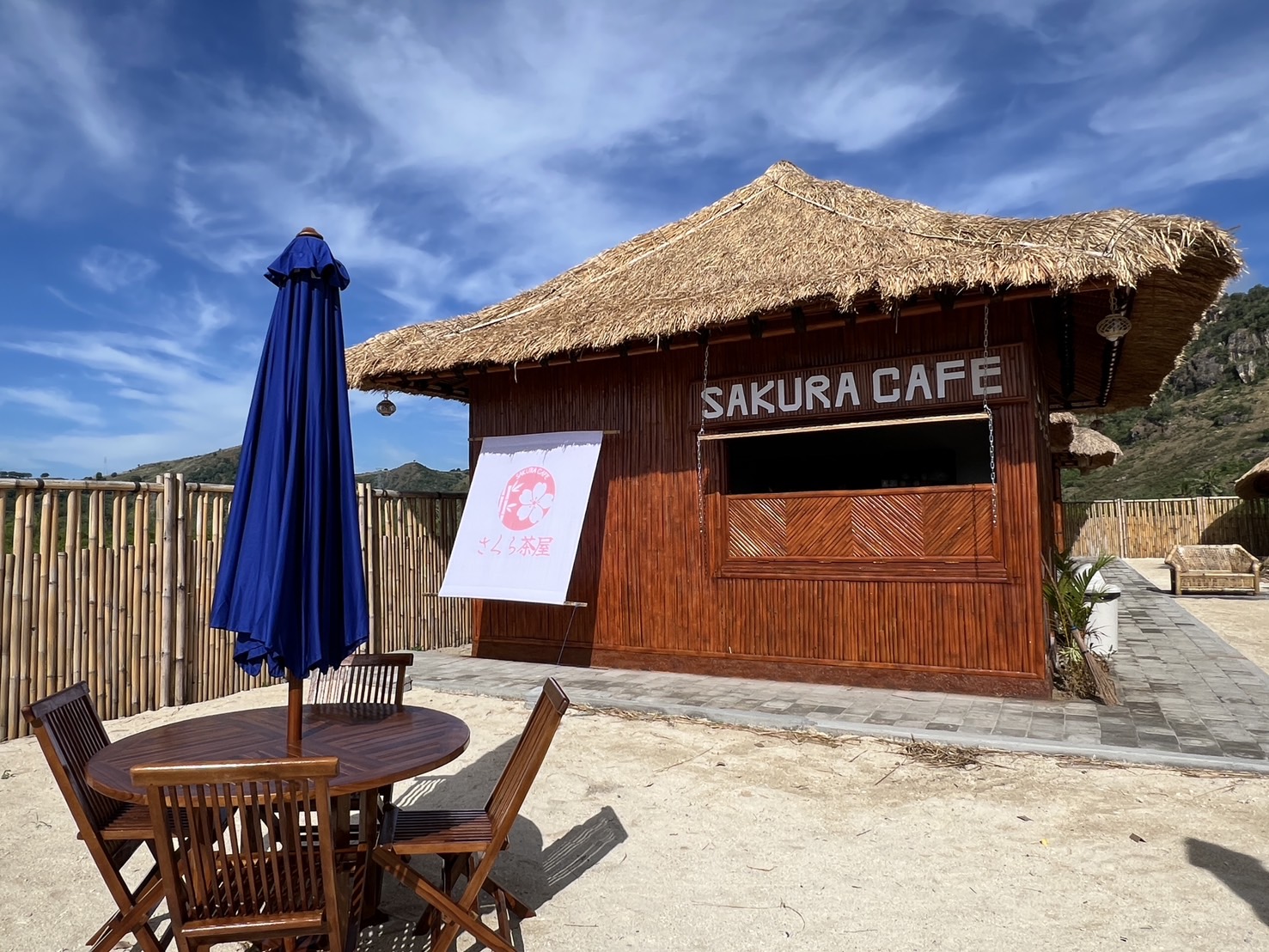
About 1 hour 10 minutes by car from Lombok International Airport. We offer a stay programme of 3 nights/4 days or more, with island trips by local boat and sunsets at SAKURA CAFE. The villas are due to be completed in stages from 2027.
Sources used for this article
- Rukita Stories, “Tipping in Indonesia” (19 June 2026; whether tipping is expected, service charges and “++”, suggested amounts)https://www.rukita.co/stories/tipping-in-indonesia
- Travelling King, “Tipping in Bali Guide” (updated 12 January 2025; 17% or 21% tax and service on bills, suggested amounts)https://www.travellingking.com/tipping-guide-for-bali/
- Hukumonline, “How to Calculate Restaurant Tax Fees” (August 2023; restaurant tax under Law 1/2022 capped at 10% and set by each region)https://www.hukumonline.com/klinik/a/how-to-calculate-restaurant-tax-fees-lt64da393f0a68e/
- Smartraveller (Australian Government), “Indonesia” (eating, drinking and smoking in public during Ramadan)https://www.smartraveller.gov.au/destinations/asia/indonesia