Bali’s Denpasar Airport (I Gusti Ngurah Rai International Airport) is where many travellers change planes on the way to Lombok, whichever country their international flight comes from. “What exactly do I have to do between getting off the international flight and boarding the domestic one?” and “What if I miss the connection?” are worries we often hear from people facing their first connection abroad. The short answer is that there are only three main stages: go through immigration, collect your checked bags, then move to the domestic terminal and check in. Keep that order in mind and you’re unlikely to get lost, even on your first connection.
In this guide we go through what you actually do at each step, how to get between terminals, how to think about connection time, how to use the wait, common problems and how to deal with them, and finally some frequently asked questions. It’s written for anyone connecting at Denpasar on the way from Bali to Lombok, but the same way of thinking also applies if you’re continuing to another Indonesian city such as Jakarta.
Facility names, opening hours, floor layouts and counter locations at the airport can change with renovations or operational changes. This guide focuses on the parts that rarely change: the overall flow and how to think about it. Always check the latest details on the airport’s official website and with your airline shortly before you travel.
It’s aimed at travellers arriving in Bali on an international flight and continuing to Lombok or elsewhere, especially those connecting abroad for the first time who worry about getting lost on the way or not making it in time. Experienced travellers will find some of this obvious, but if it’s your first time, simply knowing the flow in advance makes the day itself much less stressful.
The overall flow of a connection at Denpasar Airport
Let’s start with the big picture. From landing on an international flight to boarding a domestic one, there are generally four steps. Even on a single ticket (one through booking issued by the airline), it’s safest to prepare on the basis that in Indonesia you will normally clear entry formalities in Bali first. Even though Bali is only your connecting airport, the flow is the same as in many other countries: you enter the country, then board the domestic flight. This is the point first-time connecting passengers most often overlook.
- Immigration: show your passport and go through passport control.
- Baggage claim: collect your checked bags from the carousel.
- Customs: pass through customs, declaring items if you need to.
- Domestic check-in: leave the arrivals hall, move to the domestic terminal, check in and go through security.
Written down it looks simple, but once you’re walking through the airport it’s easy to be distracted by the signs, the direction of the arrows and the crowds, and to forget for a moment what comes next. Just having these four steps in your head makes decisions on the spot much easier. Let’s look at each one in a little more detail.
Figure: Four steps for connecting at Denpasar Airport
1. Immigration
When you leave the international flight, follow the signs to Immigration. The process and the steps required can differ slightly depending on the type of visa you’re entering on (VOA, e-VOA and so on), so it helps to confirm in advance which category you’ll be entering under. We recommend reading up on the basics of Indonesian visas before you travel.
The questions at immigration are limited, and generally cover only the purpose of your trip, how long you’re staying and where you’re staying. Queue times vary by day and time: some days it moves faster than expected, other days you’ll wait quite a while. Wait your turn calmly and follow the officer’s instructions, and you’ll be fine. Knowing that the questions follow a fairly set pattern is enough to make most people feel a lot more relaxed.
2. Baggage claim
After immigration, go to the baggage claim carousel showing your flight number and collect your checked bags. It usually takes a while for bags to come out, so even if you clear immigration quickly, it’s not unusual to end up waiting at the carousel anyway. Don’t rush; wait with the other passengers.
If at this stage your bag is missing or damaged, don’t hurry on. The basic rule is to speak to a nearby staff member or the lost baggage desk (Lost and Found). Keep your baggage claim tag together with your boarding pass until you have your bag. Even if you have a domestic flight to catch and time is tight, don’t leave a baggage problem to sort out later on your own judgement. Reporting it on the spot is what helps avoid trouble afterwards.
3. Customs
Once you have your bags, you pass through customs. On a typical holiday with nothing to declare you’ll use the green channel (nothing to declare), but the rules on restricted items and duty-free allowances can be revised, so it’s reassuring to check the latest customs rules before you travel. This is especially worth doing if you’re bringing in expensive electronics or a large quantity of goods, so you aren’t caught off guard on arrival.
4. Domestic check-in
After customs you come out into the international arrivals hall. From here, move to the domestic terminal, check in again at the check-in counter, go through security and head to your domestic departure gate. In many cases the bags you checked on the international side need to be checked in again here for the domestic flight; we explain this in more detail in the next section. That completes the connection. Seen as a whole, it’s less a special procedure than a series of simple tasks: you enter the country once, then board a domestic flight. Thinking of it that way should make it feel easier.
Getting between terminals
Denpasar Airport has separate international and domestic terminals. After leaving the arrivals hall, the basic flow is to follow the signs or staff directions towards the domestic terminal. Walking routes or shuttle buses between terminals are usually provided, depending on how the airport is operating, but the exact route, the time it takes and where to board can change with the season or with renovation work. After you land, take your time and follow the signs as you go.
On the way you may need to pull your suitcase or wheeled bag over steps or onto escalators. If you have a lot of luggage or are travelling with small children, allow for it taking longer than usual. Moving around the airport can include outdoor stretches, so with Bali’s climate in mind (heat and sudden downpours) it helps to pack your hand luggage so you can move easily.
If you’re unsure, ask airport staff or your airline’s ground staff something like “Domestic terminal?” and they will almost always point you in the right direction, often with gestures. Many signs in the airport are also in English, so if you follow them calmly you’re unlikely to get lost. Following the stream of other passengers who are also connecting is a practical guide too.
How much connection time to allow
How much time to allow for a connection is something many people worry about. The bottom line: since you can’t predict how busy immigration will be, it’s always better to leave a margin. Several variables add up: the number of people queuing at immigration, how long the bags take, the time to move between terminals and how busy domestic security is. It’s important not to be too optimistic that a short connection will be fine. The total time a connection takes also depends on when your flight lands and how busy the airport is overall.
Take particular care if your international and domestic flights are on separate tickets. Unlike a through booking under one booking reference, with separate tickets your bags are generally not checked through automatically to the domestic flight; you’ll need to collect them and take them across yourself. This isn’t specific to Denpasar Airport; it’s a general rule worth keeping in mind for any connection from an international to a domestic flight. If you’ll be carrying your bags yourself, you need to build that extra time and effort into your connection time, on top of everything from immigration to check-in.
With separate tickets, it’s also important to assume that the domestic flight will not automatically wait for you if your international flight is delayed. We cover this in the “Common problems” section below. Choosing a flight combination with a comfortable connection time at the booking stage is one effective precaution. For how to search for flights to Lombok and how the routes work, see Lombok Flights and Tickets: The Complete Guide to Routes and How to Book.
Figure: Are your international and domestic flights on one booking?
The exact number of minutes to allow varies with the season, the number of flights and how busy the airport is, so we deliberately don’t give a fixed figure here. The basic principle is that the more it’s your first connection, the more luggage you have, or if you’re travelling with children or older people, the more slack you should build into your schedule. Even if you’re used to connecting and travelling light, we still recommend leaving at least some margin.
Making good use of the wait
If you leave a comfortable margin for your connection, you’ll naturally have some time to wait in the airport. Rather than spending it worrying, use it to get a few things done that will make the rest of the journey easier. Here are the main ones.
Changing money
There are usually several money exchange counters in the airport, but rates tend to vary from place to place. The approach commonly recommended is to change only what you need for now at the airport and to change larger amounts at a licensed money changer in town. A safe way to do it is to change just enough local currency on arrival for a taxi or ride-hailing app and a quick bite. Rates and counter locations change, so decide based on the latest local information and the signs you see.
Getting a SIM or other connection
If you want to use map or ride-hailing apps as soon as you arrive, you may be able to buy a SIM card or eSIM in the airport. Sorting out your connection during the wait makes getting around after you reach Lombok much smoother. For connectivity on Lombok itself, see SIM Cards, Wi-Fi and Workations on Lombok: A Complete Guide. If you set up an eSIM before you travel, you may be able to skip this step at the airport altogether, so it’s worth considering once your itinerary is fixed.
Food, toilets and a rest
There are usually restaurants and shops on the domestic terminal side too. However, the choice can be limited once you’re past security, so it’s reassuring to eat while you still have time, or at least pick up a snack. After a long flight your body is usually more tired than you realise. Don’t pack too much into the wait; deliberately take some time to sit down and catch your breath, and the domestic flight will feel much more comfortable. Checking where the toilets are early on, between moves, also saves a scramble later.
Charging and keeping valuables safe
You’ll use your phone a lot during a connection, for maps, ride-hailing apps and checking exchange information, so it’s reassuring to charge it during the wait. In case you can’t find a power socket, a power bank in your carry-on bag is a good backup. A connection is also a moment when it’s easy to relax your guard, so make a point of keeping your passport, wallet and other valuables on you at all times.
Figure: Things to do while you wait for your connection
Common problems and how to handle them
The most common problem is that a busy immigration hall or a delayed international flight leaves you with less time than expected to make your domestic connection. What matters here is not to act hastily on your own judgement, but to tell the airline about the situation as early as possible.
If you’re on a single through booking, the airline often already knows about delays to the connecting flight, and you may be able to get guidance and support. In some cases they will rebook you or make announcements without you having to do anything. On the other hand, if you booked your international and domestic flights separately, the general understanding is that if a delay makes you miss the connection, dealing with it is in principle your own responsibility. That’s exactly why, with separate tickets, allowing a longer connection time is in the end the surest way to avoid trouble.
If you do miss your connection, or realise you’re likely to, the following steps will help you handle it calmly rather than panicking.
- Tell the airline’s counter or staff about the situation as soon as you know
- If you have a booking, ask whether you can change flights, whether there’s an alternative flight, and whether there’s any extra charge
- Allow for the possibility that you won’t be able to travel on that day, and keep some slack in your accommodation and plans for the following days
- If you have travel insurance, check whether the situation is covered
The other common problem happens at baggage claim. Bags that don’t appear, bags that look like someone else’s and nearly get mixed up, or bags that arrive damaged are not unusual during connections. Rather than putting off checks because you’re in a hurry, get into the habit of glancing at the tag number and the look of your bag as soon as you pick it up. That makes later problems easier to prevent. If something does go wrong with your bag, report it at the Lost and Found desk on the spot and be sure to get a copy of the report.
You can’t completely avoid delays, but simply deciding in advance to leave a comfortable connection time, and who you’ll ask first if something goes wrong, takes a lot of the mental strain away. Things not going to plan isn’t unusual when travelling abroad, so going in with the attitude that “these things happen” may be just right.
Frequently asked questions
Q. If my international and domestic flights are with the same airline, will my bags be checked through automatically?
If they’re issued as a through ticket under one booking reference, your bags may be checked through to your final destination. However, even with the same airline, if the international and domestic flights were booked as separate tickets, the general rule is that you’ll need to collect your bags and check them in again yourself for the domestic flight. Check which applies to you in advance, in the airline’s or booking site’s information or your booking confirmation email.
Q. How much connection time should I allow to be safe?
It depends on how busy immigration is and how the flights are running on the day, so it’s impossible to say that a certain number of minutes is always safe. Particularly if it’s your first connection, or if you booked the international and domestic flights separately, the basic principle is to build a comfortable margin into your schedule. When booking, we recommend avoiding combinations with very short connection times and choosing flights with a little more room.
Q. Do I need to speak Indonesian to make the connection?
If you follow the signs, many of which are also in English, and the staff’s gestures, you can manage the connection with just a few simple words. The questions usually asked at immigration are limited, so it helps to have a couple of simple phrases ready. If you get stuck, calmly ask a nearby staff member and they will almost always help, often with gestures.
Summary
A connection at Denpasar Airport comes down to three stages: immigration, baggage claim, then moving to the domestic terminal to check in. Understand that flow and you’re unlikely to get lost, even the first time. The key points are to leave a margin in your connection time; especially if your international and domestic flights are on separate tickets, to plan on the basis that your bags won’t be checked through automatically; to use the wait well for changing money, getting a SIM, eating and resting; and, if you’re delayed, to tell the airline about the situation early.
For a comparison of the routes from Bali to Lombok, see Bali to Lombok: Flights, Fast Boats and the Public Ferry Compared, and for what to expect after you land, see Lombok International Airport (Praya Airport) Arrival Guide. We hope this takes some of the worry out of your connection and helps your trip get off to a good start.
For the last leg to Lombok, Bali to Lombok Flights shows the departure times, with the last flight at around 18:00 in the November 2026 sample schedule.
More on this topic: Getting to Lombok. Sample 3- to 5-night itineraries in Sekotong, with the cost per person: Stay Programme Itineraries.
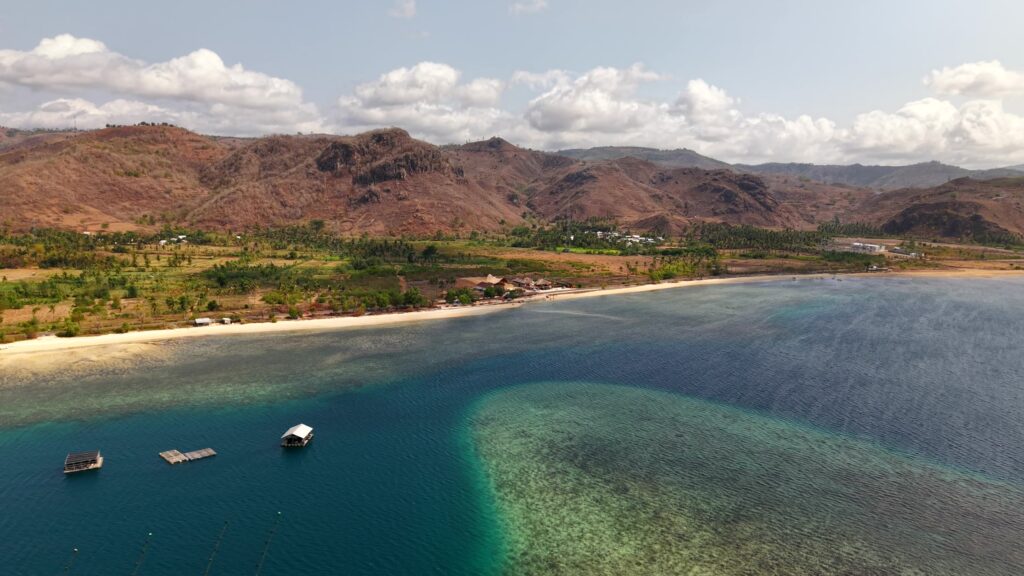
SEMELAR BEACH VILLAGE
Come and spend some time in the Sekotong village we call home
About 1 hour 10 minutes by car from Lombok International Airport. We offer a stay programme of 3 nights/4 days or more, with island trips by local boat and sunsets at SAKURA CAFE. The villas are due to be completed in stages from 2027.