“If I get an upset stomach on Bali or Lombok, how long will it last?” “Should I take medicine?” “Will my family catch it?” Many people worry about so-called “Bali belly” before a trip to Indonesia. The short answer: Bali belly is a popular name for travellers’ diarrhoea, and according to the US Centers for Disease Control and Prevention (CDC), without treatment bacterial cases usually clear up in 3 to 7 days and viral cases in 2 to 3 days. If you have a fever or blood in your stool, you need to see a doctor. The same precautions apply to street food on Lombok.
This guide is based on published information from the CDC, the Public Health Agency of Canada, the travel advice of the US State Department, the UK government and Australia’s Smartraveller, Public Health Scotland’s Fit for Travel and the World Health Organization (WHO), and on our team’s videos. It is general information and is not a substitute for diagnosis or treatment. Use any medicine according to its leaflet and the advice of a doctor or pharmacist.
It is written for people preparing for a trip to Bali or Lombok who want to be ready for stomach trouble, and for those who want to try street food there.
Information as of September 2026
What this guide covers
- ✓What Bali belly is and what the symptoms are
- ✓How long it usually lasts, and how that depends on the cause
- ✓Whether it spreads to others, and how to avoid passing it on
- ✓What to keep in mind about anti-diarrhoea medicine
- ✓When to see a doctor, and what to watch at street stalls on Lombok
In short
Bali belly is a popular name for diarrhoea while travelling (travellers’ diarrhoea). Most cases clear up within days: typically 3 to 7 days for bacterial causes and 2 to 3 days for viral ones. First, replace fluids and salts with oral rehydration solution or similar. See a doctor if you have a high fever, blood in your stool, severe or very frequent diarrhoea, signs of dehydration, or if you are not getting better. If you have a fever or blood in your stool, ask a doctor or pharmacist before taking medicine to stop the diarrhoea. The same precautions apply to street food on Lombok.
What is Bali belly?
“Bali belly” is a popular name for diarrhoea that happens while travelling on Bali and elsewhere; it is not a medical term. Medically it is called travellers’ diarrhoea.
Most cases are caused by bacteria or viruses taken in through the mouth with food or water. The CDC’s guide for health professionals, the “Yellow Book” (2026 edition), explains that 75 to over 90% of travellers’ diarrhoea is caused by bacteria, at least 10 to 25% by viruses and about 10% by protozoa. The WHO explains that these infections spread through contaminated food or drinking water, or from person to person when hygiene is poor.
It is not unusual. Australia’s Smartraveller says that waterborne, foodborne, parasitic and other infectious diseases are widespread in Indonesia, and Fit for Travel calls travellers’ diarrhoea one of the commonest health problems during travel, adding that it tends to happen in the first week. The CDC says that, depending on the destination and season, 30 to 70% of travellers get it on a two-week trip.
How long does Bali belly last? Symptoms and incubation period
According to the CDC, without treatment, bacterial cases usually clear up in 3 to 7 days and viral cases in 2 to 3 days; cases caused by protozoa can last weeks or longer. The time from eating to the first symptoms (the incubation period) is 6 to 96 hours for bacteria and viruses. If you are not better after a few days, or you have a high fever or blood in your stool, see a doctor.
According to the Public Health Agency of Canada, besides diarrhoea, fever, nausea, vomiting, bloating, stomach pain and sudden urges to go are common. The CDC says it ranges from mild cramps and loose stools to severe stomach pain, bloody stools and fever.
How long it takes for symptoms to start depends on the cause. According to the CDC, illness from toxins formed in food starts within hours, and illness from bacteria or viruses within 6 to 96 hours. Protozoa take longer, one to two weeks.
How long it takes to recover also depends on the cause. The CDC Yellow Book gives these typical durations without treatment.
- Bacteria: usually 3 to 7 days
- Viruses: 2 to 3 days (for norovirus, the CDC says most people get better in 1 to 3 days)
- Protozoa: without treatment, it can last weeks to months
The Public Health Agency of Canada also says symptoms usually clear up in a few days without treatment. On the other hand, the CDC explains that stomach symptoms can continue after recovery even when no infection remains, which is called post-infectious irritable bowel syndrome.
Can Bali belly spread to other people?
Depending on the cause, yes. For norovirus, one of the causes of travellers’ diarrhoea, the CDC lists direct contact with someone who has it (such as caring for them, sharing food or utensils, or eating food they handled), eating or drinking something contaminated, and touching contaminated surfaces and then putting your fingers in your mouth.
Care is needed even after you recover. The CDC explains that norovirus can be found in vomit and stool even before you start feeling ill, and that people can still spread it for two weeks or more after they feel better. You cannot tell by looking whether your diarrhoea is the kind that spreads. Assume it can, and do the following.
- Wash your hands with soap and running water after using the toilet and before eating. The CDC says hand sanitiser does not work well against norovirus and is not a substitute for hand-washing
- To clean up after vomiting or diarrhoea, the CDC recommends a chlorine bleach solution (1,000 to 5,000 ppm) left on the surface for at least 5 minutes
- Do not prepare or handle food for others, or care for others, while you are ill and for at least 2 days (48 hours) after your symptoms stop (CDC)
What should you do first? Rehydration, and when to see a doctor
What matters first is fluids and salts, more than medicine. The CDC Yellow Book says replacing the fluids and salts you lose is important and is best done with oral rehydration solution (ORS) made from packaged oral rehydration salts, such as those provided by the WHO. The WHO describes ORS as a solution of clean water, sugar and salt, and Fit for Travel says rehydrating drinks must be made up with safe water. Bringing ORS sachets from home is the simplest way to be ready.
In Indonesia, oral rehydration salts are called “oralit”. Buleleng Regional Hospital on Bali says it is available at community health centres (puskesmas), pharmacies and chemists, and that one sachet is dissolved in about 200ml of drinking water (or as the sachet instructs).
See a doctor without waiting in cases like these.
- A high fever (Fit for Travel, Public Health Agency of Canada)
- Blood or mucus in the stool (Fit for Travel, Public Health Agency of Canada)
- Severe or very frequent diarrhoea. Fit for Travel gives more than 6 loose stools in 24 hours as a reason to get medical help
- Continuous vomiting or strong stomach pain (Public Health Agency of Canada)
- Signs of dehydration. The CDC lists passing less urine, a dry mouth and throat, and feeling dizzy when standing up
- Not getting better after a few days (Fit for Travel says symptoms last 3 to 5 days on average), or feeling ill after you get home (CDC)
The Public Health Agency of Canada says drinking fluids is especially important for children, people with chronic illnesses and older people, and asks that babies and young children with signs of dehydration, blood in the stool, fever or continued vomiting be seen right away. A persistent fever may be an illness other than diarrhoea. Public Health Scotland’s Fit for Travel lists typhoid among the vaccines to consider for Indonesia.
For hospitals and clinics on Lombok, travel time from Sekotong to a hospital, and insurance and deposits, see our guide to hospitals, healthcare and travel insurance on Lombok. The US State Department says medical care is not free in Indonesia, that hospitals and doctors often require payment or sizable deposits upfront before service or admission, and strongly recommends supplemental insurance that covers medical evacuation. Australia’s Smartraveller says many regional hospitals only provide basic facilities, and that if you are not insured you may have to pay many thousands of dollars up front for medical care.
If you feel ill after you get home, the CDC advises contacting your doctor and telling them about your travel. The CDC Yellow Book notes that some travellers have stomach symptoms lasting more than 14 days, that the parasite Giardia is the most likely parasitic cause of such persistent diarrhoea, and that stool samples collected over 3 or more days may be examined for parasites.
Figure: What to do if you get an upset stomach, and when to see a doctor
What about medicine to stop diarrhoea?
Medicine to stop diarrhoea needs care. Fit for Travel advises not taking anti-diarrhoea medicines if you have blood or mucus in your stool, a high fever or severe stomach pain, and to seek medical advice instead, and says they are not recommended for children under 12. The CDC Yellow Book says that using such medicines alone is not recommended for people with bloody stools or diarrhoea with fever. This guide does not recommend any particular medicine.
On the idea of preventing it with probiotics, the CDC Yellow Book says studies on preventing travellers’ diarrhoea with probiotics have not given clear results and there is not enough data to recommend them. Which medicine to bring depends on whether it suits your symptoms and on your age, any chronic illness and whether you are pregnant, and the age limits and who cannot take a product differ from product to product. Asking a pharmacist at home before you leave and reading the leaflet will save you from panicking on the spot.
How can you prevent it? Water, ice, raw food and hand-washing
The WHO lists safe drinking water, hand-washing with soap and good food hygiene among the ways to prevent diarrhoea. Specific precautions are as follows.
- Do not drink tap water. The UK government says tap water is not safe to drink in Indonesia, and the US State Department says the same for many areas. The CDC recommends using bottled or disinfected water even to brush your teeth, and not swallowing shower water
- Be careful with ice. The CDC advises not using ice in destinations with limited access to clean water, and the US State Department suggests asking for no ice in your drinks, since it may be made with tap water
- Raw vegetables and cut fruit need care; the CDC advises avoiding cut-up fruit and vegetables and fresh salads. Choosing fruit you can peel yourself makes it safer (CDC)
- Eat hot food while it is still hot (CDC)
- Wash your hands with soap before eating and after using the toilet. When there is no soap, hand sanitiser with at least 60% alcohol helps (CDC)
- For drinks, choose unopened, factory-sealed bottles and cans (CDC)
Even with these precautions, assume you cannot prevent it completely, and have oral rehydration solution, your usual medicines and travel insurance ready.
There are also vaccinations. For Indonesia, Public Health Scotland’s Fit for Travel advises courses or boosters of diphtheria, polio and tetanus for all travellers, lists hepatitis A, hepatitis B, rabies and typhoid as vaccines to consider, and advises cholera and Japanese encephalitis only for those at highest risk. Ask a travel clinic or your doctor well in advance.
Is it the same at street stalls on Lombok?
Yes. The CDC’s advice to avoid food from street vendors is general advice for travellers, not something specific to Bali, so it applies on Lombok too.
In a video on our team’s YouTube channel (published in February 2026), Hiroki Nakamura, who runs a business in Sekotong, says that local food is cheap, but there are many stories of people getting an upset stomach after eating at stalls.
Watch out for spice too. In a video published in November 2025, Nakamura says that much of Sasak food is spicy. Lombok’s specialities also include spicy dishes such as ayam taliwang, grilled chicken eaten with a chilli sauce, and plecing kangkung, water spinach with a chilli sauce. Fit for Travel notes that a change in diet, such as oily or spicy food, can also cause loose stools. If you are not used to spicy food, you can ask for it “tidak pedas” (not spicy).
Water is different too. In a video published in August 2025, Nakamura says that at seaside hotels and resorts the shower water is often salty, because groundwater pumped up right by the beach contains salt. Wherever you stay, it is safer not to swallow shower water and to brush your teeth with bottled water.
A word from us in Sekotong
In rural areas like Sekotong there are almost no medical facilities better equipped than a clinic, and you need to allow one to two hours to get to a hospital in Mataram, the provincial capital. Bring ORS powder and the medicines you normally use from home, and keep plenty of bottled water in your room so you are not caught out at night. On days when your stomach is not right, do not squeeze in island-hopping boats or long car journeys; rest somewhere close to a toilet.
Is street food right for you? The drawbacks first
To be honest, we cannot recommend street food as safe in terms of hygiene. The CDC advises avoiding food from street vendors. For short trips where you cannot afford to lose a day, people with chronic illnesses, older people, families with small children and pregnant women, given the risk of dehydration and the limits on medicine, it is safer to skip stalls and choose places with good hygiene.
It suits people who can stick to the basics, such as choosing freshly cooked food and avoiding ice, who have room in their schedule to rest if they get an upset stomach, and who have oral rehydration solution and insurance ready.
Frequently asked questions
Q. How long does Bali belly last?
According to the CDC, without treatment, bacterial cases usually clear up in 3 to 7 days and viral cases in 2 to 3 days. Cases caused by protozoa can drag on. If you are not better after a few days, or have a high fever, blood in your stool or signs of dehydration, see a doctor.
Q. Should I take medicine to stop the diarrhoea?
Rehydration comes first. The CDC and Fit for Travel advise against relying on medicines that slow the gut when there is blood in the stool or a fever. If you have a fever or blood in your stool, ask a doctor or pharmacist before taking anything.
Q. Will my family in the same room catch it?
Some causes, such as norovirus, spread from person to person. Wash your hands with soap and running water after using the toilet and before eating, and do not prepare food for others while you are ill and for at least 2 days after your symptoms stop (CDC).
Q. How soon after eating does Bali belly start?
According to the CDC, illness from toxins formed in food starts within hours, and illness from bacteria or viruses within 6 to 96 hours. Protozoa take longer, one to two weeks.
Summary
Bali belly is a popular name for travellers’ diarrhoea, and it is not unusual in Indonesia. Bacterial cases often clear up in 3 to 7 days and viral cases in 2 to 3 days; first, replace fluids and salts with oral rehydration solution. See a doctor if you have a high fever, blood in your stool, severe diarrhoea or signs of dehydration, or if you are not getting better.
Relying only on medicine to stop diarrhoea is not recommended when you have a fever or blood in your stool. At street stalls on Lombok, the precautions are the same as on Bali.
Related reading
- Lombok food guide: spice, hygiene, halal food and food costsThe overall picture of eating on Lombok, from spice and hygiene to food costs
- Lombok packing listCheck what to take before you leave, including your usual medicines
For the mosquito-borne side of travel health, see Mosquitoes and Dengue Fever in Lombok, which covers repellent and what to do about a fever of 38C or higher.
More on this topic: Bali and Lombok. Adding three nights on Lombok to a Bali trip: Stay Programme Itineraries.
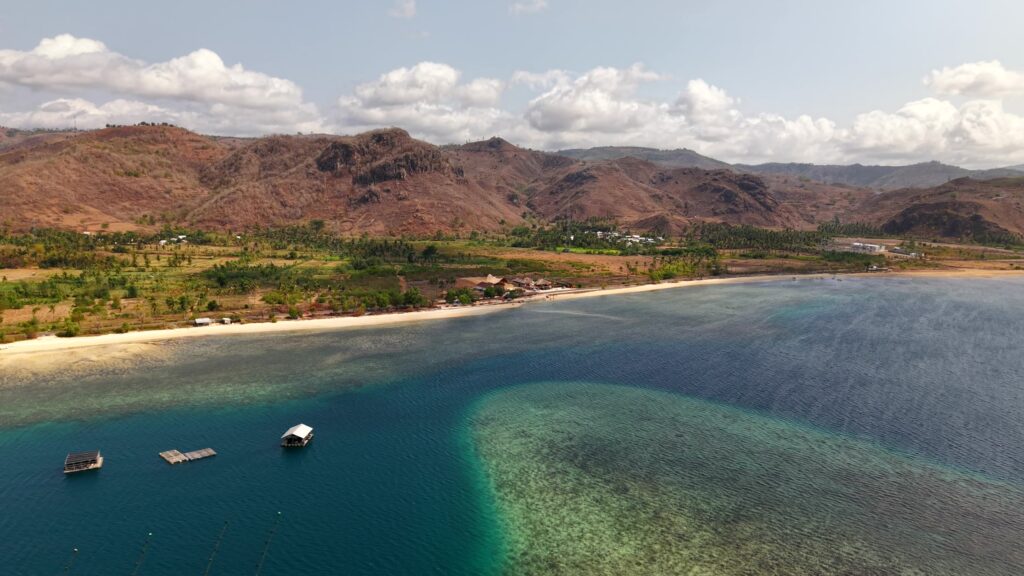
SEMELAR BEACH VILLAGE
Come and spend some time in the Sekotong village we call home
About 1 hour 10 minutes by car from Lombok International Airport. We offer a stay programme of 3 nights/4 days or more, with island trips by local boat and sunsets at SAKURA CAFE. The villas are due to be completed in stages from 2027.
Sources for this guide
- Video on our team’s YouTube channel published 31 August 2025 (shower water at seaside hotels often salty because the groundwater contains salt)https://youtu.be/5zjh7zx5Klw
- Video on our team’s YouTube channel about a tour of Lombok by 30 visitors, published 15 November 2025 (much of Sasak food is spicy)https://youtu.be/LrBySIKtuJc
- Video on our team’s YouTube channel about the town-building project on Lombok, published 1 February 2026 (local food is cheap, many stories of upset stomachs from street food)https://youtu.be/Z201el_-J6U
- US Department of State, Indonesia Travel Advisory, travel guidance issued 9 July 2026 (tap water, no ice, medical care not free, payment or sizable deposits upfront, medical evacuation insurance)https://travel.state.gov/en/international-travel/travel-advisories/indonesia.html
- UK Foreign, Commonwealth and Development Office, Indonesia travel advice: health (tap water not safe to drink)https://www.gov.uk/foreign-travel-advice/indonesia/health
- Australian Government, Smartraveller: Indonesia (waterborne and foodborne diseases widespread, regional hospitals, paying up front without insurance)https://www.smartraveller.gov.au/destinations/indonesia
- Fit for Travel (Public Health Scotland), Indonesia (vaccines advised and to consider)https://fitfortravel.nhs.uk/destinations/asia-east/indonesia
- Fit for Travel (Public Health Scotland), “Travellers’ Diarrhoea” (how common it is, change in diet, rehydrating drinks made with safe water, when to seek medical help, anti-diarrhoea medicines, average duration)https://fitfortravel.nhs.uk/advice/disease-prevention-advice/travellers-diarrhoea
- World Health Organization, “Diarrhoeal disease”, 7 March 2024 (how infection spreads, ORS as clean water, sugar and salt, prevention)https://www.who.int/news-room/fact-sheets/detail/diarrhoeal-disease
- CDC Yellow Book 2026, “Travelers’ Diarrhea” (share of causes, time to onset, duration, how common it is, oral rehydration, probiotics, cautions on medicines that slow the gut, post-infectious irritable bowel syndrome)https://www.cdc.gov/yellow-book/hcp/preparing-international-travelers/travelers-diarrhea.html
- CDC, “About Norovirus” (how it spreads, symptoms, recovery time, how long people can spread it after recovering, signs of dehydration)https://www.cdc.gov/norovirus/about/index.html
- CDC, “How to Prevent Norovirus”, updated 13 January 2025 (found in vomit and stool before and after illness, hand sanitiser, chlorine bleach, not preparing food for at least 48 hours)https://www.cdc.gov/norovirus/prevention/
- CDC Yellow Book 2026, “Post-Travel Diarrhea” (symptoms lasting more than 14 days, Giardia, stool samples over 3 or more days)https://www.cdc.gov/yellow-book/hcp/post-travel-evaluation/post-travel-diarrhea.html
- CDC, “After Travel Tips” (contact your doctor if you feel ill after your trip and tell them about your travel)https://wwwnc.cdc.gov/travel/page/after-trip
- CDC, “Food and Drink Considerations When Traveling” (ice, hot food served hot, water for brushing teeth and showering, fruit you peel yourself, street vendors, sealed drinks, hand sanitiser)https://wwwnc.cdc.gov/travel/page/food-water-safety
- Public Health Agency of Canada, “Travellers’ diarrhea”, updated 22 January 2024 (symptoms, recovery time, rehydration, when to see a doctor, babies and young children)https://www.canada.ca/en/public-health/services/diseases/diarrhea.html
- Wikipedia, “Travelers’ diarrhea” (popular names such as Bali belly)https://en.wikipedia.org/wiki/Travelers%27_diarrhea
- RSUD Kabupaten Buleleng, “Informasi Penting Seputar Oralit, Minuman Khusus Saat Mengalami Diare”, 21 November 2017 (where to get oralit and how to dissolve it)https://rsud.bulelengkab.go.id/informasi/detail/artikel/informasi-penting-seputar-oralit-minuman-khusus-saat-mengalami-diare-63
- Wikipedia, “Ayam taliwang” (a Lombok dish, chilli sauce)https://en.wikipedia.org/wiki/Ayam_taliwang
- Wikipedia, “Plecing kangkung” (a water spinach dish from Lombok and Bali, topped with chilli sauce)https://en.wikipedia.org/wiki/Plecing_kangkung