Which beach should you go to in Bali? Which beaches are fine for swimming and which are not? Is it safe to go in the sea with children? These are worth checking before you spend time in Bali’s waters.
In short, choosing by purpose makes it simple. For calm water and swimming, Nusa Dua and Sanur; for surfing, Kuta or Padang Padang on the Bukit Peninsula; for sunsets, Seminyak or Jimbaran; and for snorkelling in clear water, Blue Lagoon at Padang Bai in the east. Some beaches, such as Kuta and Canggu, have big waves; if a red flag is flying, stay out of the water.
This article is based on the Indonesian tourism ministry’s beach guide, Wikivoyage, an article by BIMC Hospital in Bali, Indonesian news reports and WeatherSpark’s climate data, read in October 2026. We did not check lifeguard coverage at each beach. It is written for travellers planning to swim in Bali, including families choosing a beach for children.
Information as of October 2026
What this article covers
- ✓Choosing a beach by purpose (swimming, surfing, sunset, snorkelling)
- ✓What the main beaches are like, and how far they are
- ✓Red flags, rip currents and children in the water
- ✓Sea temperatures and the rainy months
- ✓How Bali’s beaches differ from Lombok’s
In short
As a guide: Nusa Dua and Sanur for swimming, Kuta and Padang Padang for surfing, Seminyak and Jimbaran for sunsets, and Blue Lagoon in the east for snorkelling. Some beaches, such as Canggu, are not good for swimming. Stay out of the water when a red flag is flying, and swim near lifeguards (as of October 2026).
How do Bali’s beaches differ?
Putting the tourism ministry’s and Wikivoyage’s descriptions together: Kuta and Canggu in the southwest are surf beaches, Seminyak between them is for beach clubs and sunsets, Sanur in the east and Nusa Dua in the southeast have calm water, the Bukit Peninsula at the southern tip has beaches below cliffs and surf breaks, and the east and north have black volcanic sand and plenty of coral reef.
Where you stay and what the beach is like are closely linked, so think about which beach you want to use for what before choosing a hotel. For the differences between areas, see Where to stay in Bali.
Figure: Bali beaches by purpose
For swimming: Nusa Dua and Sanur
The tourism ministry describes Nusa Dua’s beach as having calm water and good facilities, ideal for family trips. Wikivoyage also says its beaches are white sand, deep, long and safe for swimming. Nusa Dua is an enclave of upscale hotels with security checks at the gates, about 20 to 30 minutes by car from the airport. At neighbouring Tanjung Benoa you can book water sports on the beach, with most activities around US$25 to 30 (Wikivoyage).
Sanur on the east coast is described by the tourism ministry as a calm beach for watching the sunrise. The Rough Guides travel guide says its calm, shallow water is safe for children; a wide stretch of shore is exposed at low tide, with a reef about 1 km offshore. It suits a stay of morning walks on the beach in the cool hours and days in calm water.
For surfing: Kuta, Padang Padang and Dreamland
Kuta Beach is about 15 minutes from the airport, with big waves that are popular with beginner surfers (tourism ministry); Wikivoyage calls Kuta “surfer central”. On the Bukit Peninsula at the southern tip, Padang Padang is a small beach popular with surfers, and Dreamland has white sand and big waves. Melasti and Pandawa beaches, known for their cliff-cut roads and views (tourism ministry), are also on the Bukit Peninsula.
Canggu, north of Seminyak, has dark grey to black sand, is not particularly good for swimming and is known for challenging surf (Wikivoyage). A surf beach is also a beach with strong waves and currents for swimmers. If swimming is your aim, choose a different beach.
For sunsets: Seminyak, Jimbaran and the sea temples
The tourism ministry describes Seminyak as quieter than Kuta, with plenty of beach clubs and seaside restaurants, and names Batu Belig and Petitenget as good for sunset photos. Jimbaran, south of the airport, is known for seafood barbecues along the beach, where you can watch the sunset over dinner. Wikivoyage describes Jimbaran’s beach as sheltered and close to the airport.
According to WeatherSpark, sunset in Denpasar falls between about 18:06 and 18:47, shifting by about 40 minutes over the year. To watch the sunset from a sea temple, consider Tanah Lot on the west coast or Uluwatu Temple on the cliffs at the southern tip.
For snorkelling: Blue Lagoon and Amed in the east
The tourism ministry presents Blue Lagoon at Padang Bai in the east as a popular snorkelling spot with very clear water and coral reefs, 1.5 to 2 hours from Denpasar. Bias Tugel, near Padang Bai, is a small beach reached by a 15 to 20 minute walk. Further east, Amed and Tulamben are known for black-sand beaches and diving.
Crystal Bay on Nusa Penida, off the southeast coast, is also known for clear water, but you need to take a boat from Sanur. See Nusa Penida from Bali for how to get there and what to watch out for.
Before you go in: red flags and rip currents
An article by BIMC Hospital in Bali advises following the beach guards (Balawista) and watching for red warning flags. On windy days, waves and currents become stronger and can be too much for average swimmers and children. The same article notes that drowning is the second most common cause of accidental death in children, and that small children are especially vulnerable to strong surf and currents.
Metro TV (January 2024) reported that a 14-year-old foreign boy was swept away by the current at Kuta Beach and died. The BIMC article also warns of treacherous undercurrents, and recommends reapplying sunscreen every hour, drinking water regularly, and not mixing alcohol with swimming or boating.
Take care
- Do not go in the water when a red flag is flying
- Follow the lifeguards and swim near where they are stationed
- Never take your eyes off children. Do not let them swim at beaches with big waves
- Do not swim after drinking alcohol
- Reapply sunscreen every hour and drink water regularly
Sea temperatures and the rainy months
According to WeatherSpark, the sea around Denpasar ranges from about 26 degrees Celsius in August, the coolest month, to about 29 degrees in December, the warmest. The wetter season runs from mid-November to late March, with January the wettest month. August, the driest month, is also the windiest.
- ✓Separate swimming beaches from surf beaches in your plan
- ✓With children, choose the calmer east-facing beaches
- ✓When you arrive, check where and when lifeguards are on duty
- ✓Pack sunscreen, a hat and drinking water
- ✓Check prices and insurance before booking beach water sports
How do Bali’s beaches differ from Lombok’s?
Bali’s beaches have towns and shops close by, so you can combine the sea with food and beach clubs. On the other hand they are busy, and there is a clear split between surf beaches and swimming beaches. Neighbouring Lombok also has beaches, around Kuta Mandalika in the south and Sekotong in the southwest. We compare them in South Lombok beaches and Sekotong’s beaches.
From Bali to Lombok, take a domestic flight from the airport or a boat from a port; see Bali to Lombok: all routes.
A note from Sekotong
The beach at Sekotong looks out over the small southern Gili islands offshore. SAKURA CAFE on the beach is open 10:00 to 22:00 and closed on Mondays. Before swimming, check the day’s waves and tide with people on the beach.
Downsides of Bali’s beaches, and who they suit
The downsides first. Popular beaches are crowded, and the surf beaches in the southwest can have waves and currents too strong for swimming. Some beaches, such as Canggu, are not good for swimming at all, and beaches below cliffs involve stairs. The clearest water in the east is far from the airport and southern hotels.
On the other hand, if you know what you want from a beach, Bali has many to choose from. Combine swimming, surfing, sunsets and diving with where you stay, and you will spend less time on the road. If you would like a few days on a quieter beach, you can add Lombok to the trip.
Frequently asked questions
Q. Which beach is best for swimming in Bali?
The tourism ministry describes Nusa Dua as calm and family friendly, and Wikivoyage says its beaches are safe for swimming. Sanur is also a calm beach.
Q. Can I swim at Kuta Beach?
It has big waves and is known as a surf beach. In January 2024 a swimmer was swept away there. Stay out on red-flag days and swim near the lifeguards.
Q. What is the sea like at Canggu?
Wikivoyage says it has dark sand, is not particularly good for swimming and is known for challenging surf.
Q. Where is good for snorkelling?
The tourism ministry recommends Blue Lagoon at Padang Bai in the east for its clear water and coral reefs, 1.5 to 2 hours from Denpasar.
Q. How warm is the sea?
About 26 degrees Celsius in August to about 29 degrees in December, according to WeatherSpark.
Summary
For Bali’s beaches: Nusa Dua and Sanur for swimming, Kuta and Padang Padang for surfing, Seminyak and Jimbaran for sunsets, and Blue Lagoon in the east for snorkelling. Some beaches are not good for swimming, so match your purpose to the beach.
Stay out when a red flag is flying, swim near lifeguards and never take your eyes off children. The sea is about 26 to 29 degrees Celsius, and the wetter season runs from mid-November to late March (as of October 2026).
Related reading
- Where to stay in BaliBeaches and areas compared
- Sekotong’s beachesMekaki, Elak-Elak and the south coast
- Nusa Penida from BaliFast boats, day trips and Kelingking safety
More on this topic: Bali and Lombok. Adding three nights on Lombok to a Bali trip: Stay Programme Itineraries.
SEMELAR BEACH VILLAGE
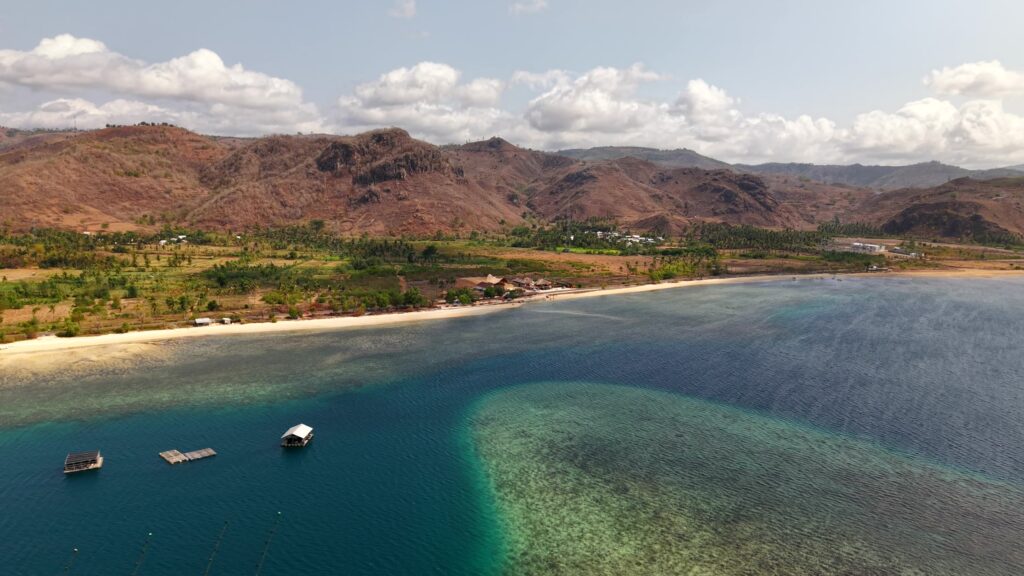
Come and spend some time in the Sekotong village we call home
About 1 hour 10 minutes by car from Lombok International Airport. We offer a stay programme of 3 nights/4 days or more, with island trips by local boat and sunsets at SAKURA CAFE. The villas are due to be completed in stages from 2027.
Sources used for this article
- Indonesian tourism ministry, Bali beaches (Japanese-language page: Kuta, Seminyak, Sanur, Jimbaran, Nusa Dua, Padang Padang, Dreamland, Melasti, Blue Lagoon and others)https://www.indonesia.travel/jp/ja/travel-ideas/marine/pantai-bali
- Wikivoyage, “Bali” (Kuta, Jimbaran and Sanur)https://en.wikivoyage.org/wiki/Bali
- Wikivoyage, “Nusa Dua” (beaches and swimming, security, water sports prices)https://en.wikivoyage.org/wiki/Nusa_Dua
- Wikivoyage, “Canggu” (sand colour, not good for swimming)https://en.wikivoyage.org/wiki/Canggu
- Rough Guides, “Sanur, Bali” (travel guide, undated: calm, shallow water, low tide and the reef in Sanur)https://roughguides.com/indonesia/bali/sanur-bali
- BIMC Hospital Bali, “A Safe Bali Beach Vacation” (12 July 2017: lifeguards, red flags, children and drowning, sunburn, alcohol)https://bimcbali.com/health-e-update/safe-bali-beach-vacation.html
- Metro TV, “WNA Terseret Arus di Pantai Kuta Bali Ditemukan Meninggal” (4 January 2024: the Kuta Beach accident)https://www.metrotvnews.com/read/kELCxoBo-wna-terseret-arus-di-pantai-kuta-bali-ditemukan-meninggal
- WeatherSpark, average weather in Denpasar (sunset, sea temperature, wetter season, wind)https://weatherspark.com/y/128849/Average-Weather-in-Denpasar-Indonesia-Year-Round