“Where is Lombok’s pottery made?” “Can you watch the potters or have a go yourself?” “Can you take a pot home?” When you look into souvenirs from Lombok, red-brown unglazed jars and water jugs turn up alongside woven cloth and pearls.
In short, the three villages most often named as Lombok’s earthenware (gerabah) centres are Banyumulek in West Lombok, Penujak in Central Lombok and Masbagik in East Lombok. Banyumulek is about 20 minutes by car from Mataram, the provincial capital, and Penujak is about 2km from Lombok International Airport; in both you can walk between workshops and watch pieces being made. The Indonesian tourism board lists a pottery class for Rp50,000.
This article is based on pages we opened and read in October 2026: the Indonesian tourism board, The Jakarta Post, Indonesian news sites, papers from the University of Mataram and others, and the Lombok Pottery Center profile page. It is written for travellers who want to see a Lombok craft beyond weaving and pearls, and for anyone thinking of buying pottery as a souvenir.
Information as of October 2026
What this article covers
- ✓Lombok’s three pottery villages, where they are and what sets them apart
- ✓How the pots are made, from soaking the clay to firing
- ✓What the bottom-filled “thief’s jug” is
- ✓What visits and pottery classes cost, and the best time of day to go
- ✓What to watch for when buying and carrying fragile pieces
In short
Lombok’s pottery villages are Banyumulek in the west, Penujak in the centre and Masbagik in the east. Penujak and Banyumulek are the closest to the airport and Mataram: you can watch the potters at work in the shops, or make a piece yourself in a class for around Rp50,000. Prices vary widely with size and workmanship, and we could not confirm 2026 shop prices, so compare a few shops before you buy (as of October 2026).
Where is Lombok’s pottery made? The three villages
Colours, Garuda Indonesia’s in-flight magazine (July 2017), names three main pottery-producing villages on Lombok: Banyumulek, Masbagik Timur and Penujak. It says the craft is handed down from mother to daughter and is the main source of income for many families. The Lombok Pottery Center (founded in 1988), which sells handmade pottery, also names these three villages as home to its potters and says it works with 214 women potters who produce from their homes.
The three villages are spread across the west, centre and east of the island. Banyumulek is in Kediri district, West Lombok, and the Indonesian news site Good News From Indonesia (October 2024) puts it about 20 minutes by car from Mataram. Penujak is a village in West Praya district, Central Lombok, which the tourism board describes as about 2km from Lombok International Airport. Masbagik is the name of a district in East Lombok, and a University of Mataram paper (2025) describes Penakak village in Masbagik Timur district as a centre of traditional pottery production.
Figure: Lombok’s three pottery villages
The in-flight magazine notes that the method varies slightly from village to village, so each village’s earthenware looks a little different. As examples of decoration it gives gecko motifs in Penujak, starfish in Masbagik and old coins and rattan in Banyumulek.
Banyumulek, the largest of the three
According to The Jakarta Post (January 2010), of roughly 3,035 households in Banyumulek, at least 1,800 made pottery at home, with around 8,000 people involved once whole families are counted. Pottery-making in the village goes back to the kingdoms of Selaparang and Pejanggik, when it supplied cooking utensils. Handicraft-style production began in 1989 with help from the provincial government and New Zealand aid, and that support ran until 2001. The village has been listed by the provincial tourism office as a tourism village since 2001.
Good News From Indonesia (October 2024) gives the village an area of about 42 hectares and a population of more than 8,000, and says that since the 1990s about 80% of residents have worked in pottery. Clay is dug from around the village, and many potters colour their work with natural materials such as cooked tamarind seeds. There is no entry fee; the best hours to visit are 8am to 4pm (local time), and firing usually starts around 11am, so arriving by about 10am gives you a chance to see it.
At the time of the Jakarta Post article there were at least 200 art shops in the village, and pieces were exported to the United States, Australia, Europe and parts of Asia. One potter’s small pots sold for Rp2,500 and larger ones for Rp5,000, while pieces sold to art shops fetched Rp25,000–50,000. These are 2010 prices; we looked for newer reports and papers in October 2026 but could not confirm current shop prices.
How do Penujak and Masbagik differ?
The tourism board’s travel article presents Penujak as a tourism village in Central Lombok. Most residents are potters; orders fell after the Bali bombings, and pottery-making pauses during the harvest season. It names Damarwulan Artshop and Yulia Pottery as shops, and describes a husband-and-wife team in Adong hamlet who make large pieces such as water jars, barrels, tables and chairs.
It says the clay is dried and roasted until it resembles flour, then mixed with sand to strengthen large pieces, and that in good weather making a piece takes about a week. A University of Mataram community-service report (October 2025) lists Penujak’s challenges as fewer young people taking up the craft, few new products and weak marketing.
Masbagik appears in a University of Mataram paper (2025) on bowls made in Penakak village, which it describes as a traditional pottery centre. The paper reports training covering clay preparation, shaping, drying, firing, colouring and glazing, but gives no figures for the number of potters or prices. In the sources we opened for this article, we found no information on shops or classes aimed at visitors.
← Scroll sideways to see the whole table
| Village | Regency and district | Getting there | For visitors |
|---|---|---|---|
| Banyumulek | West Lombok, Kediri | About 20 min by car from Mataram | Free entry; 8am–4pm is best; firing from about 11am |
| Penujak | Central Lombok, West Praya | About 2km from the airport | Pottery classes in shops (example: Rp50,000) |
| Masbagik | East Lombok (Penakak village and nearby) | Travel time not confirmed | No visitor information found |
Sources: Good News From Indonesia (October 2024), Indonesian tourism board, University of Mataram paper (2025). Prices and times may change.
How are the pots made, from soaking to firing?
The Lombok Pottery Center lists the materials as clay, sand, water and cooking oil, with the clay brought from nearby hills whose poor soil is unsuitable for farming. The clay is soaked in water for two days, filtered to remove sand and small stones, then mixed with sand and water before shaping. Colours come from natural materials such as rice husks, straw dust, tamarind acid and coconut dust, and pieces are fired in a traditional kiln fuelled by dry leaves, wood and coconut husks.
Figure: How Lombok pottery is made (from the Lombok Pottery Center)
Sources describe the shaping differently. The Lombok Pottery Center says pieces are formed on a potter’s wheel, using tools such as stones, bottles, knives, sharpened bamboo and brushes. Garuda Indonesia’s in-flight magazine, by contrast, says no wheel is used: artisans add layers of clay to a base and press them into shape. It seems likely that this varies by village, potter and type of piece.
What is the bottom-filled “thief’s jug”?
One well-known Lombok piece is a jug filled through a hole in its base. Good News From Indonesia names the Kendhil Maling as Banyumulek’s signature product, with a filling hole in the bottom, and says the design was inspired by the way thieves enter houses by unusual routes such as windows or roofs. The tourism board describes the Cerek Maling, a water jug with its filling opening in the base, as the speciality of Yulia Pottery in Penujak. Maling means “thief” in Indonesian.
The sources do not explain how the water stays inside when the jug is turned the right way up. If you are curious, the easiest way to understand it is to ask a potter in the shop to show you.
What do visits and classes cost, and when should you go?
The tourism board’s article on Penujak lists a pottery package for Rp50,000 that includes a lesson, a piece to take home, lunch and a small bird-whistle souvenir. It follows the description of Yulia Pottery but does not say which shop offers it. The page carries no publication date, so check the current price and shop locally. On the booking site Wotif, a two-hour class at a workshop in Penujak (Adong hamlet) was listed at AU$24 per adult (checked October 2026), including materials and tools, clay for two pieces, glazing and firing and one finished piece to take home, but not hotel transfers, food or international shipping.
In Banyumulek entry is free, and Good News From Indonesia says you can watch pieces being made and try making one yourself. If you want to see firing, plan to arrive around 10am to catch it from about 11am. Penujak is close to the airport, which makes it an easy stop on your arrival or departure day.
Take care
- Some households stop making pottery during the harvest season (tourism board). If you want to watch the work, ask the shop about its schedule
- Pieces made in a class may need days to dry and fire. Check whether you can take yours home the same day
- Before booking a class, check what the price includes (number of pieces, firing, shipping)
- Some shops expect bargaining. Prices vary widely with size and workmanship, so compare two or three shops before deciding
Buying pottery and getting it home
Unglazed earthenware breaks easily, and some pieces are heavy. Small pots, plates and jugs fit in hand luggage; for large water jars or furniture-sized pieces you will need to ask whether the shop can pack and ship them. The Lombok Pottery Center says its pieces are mainly decorative but can also be used to serve food and are microwave safe. That may not apply to every piece in every shop, so if you plan to use something as tableware, ask before you buy.
If you want to combine pottery with Sasak villages and weaving, see Sasak Culture and Traditional Villages. For an overview of what to see around the island by area, see Lombok sightseeing spots.
- ✓Which village suits you (Penujak near the airport, Banyumulek near Mataram)
- ✓If you want to see firing, have you planned to arrive around 10am
- ✓Have you checked the class price and how you will receive your piece
- ✓Have you decided how big and heavy a piece you can carry, and how to pack it
- ✓If you will use it as tableware, have you asked the shop
A note from Sekotong
From Sekotong in southwest Lombok, Mataram is about 1.5 hours by car (the estimate in our Sekotong guide). Banyumulek is about 20 minutes by car from Mataram, so for anyone staying in Sekotong it fits naturally into a day out towards Mataram or West Lombok. Penujak is near the airport and can be a detour on your way to a flight. Traffic changes journey times, so leave plenty of margin.
Downsides of a pottery-village visit, and who it suits
First, the downsides. Up-to-date information on prices and opening times is scarce; the only prices we could confirm were 2010 village prices and undated class fees. We found no visitor information for Masbagik. Pottery is fragile and heavy, which limits how much you can buy, and some households stop work during the harvest.
On the other hand, in villages close to the airport and Mataram you can watch, at close range, clay being shaped and fired with leaves and wood, and some shops let you make your own piece for a small fee. It suits travellers who want to see a craft that grew out of everyday household objects, different from weaving or pearls, and anyone who wants a short stop on their first or last day.
Frequently asked questions
Q. Where is Lombok’s pottery made?
The villages most often named are Banyumulek in West Lombok, Penujak in Central Lombok and Masbagik in East Lombok.
Q. How do I get to Banyumulek?
It is about 20 minutes by car from Mataram (Good News From Indonesia, October 2024). Entry is free, and 8am to 4pm is the recommended time to visit.
Q. Can I try making pottery?
The tourism board’s article on Penujak lists a Rp50,000 package with a lesson, a piece to take home and lunch (the shop is not named). A booking site listed a two-hour class at a Penujak workshop for AU$24 per adult (October 2026).
Q. What is the “thief’s jug”?
A jug filled through a hole in its base, described as the Kendhil Maling in Banyumulek and the Cerek Maling in Penujak. Maling means “thief”.
Q. How much does pottery cost?
A 2010 article gave Rp2,500–5,000 for one potter’s small pots and Rp25,000–50,000 for pieces sold to art shops. We could not confirm 2026 prices, so compare shops.
Summary
Lombok’s pottery villages are Banyumulek in the west, Penujak in the centre and Masbagik in the east. Banyumulek is about 20 minutes by car from Mataram with free entry; Penujak is about 2km from the airport and has shops offering classes. There is less visitor information for Masbagik.
The clay is soaked and filtered, mixed with sand, shaped, coloured with natural materials and fired with leaves and wood. Prices depend on size and workmanship and we could not confirm 2026 prices, so compare shops before buying and think about packing before you choose (as of October 2026).
Related reading
- Sasak Culture and Traditional VillagesHow to visit Sade and Lombok’s weaving villages
- Lombok Sightseeing SpotsAn overview of what to see, area by area
- Things to Do in SekotongOur guide to Lombok’s southwest
More on this topic: Lombok Travel Guide. Sample 3- to 5-night itineraries in Sekotong, with the cost per person: Stay Programme Itineraries.
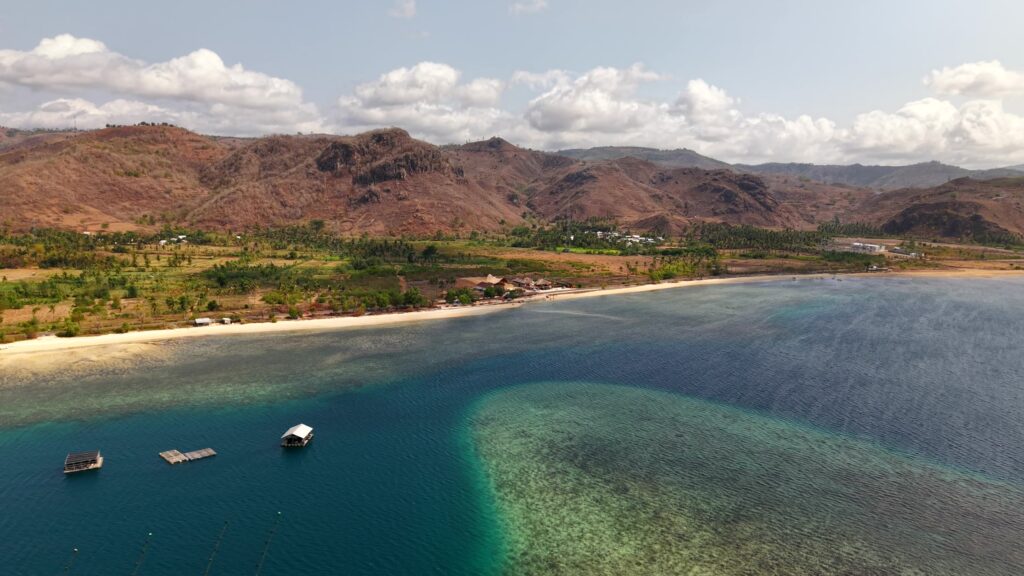
SEMELAR BEACH VILLAGE
Come and spend some time in the Sekotong village we call home
About 1 hour 10 minutes by car from Lombok International Airport. We offer a stay programme of 3 nights/4 days or more, with island trips by local boat and sunsets at SAKURA CAFE. The villas are due to be completed in stages from 2027.
Sources used for this article
- Indonesian tourism board, “Serunya Wiskul dan Membuat Gerabah di 2 Desa Wisata Penjaga Tradisi” (Penujak’s location, Yulia Pottery, Rp50,000 class, method)https://www.indonesia.travel/jp-ja/travel-ideas/serunya-wiskul-dan-membuat-gerabah-di-2-desa-wisata-penjaga-tradisi
- Good News From Indonesia, “Menelusuri Jejak Tradisi Gerabah Lombok di Desa Banyumulek” (10 October 2024; location, travel time, free entry, hours, Kendhil Maling)https://www.goodnewsfromindonesia.id/2024/10/10/menelusuri-jejak-tradisi-gerabah-lombok-di-desa-banyumulek-awal-mula-dari-karya-rupa-yang-mendunia
- The Jakarta Post, “Potters plea for patent protection, regional regulation” (15 January 2010; households, history, prices, exports)https://www.thejakartapost.com/news/2010/01/15/potters-plea-patent-protection-regional-regulation
- Lombok Pottery Center (Smithsonian Festival Marketplace profile; founded 1988, 214 potters, materials and method)https://festival-marketplace.si.edu/lombok-pottery-center-r10-a9231/
- Garuda Indonesia in-flight magazine Colours (July 2017, p. 78; the three villages, decoration, shaping without a wheel)https://www.agencyfish.com/Garuda_Colours_Magazine/2017/July/files/basic-html/page78.html
- Silva et al., “KKN-PMM Regenerasi dan Inovasi Pengembangan Desa Wisata Gerabah di Penujak” (University of Mataram journal, October 2025; Penujak’s challenges)https://journal.unram.ac.id/index.php/jippm/en/article/view/8074
- Herlinasari et al., “Pembuatan Gerabah Mangkuk … Di Desa Penakak Kecamatan Masbagik Timur” (2025; Penakak village)https://jkp.unram.ac.id/index.php/JKP/article/view/211
- Wotif, “Lombok Pottery Workshop with Local Artisans” (checked October 2026; two hours, AU$24, inclusions)https://www.wotif.com/things-to-do/lombok-pottery-workshop-with-local-artisans.a52052000.activity-details
- Semelar Beach Village, “Things to Do in Sekotong” (travel time from Sekotong to Mataram)https://semelarvillage.com/en/sekotong-complete-guide-en/