“I’d like to visit a village on Lombok, but where should I go?” “What is a tourism village (desa wisata), and what can you do there?” Look into a trip to Lombok and, besides Sade and Sukarara, you will find villages where you cycle through rice fields or walk among old houses.
In short, Lombok has a number of tourism villages (desa wisata) where residents have organised themselves to welcome visitors and show them farming, crafts and cooking. Besides Sade and Rembitan for traditional houses, Tetebatu for rice terraces and Sukarara for weaving, the Indonesian tourism board highlights Bilebante for cycling and rice fields, Bonjeruk for old houses, Sesaot for forest and rivers, and Sembalun Lawang at the foot of Mount Rinjani. Many are 30 to 45 minutes from Mataram, so you can visit one or two in half a day.
This article is based on travel articles from the Indonesian tourism board and Indonesian news reports (Good News From Indonesia, Republika, Liputan6, Katadata), which we opened and read in October 2026. It is written for travellers who want to spend some time close to village life on Lombok between days at the beach.
Information as of October 2026
What this article covers
- ✓What a tourism village (desa wisata) is
- ✓Lombok’s main tourism villages by theme
- ✓Where each village is and how long it takes from Mataram or the airport
- ✓Villages that won awards in the 2021 tourism village competition
- ✓What to keep in mind about clothing, money and photos
In short
Lombok’s tourism villages are places where residents welcome visitors and show them rice fields, crafts, food, forests and rivers. Closest to Mataram are Bilebante for cycling and rice fields (about 15km), Bonjeruk for old houses (about 40 minutes) and Sesaot for forest and rivers (30–40 minutes); from the airport, Sade and Sukarara are about 30 minutes. Few activity prices are published, so check with the village or your accommodation before you go (as of October 2026).
What is a tourism village (desa wisata)?
A tourism village welcomes visitors to the village itself as the destination. The tourism board describes Lombok’s tourism villages as showing a side of the island beyond its beaches, where you can meet communities who keep their traditions alive through daily life, and says they suit travellers looking for a quieter, more culturally rich experience away from the coast. Each village has its own focus, from crafts and food to farming and nature walks.
The national government also supports tourism villages. In the Indonesian Tourism Village Awards (ADWI) 2021, reported by Good News From Indonesia (December 2021), three Lombok villages each took fourth place: Senaru in North Lombok (tourist attraction category), Bonjeruk in Central Lombok (public toilets) and Sesaot in West Lombok (cleanliness, health, safety and environment).
Halal tourism villages are a distinctly Lombok initiative. Liputan6 (November 2018) reported a plan to create 99 halal tourism villages on Lombok and Sumbawa over three years, starting with Setanggor village in Central Lombok. Republika (March 2019) reported that Setanggor was inaugurated as a tourism village by the national Ministry of Villages, which provided a weaving gallery, homestays and street lighting.
Lombok’s main tourism villages by theme
Figure: Choosing a Lombok tourism village by theme (from the tourism board and others)
Some villages have a clear focus: Sade for traditional Sasak houses, Sukarara for weaving and Penujak for pottery. We cover Sade and Sukarara in Sasak Culture and Traditional Villages and the rice-terrace and waterfall village of Tetebatu in our Tetebatu guide. This article concentrates on the others. Sade was badly damaged by fire on the night of 22 August 2026 (at least 125 homes razed, according to the provincial disaster agency, and 75 houses totally destroyed, according to the tourism minister; no one died), and as of 12 October 2026 its formal relaunch as a destination was still being prepared, so check the current situation with your accommodation or driver before you go.
← Scroll sideways to see the whole table
| Village | Regency | Getting there | What to do |
|---|---|---|---|
| Bilebante | Central Lombok, Pringgarata | About 15km, 30–45 min from Mataram | Cycling, a rice-field fishing market, herb garden, cooking class |
| Bonjeruk | Central Lombok | About 40 min from Mataram | Old houses, a bamboo market, local food |
| Sesaot | West Lombok | 30–40 min from Mataram | Protected forest and clear rivers |
| Setanggor | Central Lombok | Not confirmed | Halal tourism village, weaving, rice fields |
| Sembalun Lawang | At the foot of Rinjani | 3–4 hours from Mataram | Valley views, strawberry farms, trailhead |
| Sade and Rembitan | Central Lombok, Pujut | About 30 min by car from the airport | Sasak houses, weaving demonstrations (Sade is being rebuilt after the August 2026 fire) |
Sources: Indonesian tourism board travel articles, Republika (2019). Bilebante’s travel time differs between two tourism board pages, so a range is given.
Bilebante: cycling and rice fields
Bilebante is a village in Pringgarata district, Central Lombok. According to the tourism board it is about 15km from Mataram, about 30 minutes by car (45 minutes on another page), and about 45 minutes from the Mandalika area. Known as the “Green Tourism Village”, most of what it offers centres on the rice fields.
Activities listed include the Pancingan Market, where you fish in a rice-field pond and have your catch cooked on the spot; cycling through the settlements, along the river and past Lingkar Kelud Temple, described as the oldest temple in Central Lombok; an herb garden tended by young villagers, with a traditional spa; seaweed grown in the rice fields and seaweed serabi (a rice-flour pancake); local dishes such as plecing kangkung; a Sasak cooking class led by local housewives; and visits to bamboo weavers. Payments at the market are mostly in cash. The page recommends visiting in the dry season, May to September.
Bonjeruk’s old houses, and Sesaot’s forest and rivers
Bonjeruk is a village in Central Lombok that the tourism board places about 40 minutes from Mataram, describing its historic character, colonial-era architecture and old houses still in use, and its quiet lanes. Another tourism board article mentions a food market in a bamboo grove (Pasar Bambu), ayam merangkat, a dish often served at pre-wedding or wedding gatherings (for three to four people), and a Dutch-era house that can be visited by appointment with the caretaker. In the 2021 awards it placed fourth for public toilets and was also among the top 50 tourism villages.
Sesaot is a village in West Lombok that the tourism board describes as a cool, quiet place with clear rivers running through protected forest, 30–40 minutes from Mataram. It recommends the village to people who enjoy forest landscapes but does not list specific activities. In the 2021 awards it placed fourth for cleanliness, health, safety and environment.
Take care
- Activity prices are often not published. Check the cost of cooking classes or cycling, and what is included, in advance
- Markets and small village shops are often cash-only (Bilebante’s market is almost entirely cash)
- Wear clothing that covers shoulders and knees when visiting old houses or places of prayer
- Ask before photographing people or inside homes
- Some places, such as the Dutch-era house, need an appointment
Villages at the foot of the mountain: Sembalun Lawang and Senaru
There are also villages on the slopes of Mount Rinjani. According to the tourism board, Sembalun Lawang is known for sweeping valley views, highland scenery, strawberry farms and vegetable fields, and is a gateway for Rinjani treks. From Mataram it takes 3 to 4 hours along winding mountain roads, which the board notes are part of the scenery. Senaru in North Lombok placed fourth in the tourist attraction category of the 2021 awards. For the waterfalls near Senaru, see our guide to Lombok’s waterfalls.
Being high up, these villages are cooler and feel very different from the coast. Because they take a long time to reach, either pick just one for a day trip or plan to stay overnight on the slopes.
How to visit, and planning a route
Figure: Planning a half-day or full-day village visit
The Bilebante article recommends getting there by private car or rented motorbike. Public transport between villages is impractical, so if you are staying in Mataram or Senggigi, hiring a car and driver for half a day or a day and combining nearby villages is the realistic option. We compare ways of getting around Lombok in our Lombok transport guide.
- ✓Have you checked each village’s theme and travel time
- ✓Have you arranged a car and driver
- ✓Have you booked activities and checked what the price includes
- ✓Do you have small notes
- ✓Do you have clothes that cover shoulders and knees, plus a hat and water
A note from Sekotong
From Sekotong in southwest Lombok, Mataram is about 1.5 hours by car (the estimate in our Sekotong guide). The tourism villages near Mataram (Bilebante, Bonjeruk and Sesaot) fit easily into a day out towards Mataram for anyone staying in Sekotong. Sembalun Lawang, at the foot of the mountain, is another 3–4 hours from Mataram, so a day trip from Sekotong is not realistic; plan to stay on the slopes instead.
Downsides of visiting tourism villages, and who it suits
First, the downsides. Activity prices and visiting hours are hardly mentioned even in the tourism board’s articles, so you need to check before you go. The villages are hard to reach by public transport and you will need to arrange a car. Villages are places where people live, so don’t expect the signage or facilities of a tourist site. We could not confirm how far the halal tourism village plan has progressed.
On the other hand, within 30–45 minutes of Mataram there are several villages that will show you rice fields, a bamboo market, forest and rivers, and local food. They suit travellers who want to spend even half a day close to village life on Lombok between beach days, and those who want to talk with local people through food and crafts.
Frequently asked questions
Q. What is a tourism village (desa wisata)?
A village where residents have organised themselves to welcome visitors and show them farming, crafts, food and nature. In Indonesia the government supports them, for example through the ADWI tourism village awards.
Q. Which tourism villages are close to Mataram?
According to the tourism board: Bilebante (about 15km, 30–45 minutes), Sesaot (30–40 minutes) and Bonjeruk (about 40 minutes).
Q. What can I do in Bilebante?
Listed activities include a market where the fish you catch in a rice-field pond is cooked for you, cycling around the village, an herb garden, a Sasak cooking class and visits to bamboo weavers.
Q. How much does it cost?
Prices were not given in the tourism board’s articles. Check each activity with the village or your accommodation.
Q. Are there halal tourism villages on Lombok?
Setanggor village in Central Lombok was reported to have been inaugurated as a halal tourism village in 2019.
Summary
Lombok has a number of tourism villages that show visitors rice fields, crafts, food, forests and mountains. Closest to Mataram are Bilebante, Bonjeruk and Sesaot, and in the 2021 tourism village awards Senaru, Bonjeruk and Sesaot were among the winners. Setanggor in Central Lombok has been opened as a halal tourism village.
Few activity prices are published and the villages are hard to reach by public transport, so arrange a car and check prices and bookings with the village or your accommodation before you go. Picking one theme and visiting one or two villages in half a day is the easiest approach (as of October 2026).
Related reading
- Sasak Culture and Traditional VillagesHow to visit Sade and Sukarara
- TetebatuGetting to the village of rice terraces and waterfalls
- Lombok Transport GuideHiring a car versus using apps
More on this topic: Lombok Travel Guide. Sample 3- to 5-night itineraries in Sekotong, with the cost per person: Stay Programme Itineraries.
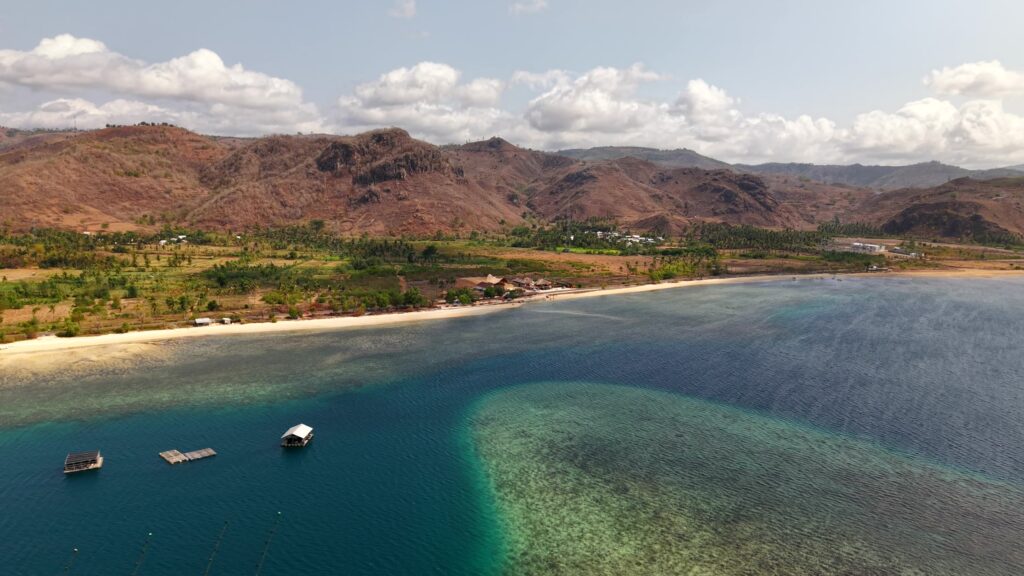
SEMELAR BEACH VILLAGE
Come and spend some time in the Sekotong village we call home
About 1 hour 10 minutes by car from Lombok International Airport. We offer a stay programme of 3 nights/4 days or more, with island trips by local boat and sunsets at SAKURA CAFE. The villas are due to be completed in stages from 2027.
Sources used for this article
- Indonesian tourism board, “Visiting 7 Unique Tourism Villages in Lombok” (checked October 2026; locations, travel times and activities of seven villages)https://indonesia.travel/gb/en/travel-ideas/mengunjungi-5-desa-wisata-unik-di-lombok/
- Indonesian tourism board, “7 Best Activities in Bilebante Tourism Village” (checked October 2026; location, about 15km, seven activities, dry season, cash)https://www.indonesia.travel/my-en/travel-ideas/ini-dia-5-aktivitas-seru-di-desa-wisata-bilebante-kabupaten-lombok-tengah
- Indonesian tourism board, “Serunya Wiskul dan Membuat Gerabah di 2 Desa Wisata Penjaga Tradisi” (Bonjeruk’s bamboo market, food, Dutch-era house, awards)https://www.indonesia.travel/jp-ja/travel-ideas/serunya-wiskul-dan-membuat-gerabah-di-2-desa-wisata-penjaga-tradisi
- Good News From Indonesia, “Daftar Lengkap Para Pemenang Anugerah Desa Wisata Indonesia 2021” (8 December 2021; awards for Senaru, Bonjeruk and Sesaot)https://www.goodnewsfromindonesia.id/2021/12/08/daftar-lengkap-para-pemenang-anugerah-desa-wisata-indonesia-2021
- Liputan6, “99 Desa Wisata Halal di Lombok-Sumbawa” (18 November 2018; halal tourism village plan, Setanggor)https://www.liputan6.com/regional/read/3695166/99-desa-wisata-halal-di-lombok-sumbawa
- Republika, “Desa Setanggor, Desa Wisata Lombok Tengah” (23 March 2019; inauguration, weaving gallery, homestays)https://news.republika.co.id/berita/pos7bx368/desa-setanggor-desa-wisata-lombok-tengah
- Katadata, “5 Desa Wisata di Lombok Selain Sade yang Wajib Dikunjungi” (26 August 2026; Tetebatu, Ende, Sukarara, Bilebante, Sembalun)https://katadata.co.id/lifestyle/varia/6a8ea9778cde0/5-desa-wisata-di-lombok-selain-sade-yang-wajib-dikunjungi
- Semelar Beach Village, “Things to Do in Sekotong” (travel time from Sekotong to Mataram)https://semelarvillage.com/en/sekotong-complete-guide-en/