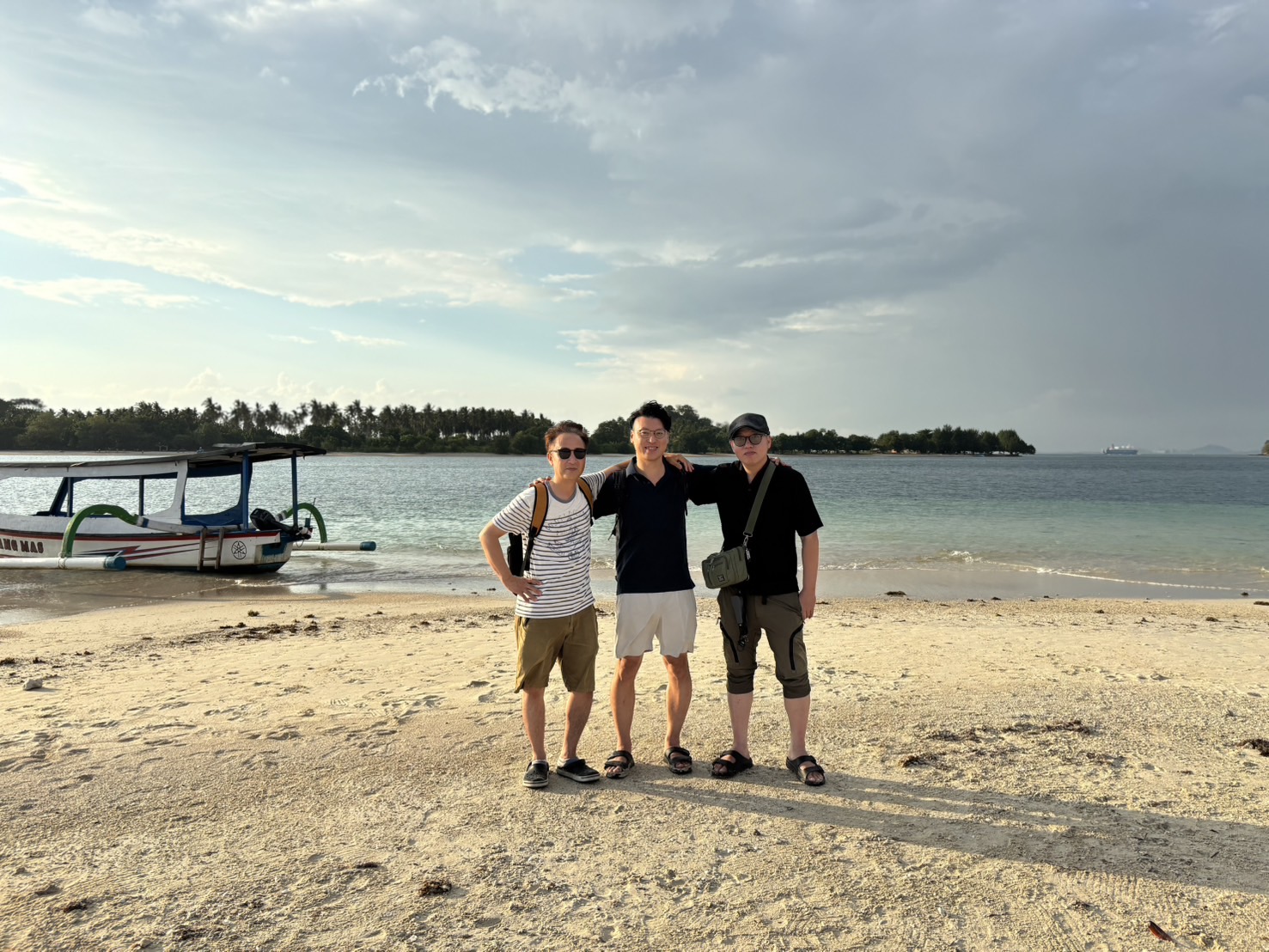
Among the islands known as the South Gilis, some have developed into tourist spots lined with restaurants and souvenir shops, while others remain quiet places with little more than a village and the sea. Gili Asahan falls into the latter category — and it stands out for one thing in particular: its village has electricity. In a part of the South Gilis where many islands still rely on generators and go completely dark after sunset, Gili Asahan is known as one of the few “islands you can stay on” that combines electricity with genuine quiet. It tends to attract travelers who come not for a lively resort scene, but simply to spend time facing the sea. This article walks through where Gili Asahan is, how to get there from Sekotong, what the island itself is like, how to spend your time there, and what to keep in mind before you go — following the order you’d naturally plan a trip. We’ll also cover how it compares with its more frequently mentioned neighboring islands, which should help if you’re deciding among the South Gilis. Lombok has two island groups with very different characters: the North Gilis and the South Gilis. Travelers who’ve already seen the buzz of the North Gilis are often struck by just how quiet the South Gilis feel by comparison. Within the South Gilis, Gili Asahan has gradually become known as a place especially suited to spending “time with nothing happening.”
Where is Gili Asahan?
Gili Asahan is one of the South Gili islands scattered off Sekotong, in southwest Lombok. The same stretch of water holds several small islands collectively known as the South Gili islands, and Gili Asahan sits right next to Gili Gede, the largest of them. If you look at a map with Gili Gede at the center, you’ll see a scattering of larger and smaller islands around it — Gili Asahan is one of these, positioned close to Gili Gede.
While the well-known “North Gilis” — Gili Trawangan, Gili Meno, and Gili Air — cluster off Lombok’s northwest coast, the South Gili islands, including Gili Asahan, gather off the Sekotong peninsula at Lombok’s southwestern base. The boat routes and departure ports for the North Gilis are completely different from those for the South Gilis, so it’s worth getting the basic north/south distinction straight before you plan further, since the names can otherwise be confusing. If you’re coming from Mataram or Senggigi, the main cities on Lombok, remember that Sekotong is your route toward the South Gilis. Checking the travel time from the airport to Sekotong ahead of time also makes it easier to plan out your arrival day.
Each of the South Gili islands has its own distinct character. For Gili Asahan, simply being next to the larger Gili Gede is itself an advantage when planning your trip. You could base yourself on or pass through Gili Gede and take a short trip out to enjoy Gili Asahan’s quiet, or conversely, stay on Gili Asahan and hop over to Gili Gede only when you need a meal or some shopping. Since the crossing between islands is often just a few minutes to a little over ten minutes by boat, it’s easy to build an itinerary that moves casually between islands — one of the real draws of visiting this part of the South Gilis.
Getting there: by boat from Sekotong
The usual way to reach Gili Asahan is by boat from a port on the Sekotong side. The Sekotong area has several departure points, with boats running out to the South Gili islands. The crossing to Gili Asahan typically takes somewhere around 10 to 20 minutes, though it varies depending on which port you leave from, the type of boat, and the sea conditions that day. Since the distance is fairly short, the island works well both as a day trip and as an overnight stay.
There’s no fixed-schedule ferry service running constantly — in most cases, you’ll be using a chartered boat. Getting familiar with how to arrange a boat charter in Sekotong beforehand makes it easier to sort things out on the day. Sometimes your accommodation or a tour operator can arrange it for you; other times you’ll negotiate directly with a boatman at the port. It’s worth deciding which approach you’ll take before you travel. We’d also recommend confirming clearly with the boatman, before you set off, how long the round trip will take and what arrangements are in place for your pickup on the way back. On a day trip especially, missing your return boat leaves you with limited options, so make sure the pickup time and how you’ll get in touch are spelled out in words, not left vague. Before boarding, confirm the price, number of passengers, and how luggage will be handled, so there’s no confusion once you’re off the boat. Since these conversations often happen in basic English, it helps to have your destination and timing written down so you can point to it if words don’t quite land.
Many travelers also arrange a charter plan that covers several South Gili islands in a single day. Rather than visiting Gili Asahan on its own, you can often be offered a route that also takes in Gili Gede and Gili Nanggu — worth asking about when you arrange your boat if you’re not staying overnight anywhere. When planning an island-hopping route, the key is not being too greedy with time on each island. Once you subtract travel time and the hassle of getting on and off boats, a realistic target for a single day is two to three islands. Give more time to the island you want to properly enjoy, and keep the ones you’re just passing through brief — that kind of pacing lets you take in the South Gilis without feeling rushed. If you’re combining this with an overnight stay, choosing an island that’s easy to reach for your final day makes the return trip smoother too.
What the island is like: size and eco-lodge-style stays
Gili Asahan is a small island you can walk around on foot. Unlike Gili Trawangan, the hub of the North Gilis, with its rows of shops and restaurants, there’s no real bustle here — picture a quiet village and coastline, and you’ll have the right idea. Not every stretch is powder-white sand, but the shallow, clear water surrounding the island makes for plenty of comfortable time on the beach. Walking the island doesn’t take long, and along the way you can take in everyday village life and the sight of fishing boats lined up along the shore.
As for accommodation, the general pattern here leans toward small eco-lodge-style places with electricity and basic amenities, rather than large resorts. Room counts are limited, so if you’re planning to stay, it’s worth booking ahead and building in some flexibility for your arrival time. At some places, expect the kind of amenities typical of a small tropical island — a fan instead of air conditioning, or a simple hot water setup, for instance. Since specific lodges’ names and rates change fairly often depending on the season and how they’re being run, this article doesn’t point to any particular property by name — take the description here as a sense of the island overall.
Another thing that gives Gili Asahan its particular character is how closely the islanders’ everyday life sits next to the area where visitors stay. You’ll see boats coming ashore after a day’s fishing, children wandering around the village — the kind of everyday scenes that are harder to find on more developed islands. There’s little in the way of Instagram-ready facilities or staged experiences; understanding going in that this is a place that has kept its own plainness helps close the gap between expectation and reality. When walking through the village, it’s worth keeping in mind that you’re passing through people’s living space — ask before taking photos, and keep your voice down during quiet hours. These small courtesies go a long way toward making your visit a comfortable one for everyone.
How to spend your time: snorkeling right offshore, and sunsets
How you spend your time on Gili Asahan is refreshingly simple. In many cases, you can snorkel straight off the beach in front of your lodging, with coral and fish visible nearby without needing a boat out to open water. This isn’t really an island for packing in activities — it suits floating in the sea, swimming, and resting in the shade or on the sand when you’re tired, more than anything else. Since the view changes with the tide, it’s worth walking the beach twice — once in the morning and again in the evening — to see it in different light.
As evening approaches, there’s a window when you can watch the sunset with the mountains of Lombok and Sekotong as a backdrop. As the day’s strong sun softens and the whole island settles into quieter colors, this alone is reason enough for many people to visit. Because the island has electricity, you can still eat dinner or read by lamplight after dark — a small but real comfort that sets this island apart. Rather than thinking of it as a place to stay connected online or seek out entertainment, it helps to frame it as somewhere you go specifically to build in time for doing nothing — that shift in expectations tends to make for a more satisfying stay. Many nights bring a clear view of the stars, a treat you get precisely because there’s so little artificial light here.
As for timing your visit, the dry season generally brings calmer seas and better visibility for snorkeling. That said, Lombok’s weather varies from year to year, so there’s no absolute guarantee. Over a stay of a few days, you could well see both good weather and a rougher day, so it’s worth packing a little extra rain gear and a change of clothes just in case. The daytime sun is strong, so don’t forget sun protection and plenty of water.
What to know before you go
There are a few things worth keeping in mind before visiting Gili Asahan. Small islands come with their own set of limitations, and knowing about them ahead of time means you won’t be caught off guard once you’re there.
- There’s generally no ATM on the island, so bring the cash you’ll need from the mainland or the Sekotong side beforehand. It’s worth bringing a bit more than you think you’ll need, just to be safe.
- Mobile signal can be unreliable depending on where you are on the island — it’s best not to assume you’ll always have a connection. Take care of any important messages before you go. Since signal strength varies by lodging, it can help to ask staff after you arrive which spots tend to get better reception.
- During the rainy season, boat services can be paused or sea conditions can turn rough, depending on wind and waves. Build some slack into your travel schedule.
- Places that accept credit cards are limited, so plan on paying with cash as your default.
- Facilities on the island tend to be fairly basic, so bring along anything you might need — prescription medication, insect repellent, sunscreen — rather than expecting to find it there.
These are all general tendencies common to the small islands of the South Gilis, and conditions can vary depending on when you visit and how a given lodge is being run at the time. Checking the latest information directly with your accommodation or boat operator before you leave should cut down on surprises once you’re there.
Figure: what to know before you go
The island also has no major hospital or clinic, generally speaking, so if you have any health concerns, bring plenty of any medication you need and plan your stay at a comfortable pace. Sea conditions can change quickly, so when snorkeling, avoid swimming too far out on your own — check with lodge staff or locals about which areas are safe before getting in the water. Basic courtesies for protecting a small island’s environment, like taking your trash with you, are also worth keeping in mind.
How it compares with its neighbors: Gili Gede and Gili Nanggu
When touring the South Gilis, the two islands most often compared with Gili Asahan are the neighboring Gili Gede and Gili Nanggu. Gili Gede is the largest of the South Gilis, and tends to have a wider range of accommodation and a larger village than Gili Asahan. If you value convenience as a base — more choices for where to stay and eat — Gili Gede may be the easier pick in some situations.
Gili Nanggu, on the other hand, is known for its beautiful beaches and tends to draw travelers coming for a day of snorkeling or swimming rather than an overnight stay. It leans more toward a day-trip island for enjoying the sea than a quiet place to settle in. Gili Asahan, by contrast, suits a night or a few nights spent unwinding somewhere with electricity but a genuinely relaxed atmosphere. Its lodges and level of service are modest, and the place still feels more like a living community than a tourist destination — one of the things that sets it apart. Even within the South Gilis, each island suits a slightly different kind of trip, so it’s worth choosing based on what you’re actually looking for; that tends to make for a more satisfying visit. If your schedule allows, combining a visit with Gili Gede and Gili Nanggu and comparing the differences firsthand is also a rewarding way to explore.
What all three islands share is that none has seen the kind of large-scale development the North Gilis have. Whichever you choose, you should plan your trip assuming electricity, water, and connectivity are less developed than in the North Gilis. Looked at the other way, that makes all three genuinely appealing options for travelers who want to escape the crowds and noise and settle into island time. Deciding which of Gili Gede, Gili Nanggu, or Gili Asahan to build your trip around comes down to your goals, how many days you have, and how much comfort you’re looking for.
Figure: comparing the South Gili neighboring islands
FAQ
Q. Can I visit Gili Asahan on a day trip?
Yes — the short crossing from Sekotong makes a day trip possible. That said, given the island’s character as a quiet, electricity-equipped place to unwind, staying a night lets you experience the sunset, stars, and morning calm that a day trip doesn’t offer. If you’re doing a day trip, it’s especially important to fix the timing of your return boat in advance. If you’d rather not be watching the clock, planning for a night or more from the start will let you appreciate the island more fully.
Q. Can I exchange money or use an ATM on the island?
Generally, there’s no ATM on the island. We’d recommend handling any currency exchange or cash withdrawals on the mainland before crossing over to Sekotong. Bringing a little more cash than you expect to need, based on how many days you’re staying, helps avoid trouble once you’re there. Also assume credit cards will be accepted almost nowhere, and work out how much cash you’ll need to cover lodging, meals, and boat fares before you travel.
Q. Can I visit during the rainy season?
Yes, visiting during the rainy season is possible, though sea conditions can sometimes affect boat services. We’d recommend building slack into your schedule and checking the day’s sea conditions with your boat operator before setting off. If possible, keep a spare day before or after your crossing so you can adjust to changing weather. If you have a return flight to catch, we’d strongly recommend not cutting your final day too close, and instead building in enough time to get back to Sekotong or the Lombok mainland comfortably.
Summary
Gili Asahan is a place in the South Gili islands off Sekotong that offers a rare combination of electricity and genuine quiet. It sits close to Gili Gede and is a short boat ride from Sekotong. The island is small enough to walk around, accommodation generally leans toward eco-lodges, and it suits a stay built around doing nothing much at all — snorkeling right off the beach, watching the sunset, and looking up at a starry sky made all the more vivid by how little artificial light there is. As long as you plan around cash, mobile signal, and rainy-season sea conditions, it’s an easy island to add to your list if you’re after a calm stretch of time within the South Gilis. Weighed against nearby Gili Gede’s convenience and Gili Nanggu’s day-trip-friendly beaches, it becomes clearer what role Gili Asahan can play in a wider South Gili itinerary. Consider working it into your trip as the island you visit once you’re ready to step back from busier sightseeing and shift into quieter time.
Sekotong is your gateway to the island. For details on port locations, how to arrange a boat, and the surrounding area, see our complete guide to Sekotong — worth checking alongside your travel plans. With your preparations on the Sekotong side sorted, crossing over should make your quiet time on Gili Asahan all the more enjoyable.
SEMELAR BEACH VILLAGE
Stay in the Sekotong village we call home
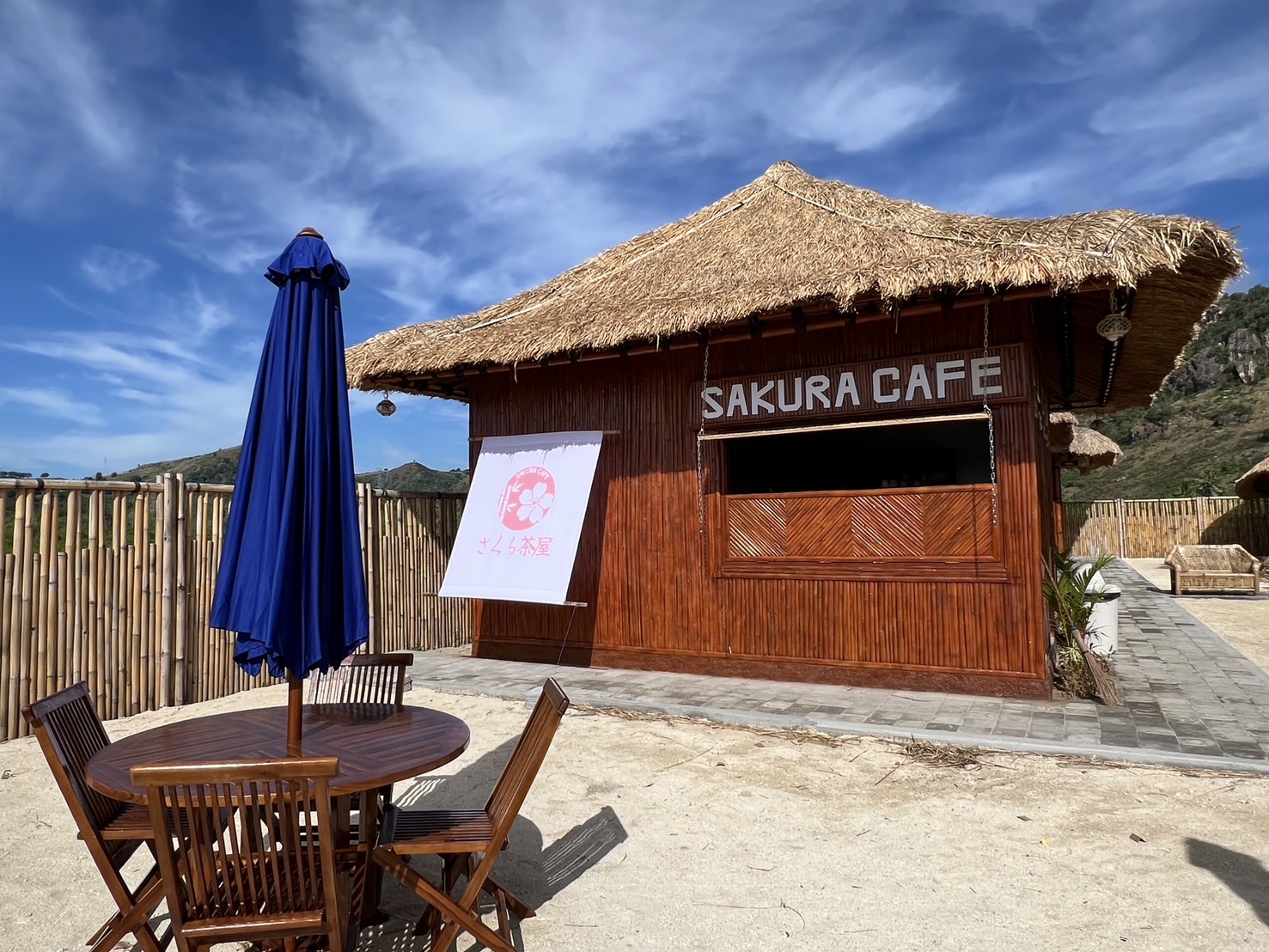
About 1 hour 10 minutes from Lombok International Airport. Stay at a beachfront villa, explore the coast by local boat, and watch the sunset from Sakura Cafe.