When is the surf good on Lombok, and why do some breaks work in the dry season and others in the wet? Most surf guides give a list of months. This one explains the two things behind those months: where the swell comes from, and how the seasonal wind decides which breaks are clean. Once you understand both, you can work out where to go from the dates you can travel.
We use Lombok as the reference point, because it is where we live and work, and compare it with Bali, the Mentawai Islands and, for contrast, the Philippines, where the swell has a different origin altogether. For the facts we rely on weather agencies, Indonesia’s official tourism site and established surf guides, listed at the end.
Information as of November 2026
What this article covers
- ✓Where swell comes from and how far it travels
- ✓How the monsoon wind decides which breaks are offshore
- ✓Lombok month by month: dry season reefs and wet season inside breaks
- ✓Desert Point: what makes it world-famous and why it is for experts only
- ✓Mentawai and the Philippines for comparison
- ✓Costs, reef cuts, tides and boats
In short
The waves on Lombok’s south and southwest coasts are mostly groundswell from storms far to the south in the Indian Ocean, not from local weather. The swell is biggest and most consistent in the dry season, roughly May to September. The monsoon wind then decides which breaks are clean: some south coast spots, such as Inside Gerupuk, are favoured by the wind in the wet season. Beginners can surf Lombok all year if they choose the right spot.
Where the waves come from
Waves are made by wind. Australia’s Bureau of Meteorology explains that wave size is set by three things: the speed of the wind, how long it blows, and the distance over which it blows, known as the fetch. Swell is wave energy created by winds elsewhere, and the Bureau notes that these waves may travel thousands of kilometres from where they formed before they reach you.
That is why Lombok’s south and southwest coasts, Bali’s Bukit peninsula, Sumbawa and the west coast of Sumatra get regular surf even on calm, sunny days. They face the open Indian Ocean, and the swell arriving there was generated by storms far to the south. Whether there are waves on a given day has little to do with the local weather; whether they are clean depends on the local wind.
Figure: How a swell reaches Lombok
The monsoon decides which breaks are clean
A wave is cleanest when the wind blows from the land out to sea, which surfers call offshore. Onshore wind, blowing in from the sea, makes the surface choppy. Which breaks are offshore therefore depends on the direction of the prevailing wind and on the way each coast and reef faces.
In Indonesia, the prevailing wind switches with the monsoon. BMKG, Indonesia’s weather agency, describes the start of the dry season as the change from the westerly Asian monsoon to the easterly Australian monsoon. For 2026, BMKG forecast that the dry season would begin in West Nusa Tenggara in April and peak in August across Bali and Nusa Tenggara. The westerly monsoon returns with the rains, usually from around November.
Figure: The two monsoon seasons on Lombok
Lombok month by month
The Surf Atlas describes the dry season, roughly May to September, as the main time to surf Lombok: the south and west coasts get bigger, more consistent groundswell, and Desert Point is most likely to work. In the wet season, roughly November to March, waves are typically a foot or so smaller and offshore winds are less common, but the guide says the season is not bad at all, and its author names Ekas Outside, Gerupuk Outside and Mawi among the breaks that stay good from November to March.
For beginners and improvers, the bay at Gerupuk, about 7 km east of Kuta, is the classic choice. Indonesian Surf Guide rates Inside Gerupuk as beginner to intermediate, reached only by a short boat ride from Gerupuk village, suited to mid to high tide, with east to northeast winds blowing offshore, and says the wet season, October to April, often brings favourable winds there. The Surf Atlas names Selong Belanak, on the south coast, as the island’s top beginner wave.
Figure: Surf seasons by area
More detail on individual spots is in our guide to Lombok’s surf spots and Lombok surfing for beginners.
Desert Point: world-famous, and for experts only
Desert Point is a left-hand reef break on the extreme southwest edge of Lombok, near Bangko-Bangko, in the same corner of the island as Sekotong. According to The Surf Atlas, it is known for long barrels, with rides of 20 to 30 seconds on good days. It needs a big south-southwest groundswell, works best with a north wind, and is a low-tide wave with a short window that can almost disappear at high tide. The dry season suits it, especially May to August.
It is also dangerous. The same guide calls it expert only: the reef finishes on shallow, jagged platforms, and anyone caught on the inside risks serious injury. The last stretch of road to the break is a dirt track. If you are not an experienced reef surfer, watch from the shore and surf elsewhere.
How the rest of the region compares
Bali
Bali faces the same Indian Ocean swell as Lombok and follows the same monsoon, so its main season is also the dry season. The difference is infrastructure and crowds: Bali has far more surf schools, accommodation and flights, and its most famous breaks are busy at the peak of the season. Our comparison of Bali and Lombok looks at the islands more broadly.
Mentawai Islands
The Mentawai Islands, off West Sumatra, are described by Indonesia’s official tourism site as one of Indonesia’s main surf destinations. It gives the peak surfing season as May to October, with wave heights of 2 to 7 metres. Getting there is part of the cost: from Padang, the public ferry takes about 10 to 12 hours, at Rp135,000 to 160,000, and the Mentawai Fast boat about 3 to 4 hours, at Rp300,000 for foreign visitors. Chartering a boat between islands costs Rp1,500,000 to 3,000,000 a day.
The Philippines: a different engine
On the Pacific coast of the Philippines, the swell comes mainly from tropical cyclones rather than from Indian Ocean storms. PAGASA, the Philippine weather agency, says the peak of the typhoon season is July to October, when nearly 70 percent of typhoons develop. Perfect Wave Travel gives August to November as the main months at Siargao, when typhoon swells arrive and the Pacific coast gets offshore winds. The monsoon matters there too: in 2026 PAGASA declared the end of the southwest monsoon on 5 October, as reported by GMA News.
Choosing by level and dates
← Scroll sideways to see the whole table
| Your level | Months | Where to look | What to accept |
|---|---|---|---|
| Beginner | All year, choosing the spot | Selong Belanak; Inside Gerupuk, especially October to April | Boat fares at Gerupuk; mid to high tide only on the reef |
| Improver | Wet season, or the edges of the dry season | Gerupuk, Ekas and Mawi on Lombok | Smaller swell in the wet season; rain and occasional rough crossings |
| Intermediate | May to September | Lombok’s south coast reefs; Bali | Crowds at the peak; reef cuts |
| Expert | May to August (Desert Point); May to October (Mentawai) | Desert Point; Mentawai Islands | Shallow reef and a short tide window; boat costs in Mentawai |
Months and levels from The Surf Atlas, Indonesian Surf Guide and Indonesia.travel. Conditions vary year to year; always check a current forecast.
Costs and risks beyond the waves
Before you book
- Boats and guides: many of Lombok’s south coast breaks, and all of Mentawai, are reached by boat; budget for fares every day
- Reef cuts: most good waves break over coral; carry a first-aid kit for cuts and consider reef booties
- Tides: shallow reefs change fast with the tide; check a tide table and ask a local surf shop before paddling out
- Medical care and insurance: see our guide to hospitals and travel insurance on Lombok
- Wet season boats: rough seas can delay crossings; keep a spare day in your plan
For the forecast, Indonesia’s weather agency BMKG publishes high wave warnings for Indonesian waters. Our guide to planning a Lombok surf trip covers accommodation, transport and what to bring.
A note from Sekotong
Our stay programme in Sekotong, in southwest Lombok, is not a surf camp: it is a quiet base by the sea, about 1 hour 10 minutes by car from Lombok International Airport, with island trips by local boat. Surfers sometimes combine a few days on the south coast with time in Sekotong; on flat days the calm water off the southern Gilis is good for snorkelling.
Frequently asked questions
Q. When is a good time to surf Lombok?
For the biggest and most consistent swell, the dry season, roughly May to September (The Surf Atlas). Beginners can surf all year by choosing the right spot.
Q. Can beginners surf Lombok in the wet season?
Yes. Indonesian Surf Guide says the wet season, October to April, often brings favourable winds at Inside Gerupuk, a beginner to intermediate wave reached by boat.
Q. When does Desert Point work?
Mostly in the dry season, especially May to August, on a big south-southwest swell at low tide. It is for experienced reef surfers only.
Q. Why are there waves on sunny, calm days?
Because the swell is generated by storms far away in the Indian Ocean and travels for days. Local weather mainly affects how clean the waves are.
Q. How is surfing in the Philippines different?
The swell on the Pacific coast comes mainly from typhoons. PAGASA puts the typhoon peak at July to October, and Siargao’s main months are usually August to November.
Summary
Lombok’s surf is driven by distant Indian Ocean swell and shaped by the monsoon. The dry season, roughly May to September, brings the biggest and most regular waves and is when Desert Point comes alive. The wet season brings smaller swell but still has good options, especially for beginners at spots like Inside Gerupuk.
Start from the dates you can travel and your level, then pick the coast and the break that suit both. Check a current forecast and the tide before every session.
Related reading
- Lombok surf spots guideWaves and difficulty by area
- Lombok surfing for beginnersChoosing by level, and the seasons
- Kuta Lombok (Mandalika) guideSurf beaches, MotoGP and development
For the seasons across the country, Indonesia’s rainy and dry seasons explains the three rainfall patterns by region, the outlook for the 2026 to 2027 rainy season, and when Lombok’s rainy and dry seasons fall.
Lombok as a destination: Lombok Travel Guide.
SEMELAR BEACH VILLAGE
Come and spend some time in the Sekotong village we call home
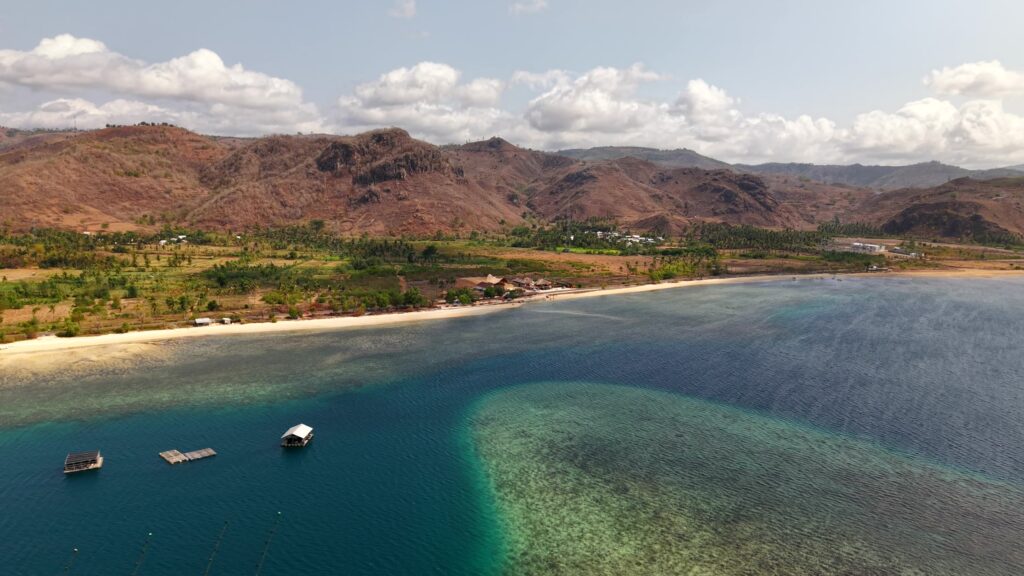
About 1 hour 10 minutes by car from Lombok International Airport. We offer a stay programme of 3 nights/4 days or more, with island trips by local boat and sunsets at SAKURA CAFE. The villas are due to be completed in stages from 2027.
Sources used for this article
- Bureau of Meteorology (Australia), “Explainer: dangerous ocean waves” (wind speed, duration and fetch; swell travelling thousands of kilometres)https://media.bom.gov.au/social/blog/2334/explainer-dangerous-ocean-waves
- BMKG, “Musim Kemarau 2026 Datang Lebih Awal, Puncak Terjadi Agustus Mendatang” (4 March 2026; Australian monsoon, NTB dry season from April, peak in August)https://www.bmkg.go.id/siaran-pers/bmkg-musim-kemarau-2026-datang-lebih-awal-puncak-terjadi-agustus-mendatang
- The Surf Atlas, “Lombok surf” (dry and wet season, beginner spots, wet season breaks)https://thesurfatlas.com/surfing-indonesia/lombok-surf/
- The Surf Atlas, “Desert Point surf” (location, wave, swell and tide, expert only, season)https://thesurfatlas.com/surfing-indonesia/desert-point-surf/
- Indonesian Surf Guide, “Inside Gerupuk” (level, wet season winds, boat access, tide)https://indonesiansurfguide.com/surf-spot/inside-gerupuk/
- Indonesia.travel (Ministry of Tourism), “Guide to planning a trip to the Mentawai Islands” (season, wave heights, ferry and fast boat fares, boat charter)https://www.indonesia.travel/au-en/travel-ideas/marine/guide-to-planning-a-trip-to-the-mentawai-islands-indonesias-surf-paradise
- PAGASA, “Tropical Cyclone Information” (peak July to October, nearly 70 percent)https://www.pagasa.dost.gov.ph/climate/tropical-cyclone-information
- Perfect Wave Travel, “Philippines surf guide” (typhoon swell, Siargao August to November)https://www.perfectwavetravel.com/philippines-surf-guide/
- GMA News, “Habagat or southwest monsoon in 2026 ended, says PAGASA” (5 October 2026)https://www.gmanetwork.com/news/weather/content/1004799/habagat-or-southwest-monsoon-in-2026-ended-says-pagasa/story/