“What are Indonesia’s best-known sweets?” “Which ones use coconut, banana or mung beans?” “Where can I find them on Lombok?” Many people wonder about this before a trip to Indonesia. The short answer: the nine worth knowing are es campur (shaved ice), es cendol (green jelly), dadar gulung (green crepe), klepon (rice cake balls), kolak pisang (banana in coconut milk), pisang goreng (fried banana), martabak manis (thick pancake), bubur kacang hijau (mung bean porridge) and rujak (fruit salad). Many use coconut milk and palm sugar. On Lombok you will come across them at hotel breakfasts, in markets and at stalls, and at evening stalls during Ramadan (the fasting month).
This guide is based on the Indonesian government’s tourism website, Wikipedia, reports in Lombok’s local papers and the state news agency Antara, and our team’s videos. There is little public information on prices and opening hours for individual places, and where we could not confirm something, we say so. We do not cover recipes.
It is written for people who want to try sweet things on Bali or Lombok, or want to know the names of sweets they have seen at stalls or at breakfast.
Information as of September 2026
What this guide covers
- ✓Nine well-known Indonesian sweets, and how to read the rankings
- ✓Choosing by ingredient: coconut, banana and mung beans
- ✓Where and when to find sweets on Lombok
- ✓The custom of sweets at evening stalls during Ramadan, and typical prices
- ✓Lombok’s own sweets, and what to watch at stalls
In short
Indonesian sweets are mostly made with coconut milk and palm sugar. On Lombok, hotel breakfasts sometimes include kolak pisang and dadar gulung. During Ramadan, stalls line the streets from the late afternoon, and a March 2026 report put light snacks at Rp5,000 to 10,000 a serving. Choose carefully with anything made with ice or cut fruit.
Here are the nine Indonesian sweets, desserts and snacks worth knowing, with what they are made of and where to find them. Most use coconut milk and palm sugar. Each one is explained in the sections below.
Table: Indonesia’s best-known sweets, desserts and snacks
← Scroll the table sideways
| Name | What it is made of | Where to find it |
|---|---|---|
| Es campur | Shaved ice with fruit, jellies of different colours and coconut flesh, palm sugar syrup, coconut milk and condensed milk | Street stalls; evening stalls during Ramadan |
| Es cendol | Green jelly of rice flour (or mung bean starch) with coconut milk and melted palm sugar | From street stalls to cafes |
| Dadar gulung | Thin green crepe rolled around grated coconut and palm sugar | Traditional markets, warungs, hotel breakfasts |
| Klepon | Glutinous rice flour balls filled with palm sugar, boiled and rolled in grated coconut | Traditional markets; a snack for breaking the fast |
| Kolak pisang | Banana simmered with coconut milk, palm sugar and pandan leaves | Hotel breakfasts, evening stalls during Ramadan |
| Pisang goreng | Banana coated in batter and deep-fried | Street stalls, local coffee shops |
| Martabak manis (terang bulan) | Thick pancake of fermented batter topped with chocolate, peanuts, cheese and more, folded over | Stalls that set up around sunset |
| Bubur kacang hijau | Mung beans cooked with coconut milk and palm sugar into a porridge | Warungs (specialist ones are called warung burjo) |
| Rujak | Cut fruit and vegetables with a sweet and spicy palm sugar sauce (with chilli and peanuts) | Street stalls |
* Based on the sources for each section (Indonesia’s official tourism website, Wikipedia, Lombok news reports and our team’s videos). We could not confirm the locations or opening hours of individual places on Lombok (as of September 2026).
What are Indonesia’s best-known sweets? How to read the rankings
There is no official popularity ranking for Indonesian sweets. One useful reference is the food site TasteAtlas, which ranks dishes from around the world by user ratings. In its “desserts in Indonesia” list, as we checked it in September 2026, pisang goreng (fried banana) was first, klepon second, dadar gulung sixth, kolak 13th and bubur kacang hijau 18th. It was based on 646 valid ratings, and the order changes over time.
Es campur, es cendol, martabak manis and rujak are not on that list, but they appear on the government tourism website, in reports from Lombok and in our team’s videos, so we cover them here as well.
Knowing what the names mean makes menus easier to read. In es campur, “es” means ice and “campur” means mixed. In dadar gulung, “dadar” means omelette or pancake and “gulung” means rolled. “Pisang” in kolak pisang and pisang goreng means banana, and “kacang hijau” in bubur kacang hijau means mung beans.
Which sweets use coconut? Es campur, es cendol, dadar gulung and klepon
Es campur is a cold dessert of shaved ice mixed with fruit, jelly and more. In a video on our team’s YouTube channel (published in September 2025), staff at a stall in Sekotong and Hiroki Nakamura, who runs a business in Sekotong, explain that it is shaved ice with coconut flesh, jellies of different colours, pineapple, melon, palm sugar syrup, unsweetened coconut milk and sweetened condensed milk.
Es cendol is a cold dessert of green jelly made from rice flour (cendol) topped with coconut milk and melted palm sugar. The government tourism website says you can find it everywhere from street stalls to cafes. The jelly is flavoured with pandan (a fragrant leaf) and is sometimes made with mung bean starch. In Central and East Java it is called “dawet”.
Dadar gulung is a thin green crepe rolled around a filling of grated coconut and palm sugar. The green colour comes from suji or pandan leaves. It is sold in traditional markets and warungs (small eateries and shops).
Klepon are bite-sized balls of glutinous rice flour dough wrapped around palm sugar, boiled and rolled in grated coconut. The sugar inside melts as they boil, so they release sweet syrup when you bite them. The government tourism website describes them as a Javanese speciality and lists them among the snacks for breaking the fast.
Lombok also has cold sweets made with young coconut. In March 2026, the local paper Lombok Post, reporting on evening stalls during Ramadan in Praya, a town in Central Lombok, said there were young coconut ice with fruit (es buah kelapa muda), es teler and es campur.
Which sweets use banana? Kolak pisang and pisang goreng
Kolak is a sweet dish simmered with palm sugar (or coconut sugar), coconut milk and pandan leaves. When it contains banana, it is called kolak pisang. Sweet potato or cassava are sometimes added.
In a video on our team’s YouTube channel (published in November 2025), Nakamura shows the Indonesian dishes served at breakfast at a resort hotel in Sekotong: kolak pisang, banana simmered sweet in coconut milk and palm sugar, and dadar gulung rolled around sweetened coconut.
Pisang goreng is banana coated in batter and deep-fried. In Indonesia it is sold at stalls and local coffee shops, and is a snack eaten with tea or coffee on a morning or afternoon break. For where Lombok’s coffee is grown and how it is drunk, see our Lombok coffee guide.
An Indonesian news site also describes a Lombok snack called “temerodok”, ripe banana in rice flour batter fried until golden.
What is the mung bean sweet? Bubur kacang hijau
Bubur kacang hijau is a porridge of mung beans cooked with coconut milk and palm sugar (or sugar). It is eaten as a dessert or snack, and is also a common choice for breakfast or a late-night bite. It is usually eaten warm, but there is also a chilled version, “es kacang hijau”. It is sometimes served with black glutinous rice or bread.
There are warungs that specialise in it, called “warung burjo”. We could not confirm how many there are on Lombok or where.
The green jelly in es cendol can be made from mung bean starch or from rice flour, so green does not always mean mung beans.
Figure: Indonesia’s main sweets by ingredient
Night stalls and fruit snacks: martabak manis and rujak
Martabak manis is a thick pancake made from a fermented batter. It is spread with butter, topped with chocolate, peanuts, cheese, sesame and so on, folded in half and cut into pieces. It is also called “terang bulan”, meaning “moonlight”, because its round shape before folding looks like a full moon.
According to IDN Times, in eastern Indonesia, including Nusa Tenggara, the name terang bulan is more familiar. Lombok is in West Nusa Tenggara province, so the sign may say “Terang Bulan”. The Indonesian site Mojok describes stalls starting to set up around sunset. We could not confirm the opening hours of stalls on Lombok.
Rujak is a salad of cut fruit and vegetables eaten with a sweet and spicy palm sugar sauce. It uses fruit and vegetables such as pineapple, unripe mango and cucumber, and the sauce contains tamarind, crushed peanuts, fermented shrimp paste and chilli. You taste sweet, spicy and sour all at once.
In a video on our team’s YouTube channel (published in May 2026), a local staff member working in Sekotong, introducing herself, names rujak as one of the dishes she is in charge of at a stall. Rujak sauce contains chilli, so if you do not like spicy food, say so when you order.
Where and when can you find sweets on Lombok? Breakfast, stalls and Ramadan evenings
In the morning, as mentioned above, you may find them at hotel breakfasts. Dadar gulung and klepon are sweets sold in markets and warungs, but we could not confirm which markets on Lombok sell them every day.
At stalls, sweet things are sold alongside meals. At the stalls in Praya, too, side dishes were lined up on the same street as kolak pisang.
Sweets are most visible on Ramadan evenings. In a video on our team’s YouTube channel (published in March 2026), Nakamura explains that during the fast people do not eat while the sun is up and cannot even drink water in the daytime (at about 13:55), and that the meal to break the fast is called “buka puasa” and in Sekotong starts all at once at around 6.30pm (at about 12:05). According to the same video, Ramadan 2026 began in mid-February.
The snacks and drinks eaten right after breaking the fast are called “takjil”, and examples include kolak pisang, es campur, dadar gulung, es cendol and iced fruit. Es campur and kolak are sold before the fast is broken.
According to the Lombok Post, in Praya in March 2026, stalls started up on the street from about 4.30pm local time, and kolak pisang in coconut milk was lined up in clear containers. Takjil and light snacks were Rp5,000 to 10,000 a serving, and side dishes Rp20,000 to 35,000 depending on type and amount. According to the state news agency Antara, at the market in Bilebante, also in Central Lombok, a woman selling there said that during Ramadan she opens from 3pm until just before the sunset prayer, with prices of Rp3,000 to 15,000. All are prices reported in March 2026.
What travellers need to watch is eating during the day. In the same video, Nakamura says that during Ramadan it is awkward to eat lunch in front of people around you. If you buy something in the late afternoon, take it back to your accommodation or eat it at the time the fast is broken, and you will not need to worry about those around you. Ramadan moves every year. We cover its effect on travel in detail in our guide to travelling during Ramadan and Nyepi.
Figure: When you can find sweets on Lombok
Are there sweets unique to Lombok? Cerorot, kelepon kecerit and poteng jaje tujak
Several Indonesian news sites feature three traditional Lombok snacks. The first, cerorot, is a dough of rice flour and palm sugar rolled into a cone of lontar palm leaf. The regional edition of IDN Times says there is something similar in Central Java, and that the Lombok version differs in adding the flesh of rattan fruit.
The second, kelepon kecerit, is Lombok’s version of klepon. Glutinous rice flour dough is filled with palm sugar and coated with grated coconut. According to the same article, it tastes much like Javanese klepon, but is not round like the Javanese kind.
The third, poteng jaje tujak, is a holiday sweet. According to detikBali, poteng is a sweet fermented food made from white glutinous rice, and jaje tujak is made by pounding black and white glutinous rice with coconut. In Sasak, “jaje” means snack and “tujak” means to pound. It is served on the ketupat day of Lebaran, the holiday at the end of the fast, and at Eid al-Adha, and is said to be indispensable at Lebaran. We could not confirm whether visitors can buy it anywhere outside the holidays.
A word from us in Sekotong
Sekotong is not a town centre with markets and stalls, and it is some distance to the towns. If you want to try market sweets or evening stalls, plan them into the late afternoon of a day when you head towards Mataram or Praya. Some hotels change their breakfast format between the busy and quiet seasons, so whether sweets are served depends on the hotel and the time of year. During Ramadan, restaurants are busy around the breaking of the fast at about 6.30pm, so eating dinner a little earlier or later makes it easier to get a seat.
Is a sweets crawl right for you? The cautions first
To be honest, it is hard to judge the hygiene of sweets at stalls, and you need to be particularly careful with es campur and es cendol, which use ice, and rujak, which uses cut fruit. Australia’s Smartraveller says waterborne and foodborne diseases are widespread in Indonesia. The US Centers for Disease Control and Prevention (CDC) advises avoiding food from street vendors and cut-up fruit, and advises against ice in destinations with limited access to clean water. It is safer to start with freshly fried pisang goreng, freshly cooked martabak manis or warm bubur kacang hijau.
Food allergies also need care. Martabak manis and rujak use peanuts, and rujak sauce may contain fermented shrimp paste. Many sweets use coconut. If you are concerned, try them at a shop or hotel where you can ask about ingredients. Some sweets are only available at certain times, such as Ramadan evening stalls or poteng jaje tujak at the holidays.
It suits people who want to try a little of the same snacks local people eat. At the prices reported in March 2026, you can try each one for a few thousand to around ten thousand rupiah. Trying them first at hotel breakfast and then looking for the ones you like outside is less likely to disappoint.
Frequently asked questions
Q. What is Indonesia’s most famous sweet?
There is no official ranking. In user ratings on the food site TasteAtlas (checked in September 2026), pisang goreng was first and klepon second.
Q. Can visitors buy from the evening stalls during Ramadan?
Yes. But avoid eating in front of people during the day, and take your food back to your accommodation or eat it at the time the fast is broken, so you do not need to worry about those around you.
Q. Is shaved ice from stalls safe to eat?
We cannot say it is safe. If you are worried, try it at a place with good hygiene, or choose a cooked snack.
Summary
Indonesian sweets are mostly made with coconut milk and palm sugar. For coconut, look for es campur, es cendol, dadar gulung and klepon; for banana, kolak pisang and pisang goreng; and for mung beans, bubur kacang hijau.
On Lombok you will find them at hotel breakfasts, in markets and at stalls, and at Ramadan evening stalls. Sweets unique to Lombok include cerorot, kelepon kecerit and poteng jaje tujak for the holidays.
Take care with anything made with ice or cut fruit. At the end of this guide there is a video showing kolak pisang and dadar gulung at a hotel breakfast in Sekotong (from about 6:55).
Watch: we are back on the move on Lombok (breakfast sweets from about 6:55)
Related reading
- Lombok’s local dishes: ayam taliwang, plecing kangkung, sate and what they costLocal dishes beyond sweets, and where to eat them
- Lombok food guide: spice, hygiene, halal food and food costsHow to deal with water, ice and raw vegetables, and a guide to daily food costs
- Visiting Bali and Lombok during Ramadan and Nyepi: how it affects travelOpening hours during the fasting month, and etiquette for eating and drinking in the daytime
More on this topic: Indonesia Travel Basics. Adding three nights on Lombok to a Bali trip: Stay Programme Itineraries.
SEMELAR BEACH VILLAGE
Come and spend some time in the Sekotong village we call home
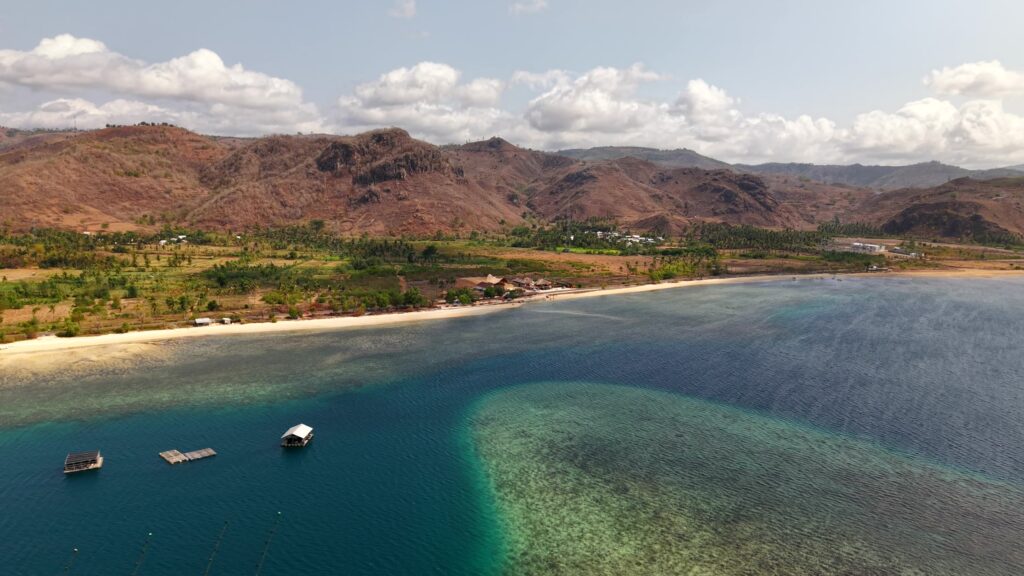
About 1 hour 10 minutes by car from Lombok International Airport. We offer a stay programme of 3 nights/4 days or more, with island trips by local boat and sunsets at SAKURA CAFE. The villas are due to be completed in stages from 2027.
Sources for this guide
- Video on our team’s YouTube channel published 15 September 2025 (the chapter on new street food: what goes into es campur)https://youtu.be/Vx9G23mdzHM
- Video on our team’s YouTube channel, “Our YouTube channel restarts: back on the move on Lombok”, published 1 November 2025 (kolak pisang and dadar gulung at a hotel breakfast in Sekotong, breakfast format changing by season)https://youtu.be/Y4SbZABKcJI
- Video on our team’s YouTube channel about progress on a place where people gather, published 21 March 2026 (when Ramadan began, the rules of the fast, the time of buka puasa, restaurants busy during Ramadan, eating in the daytime)https://youtu.be/_bcZwW-z74c
- Video on our team’s YouTube channel with a long-serving staff member, published 9 May 2026 (rujak as a dish she makes at a stall)https://youtu.be/uH0vMpLY1N4
- TasteAtlas, “Best Desserts in Indonesia”, viewed September 2026 (ranking by user ratings, number of ratings)https://www.tasteatlas.com/best-rated-desserts-in-indonesia
- Wikipedia, “Es campur” (meaning of the name, ingredients, sold before breaking the fast in Ramadan)https://en.wikipedia.org/wiki/Es_campur
- Indonesia’s official tourism website, “Es Cendol” (rice flour cendol, coconut milk and palm sugar, from stalls to cafes)https://www.indonesia.travel/gb/en/travel-ideas/gastronomy/es-cendol
- Wikipedia, “Cendol” (pandan flavour, mung bean starch, the names es cendol and dawet)https://en.wikipedia.org/wiki/Cendol
- Wikipedia, “Dadar gulung” (meaning of the name, source of the green colour, filling, where it is sold)https://en.wikipedia.org/wiki/Dadar_gulung
- Wikipedia, “Klepon” (ingredients, sugar melting as it boils, sold in traditional markets)https://en.wikipedia.org/wiki/Klepon
- Indonesia’s official tourism website, “Cari Takjil Buka Puasa? 6 Kudapan khas Indonesia ini Mudah Dicoba” (klepon as a Javanese speciality and a snack for breaking the fast)https://www.indonesia.travel/cn/zh-cn/travel-ideas/gastronomy/cari-takjil-buka-puasa-6-kudapan-khas-indonesia-ini-mudah-dicoba
- Wikipedia, “Kolak (food)” (ingredients, kolak pisang, other fillings)https://en.wikipedia.org/wiki/Kolak_(food)
- Wikipedia, “Pisang goreng” (how it is made, where it is sold, when it is eaten)https://en.wikipedia.org/wiki/Pisang_goreng
- Wikipedia, “Bubur kacang hijau” (ingredients, when it is eaten, warm and cold versions, accompaniments)https://en.wikipedia.org/wiki/Bubur_kacang_hijau
- Wikipedia, “Warung” (types of warung, warung burjo)https://en.wikipedia.org/wiki/Warung
- Indonesia’s official tourism website, “17 Most Popular and Delicious Indonesian Foods” (batter and toppings of martabak manis, the name terang bulan)https://www.indonesia.travel/ph/en/travel-ideas/gastronomy/don-t-leave-indonesia-before-you-get-a-taste-of-these-12-favorite-local-foods
- Wikipedia, “Martabak” (martabak manis served folded in half)https://en.wikipedia.org/wiki/Martabak
- Wikipedia, “Apam balik” (redirected from Martabak manis; origin of the name terang bulan, served cut into pieces)https://en.wikipedia.org/wiki/Martabak_manis
- IDN Times, “Kenapa Martabak Manis Disebut Terang Bulan? Ini Alasannya”, 21 February 2025 (terang bulan as the common name in eastern Indonesia)https://www.idntimes.com/food/diet/kenapa-martabak-manis-disebut-terang-bulan-00-j73nz-qb4vm4
- Mojok, “Alasan Penjual Martabak Kebanyakan Jualan di Malam Hari”, 18 March 2023 (stalls start setting up around sunset)https://mojok.co/terminal/alasan-penjual-martabak-kebanyakan-jualan-di-malam-hari/
- Wikipedia, “Rujak” (origin, fruit used, sauce ingredients, taste)https://en.wikipedia.org/wiki/Rujak
- Wikipedia (Indonesian), “Takjil” (meaning and examples of takjil)https://id.wikipedia.org/wiki/Takjil
- Lombok Post, “Ramainya Berburu Takjil di Sore Ramadan Kota Praya”, 7 March 2026 (times, goods and prices at evening stalls in Praya)https://lombokpost.jawapos.com/praya/amp/1507279458/ramainya-berburu-takjil-di-sore-ramadan-kota-praya-aroma-kolak-gorengan-dan-lauk-matang-menggoda-warga-yang-pulang-beraktivitas
- ANTARA News Mataram, “Berburu takjil sambil nikmati senja di Pasar Bilebante Lombok Tengah”, 4 March 2026 (opening hours and prices at the market in Bilebante)https://mataram.antaranews.com/berita/538363/berburu-takjil-sambil-nikmati-senja-di-pasar-bilebante-lombok-tengah
- kumparan, “7 Jajanan Khas Lombok, Mulai dari yang Manis sampai Gurih”, 4 June 2025 (cerorot, kelepon kecerit, temerodok)https://kumparan.com/jendela-dunia/7-jajanan-khas-lombok-mulai-dari-yang-manis-sampai-gurih-25CVFTCHpSw
- Good News From Indonesia, “10 Rekomendasi Jajanan Khas Lombok yang Unik dan Autentik”, 22 November 2024 (ingredients of temerodok, cerorot and kelepon kecerit)https://www.goodnewsfromindonesia.id/2024/11/22/10-rekomendasi-jajanan-khas-lombok-yang-unik-dan-autentik
- IDN Times NTB, “5 Kue dan Jajanan Khas Lombok yang Wajib Dicoba”, 24 July 2024 (the shape of cerorot and rattan fruit, the shape of kelepon kecerit)https://ntb.idntimes.com/food/recipe/jajan-dan-kue-tradisional-yang-wajib-dicoba-saat-di-lombok-00-lm183-1841c4
- detikBali, “Poteng Jaje Tujak, Jajanan Khas Lebaran di Lombok”, 4 April 2023 (ingredients, meaning of the Sasak words, when it is served)https://www.detik.com/bali/bali-bungah/d-6655313/poteng-jaje-tujak-jajanan-khas-lebaran-di-lombok
- CDC, “Food and Drink Considerations When Traveling” (ice, street vendors, fruit you peel yourself)https://wwwnc.cdc.gov/travel/page/food-water-safety
- Australian Government, Smartraveller: Indonesia (waterborne and foodborne diseases widespread)https://www.smartraveller.gov.au/destinations/indonesia