“Where can I see weaving on Lombok?” “What is songket?” “If I want to buy cloth as a souvenir, which village should I go to and what should I choose?” These questions come up when you look into Lombok’s handicrafts.
In short, Lombok’s weaving is easiest to understand through three villages: Sukarara, known for songket woven with gold and silver thread; Pringgasela, where stripes are woven from plant-dyed yarn; and Sade, where traditions about weaving live on. Sukarara and Sade are about 15 to 20 minutes by car from Lombok International Airport, so you can stop on your arrival or departure day. A handwoven cloth is said to take one to three months, and prices range from a few hundred thousand to several million rupiah per piece.
This article is based only on what we could confirm from Indonesia’s official tourism site (indonesia.travel) and Indonesian news reports (ANTARA, CNN Indonesia, RRI), which we opened and read in October 2026. It is written for people who want to see traditional weaving on Lombok or buy cloth as a souvenir.
As of October 2026
What this article covers
- ✓The kinds of cloth woven on Lombok (songket and plant-dyed striped cloth)
- ✓Where Sukarara, Pringgasela and Sade are, and what you can see in each
- ✓How long one cloth takes, and price ranges
- ✓How to plan your visits, and where you can try weaving
- ✓What to check when buying cloth
In short
To see weaving, start with Sukarara, about 20 minutes from the airport (songket with gold and silver thread, and you can try the loom). For plant-dyed striped cloth, go to Pringgasela in East Lombok. A handwoven cloth takes one to three months, and prices range from a few hundred thousand to several million rupiah per piece. Before buying, ask the shop whether it is handwoven and what yarn and dyes were used (as of October 2026).
What is Lombok weaving? Songket and striped cloth
In the villages of the Sasak, Lombok’s indigenous people, women still weave cloth on traditional looms. Indonesia’s tourism site describes songket as finely patterned cloth woven by hand with added gold or silver thread. The pattern stands out when it catches the light, making it a showy cloth.
The other is the cloth of Pringgasela village in East Lombok. According to CNN Indonesia (2018), Pringgasela cloth is made on a loom called a gedogan and is known for its striped patterns. Its colours are subdued, and the article describes it as clearly different from songket and ikat.
Both are “Lombok cloth”, but with songket the appeal is the fine pattern and the shine of gold and silver thread, while with Pringgasela cloth it is the plant colours and simple stripes. Which you want to see decides which village you visit.
Figure: Lombok’s three weaving villages
Sukarara: the village of songket weavers
Sukarara is in Central Lombok Regency. According to Indonesia’s tourism site, it is about 25 km from Mataram, the provincial capital, and about 20 minutes by car from Lombok International Airport. Villagers in traditional dress welcome visitors, and you can watch women weaving songket on traditional looms. The site says you can also try weaving yourself.
According to ANTARA (July 2024), about 12,000 people live in the village, and village records list 3,200 weavers (out of 3,500 households). The village is designated as a weaving tourism village. Only women weave; the skill passes from mother to daughter, starting with plain cloth and moving on to patterned cloth as they improve. Silk and cotton yarn are used, and the cloth is made into traditional dress as well as work clothes and bags.
Once a year the village holds Begawe Jelo Nyesek, a festival where large numbers of weavers line the street and weave together. In 2024 it was held on 28 July, with about 500 women in a line more than 500 m long. In 2023, 2,023 weavers took part and the event was reported to have been recognised as an Indonesian record. We could not confirm dates for 2026 or later, so check with your accommodation or a travel agent before you go.
Pringgasela: plant-dyed striped cloth
Pringgasela is in East Lombok Regency. According to CNN Indonesia (2018), the signature of Pringgasela cloth is a striped pattern called Sundawa, which is said to come from a land of many rivers. The dyes come from natural materials such as tree bark, turmeric, tarung, mango leaves and jackfruit bark.
Weaving one 300 x 90 cm cloth takes about 2 to 3 weeks, said to be quicker than songket or ikat with their complex patterns.
RRI (June 2026) names two representative patterns of Pringgasela cloth: Sundawa, representing the beauty of the Sundawa river, and Sari Menanti, representing waiting, both described as patterns with important meanings. Work is under way to protect the village’s cloth as regional intellectual property.
Sade: a traditional village where weaving lore lives on
Sade is in Central Lombok and, according to Indonesia’s tourism site, about 15 minutes by car from the airport. The site says that among the Sasak there is a tradition that women should learn to weave, and that this decides whether they can marry. It is a village of traditional houses built of wood, bamboo and earth, and weaving is seen there as part of daily life. Note, however, that Sade was badly damaged by fire on the night of 22 August 2026 (at least 125 homes razed, according to the provincial disaster agency, and 75 houses totally destroyed, according to the tourism minister; no one died), and as of 12 October 2026 its formal relaunch as a destination was still being prepared, so check the current situation with your accommodation or driver before you go.
The houses of Sade and how to visit Sasak traditional villages are covered in our article on Sasak culture and traditional villages. As a rule of thumb, go to Sukarara if weaving is your focus, and to Sade if you want to see houses and daily life as well.
How long does one cloth take? Price ranges
According to ANTARA (2024), a Sukarara cloth takes one to three months depending on the pattern and size. One weaver said that even a plain cloth takes a month. A Pringgasela striped cloth of 300 x 90 cm takes about 2 to 3 weeks (CNN Indonesia, 2018).
The same ANTARA article gives prices of a few hundred thousand to several million rupiah per piece, depending on the pattern and type of cloth. Information from Indonesia’s tourism ministry, which we checked in August 2026, said Sukarara’s signature Subahnale pattern takes one weaver about a month and sells for Rp1 million to Rp3 million per piece.
← Scroll sideways to see the whole table
| Cloth | Time per piece | Price range |
|---|---|---|
| Sukarara songket | 1 to 3 months (a month even for plain cloth) | A few hundred thousand to several million rupiah |
| Sukarara Subahnale pattern | About 1 month | Rp1 million to Rp3 million |
| Pringgasela striped cloth (300 x 90 cm) | About 2 to 3 weeks | Not confirmed |
Based on ANTARA (July 2024), CNN Indonesia (March 2018) and Indonesia’s tourism ministry (checked August 2026). Prices vary widely by shop and cloth.
Sometimes a cloth that took a month to weave is sold for a few hundred thousand rupiah. A cheap cloth is not necessarily a bad one, but whether it is handwoven, and what yarn and dyes were used, make a big difference to the price. Asking the shop what you are buying before you choose saves second thoughts later.
What to check when buying cloth
In weaving villages, the shop is often right next to where the weaving is done, so you can choose after watching the weavers at work. Our souvenir research (August 2026) also found that some of the “songket-style” cloth sold in markets for tens of thousands of rupiah is machine-woven or printed. Ask the shop about the following before choosing.
- ✓Whether it is handwoven, or machine-woven or printed
- ✓What the yarn is (gold or silver thread, silk, cotton), and whether the dyes are plant-based or chemical
- ✓Who wove it, and how long it took
- ✓The size, and whether it is a piece of cloth or made into an item such as a bag or scarf
- ✓Whether the price is per piece, and whether you can pay by card or QR or need cash
Large pieces of cloth are heavy and bulky. If you do not want more luggage, a scarf or small item is an option.
How to plan your visit: stopping near the airport
Sukarara is said to be about 20 minutes from the airport and Sade about 15 minutes, so both are close to it. Stopping on your arrival day or before your flight home lets you see weaving on the way. Pringgasela is in East Lombok, in a different direction from the two central villages. It fits more easily into a day heading to the east side of Mount Rinjani or towards Tetebatu.
We could not confirm travel times between the villages, so when you hire a car, show your list to the driver and agree the order and timing. From the airport to Sekotong in the southwest is about 1 hour 10 minutes by car; the route is covered in our guide to getting from Lombok airport to Sekotong.
A note from Sekotong
In weaving villages, asking before you take photos makes the weavers happier to oblige. If you want to try the loom, ask about the time and price first. Once you have bought cloth, put it in a bag in your hand luggage so it does not get creased or wet on the way home.
The downsides, and who it suits
There are downsides to weaving villages. In villages with many visitors, it is common to be shown into the shop after the tour, and it can feel awkward to leave without buying. Prices are often not displayed, and with some cloth it is hard to know what to base your choice on. Festival dates change from year to year and are hard to confirm in advance.
Even so, watching handwork that takes weeks or months per cloth, right beside the weavers, is an experience particular to Lombok. It suits people who love handicrafts and textiles, those who want to choose a local souvenir, and those who want a short taste of culture near the airport.
After seeing Sasak life in a weaving village, you can add a day in a seaside village. Sekotong in southwest Lombok is a string of fishing villages where Sasak people live.
Frequently asked questions
Q. How far is Sukarara from the airport?
According to Indonesia’s tourism site, it is about 20 minutes by car from Lombok International Airport and about 25 km from Mataram, the provincial capital. You can stop on the day you arrive or the day you leave.
Q. Can I try weaving?
Indonesia’s tourism site says that in Sukarara you can not only watch the weaving but also try it yourself. We could not confirm the time or price, so ask in the village first.
Q. What is songket?
It is a finely patterned cloth woven by hand with added gold or silver thread. On Lombok, Sukarara is known for it, and one cloth is said to take one to three months.
Q. How much does it cost?
News reports give a few hundred thousand to several million rupiah per piece. Information we checked in August 2026 put Sukarara’s signature pattern at Rp1 million to Rp3 million per piece. Small items can be more affordable.
Q. What is Pringgasela cloth like?
It is a cloth from a village in East Lombok, known for its striped patterns. The yarn is dyed with tree bark, turmeric, mango leaves and other plants, and woven on a loom called a gedogan. A 300 x 90 cm cloth is said to take about 2 to 3 weeks.
Summary
Lombok’s weaving is easiest to understand through three villages: Sukarara’s songket woven with gold and silver thread, Pringgasela’s plant-dyed striped cloth, and Sade, where weaving traditions live on. Sukarara and Sade are about 15 to 20 minutes by car from the airport, so you can stop on the way.
A handwoven cloth is said to take one to three months, and prices range from a few hundred thousand to several million rupiah per piece. Before buying, ask the shop whether it is handwoven, what yarn and dyes were used, and its size (as of October 2026).
Related reading
- Sasak culture and traditional villagesHow to visit Sasak villages such as Sade
- TetebatuA village of rice terraces and waterfalls in East Lombok, in the same direction as Pringgasela
- Lombok sightseeing spotsSights area by area and how to get around them
For background on the people who make these textiles, our guide to the Sasak people of Lombok covers their language, religion, houses and wedding customs.
More on this topic: Lombok Travel Guide. Sample 3- to 5-night itineraries in Sekotong, with the cost per person: Stay Programme Itineraries.
SEMELAR BEACH VILLAGE
Come and spend some time in the Sekotong village we call home
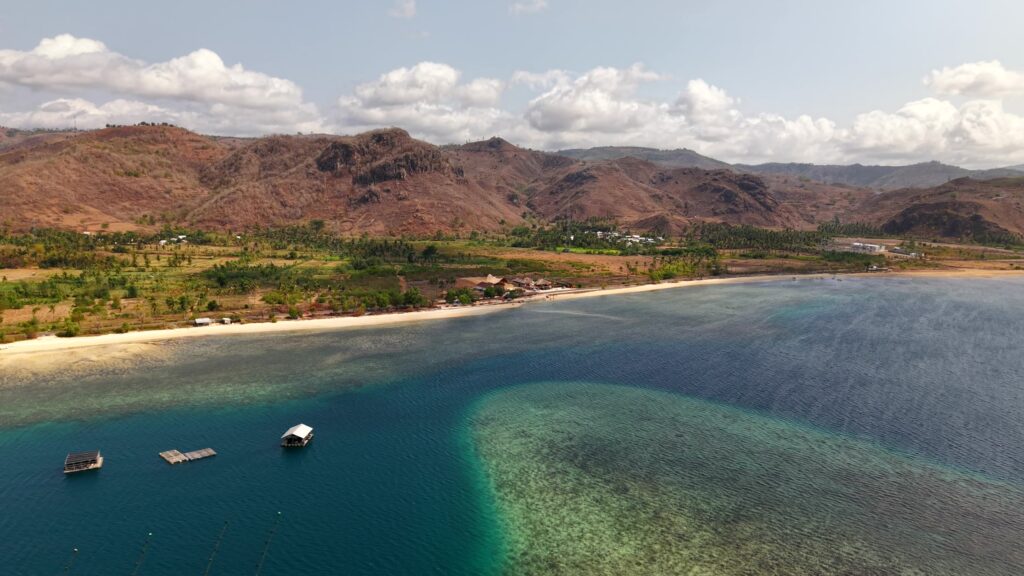
About 1 hour 10 minutes by car from Lombok International Airport. We offer a stay programme of 3 nights/4 days or more, with island trips by local boat and sunsets at SAKURA CAFE. The villas are due to be completed in stages from 2027.
Sources used for this article
- Indonesia Travel (indonesia.travel), “Discover the Art of Hand-Weaving at These Indonesian Villages” (checked October 2026)https://www.indonesia.travel/au-en/travel-ideas/culture/discover-the-art-of-hand-weaving-at-these-indonesian-villages
- ANTARA, “Melestarikan tradisi menenun lewat Festival Begawe Jelo Nyesek” (28 July 2024)https://www.antaranews.com/berita/4222011/melestarikan-tradisi-menenun-lewat-festival-begawe-jelo-nyesek
- CNN Indonesia, “Tenun Pringgasela dari NTB Bakal Unjuk Gigi di Tokyo” (17 March 2018)https://www.cnnindonesia.com/gaya-hidup/20180315113316-277-283198/tenun-pringgasela-dari-ntb-bakal-unjuk-gigi-di-tokyo
- RRI, “Kemenkum NTB Perkuat Perlindungan KI UMKM dan Tenun Pringgasela” (22 June 2026)https://rri.co.id/mataram/ekonomi/umkm/2510709/kemenkum-ntb-perkuat-perlindungan-ki-umkm-dan-tenun-pringgasela
- Semelar Beach Village, Lombok souvenir guide (Sukarara pattern price, machine-woven and printed cloth; checked August 2026)https://semelarvillage.com/en/lombok-souvenir-guide-en/