Information as of November 2026
How long can you stay in Indonesia, and which visa do you need to live on Bali or Lombok for months or years? The answer depends on why you are staying. A visa on arrival covers 60 days at most. Longer stays need a visa chosen for the purpose: a tourist visit visa, a remote worker visa, a retiree visa, a second home visa or, if you will work for an Indonesian employer, a work visa arranged by that employer.
This guide sets out the main options with the fees and conditions published by Indonesia’s Directorate General of Immigration, then covers working, tax, healthcare and the differences between Bali and Lombok. We run a stay programme in Sekotong, on Lombok, but we are not visa agents: the rules change often, so check the official pages before you apply.
What this article covers
- ✓How long each visa lets you stay, and what it costs
- ✓Deposit and income conditions for the retiree and second home visas
- ✓Working: what you can and cannot do on each visa
- ✓Tax residence after 183 days
- ✓Healthcare and insurance
- ✓Bali or Lombok for a long stay
In short
The visa on arrival is Rp500,000 for 30 days, extendable once to 60. A tourist visit visa allows up to 180 days in total. For a year or more, the remote worker visa (E33G) needs income of at least US$60,000 a year from a company abroad, and the 5-year retiree visa (E33E) is for people aged 55 or over who deposit at least US$50,000 in a state-owned bank and have US$3,000 a month in income. None of these visas allows paid work for Indonesian employers.
The main visas for staying longer
The figures below come from the visa pages of the Directorate General of Immigration (imigrasi.go.id), read in November 2026. Fees are the state charges (PNBP) shown on each page; agents add their own fees. A visa must usually be used within 90 days of being issued, and the visa’s validity is not the same as the length of stay it gives you.
← Scroll sideways to see the whole table
| Visa | Stay | Fee | Main conditions |
|---|---|---|---|
| B1 visa on arrival (VoA, e-VOA) | 30 days, one 30-day extension | Rp500,000 | Passport valid 6 months, return or onward ticket |
| C1 tourist visit visa (apply before travel) | 60 days, extendable to 180 days in total | Rp1,000,000 | Bank statement of at least US$2,000 over 3 months |
| E33G remote worker | 1 year | Rp7,000,000 | Income of at least US$60,000 a year; contract with a company outside Indonesia |
| E33E retiree, 5 years | Up to 5 years, total stay up to 10 years | Rp13,000,000 | Aged 55 or over; deposit of at least US$50,000 in a state-owned bank; US$3,000 a month in income |
| E33F retiree, 1 year | 1 year | Rp7,000,000 | US$3,000 a month in income; a sponsor is required |
| E33 second home | Up to 5 years, total stay up to 10 years | Rp13,000,000 | Deposit of at least US$130,000 in a state-owned bank, among the options listed |
Source: Directorate General of Immigration visa pages B1, C1, E33G, E33E, E33F and E33 (read November 2026). Fees exclude agents’ charges.
For the retiree and second home visas, the deposit has to be made in your own name at a state-owned bank and reported to the immigration office within 90 days of arrival, and it must stay there while the permit is valid. The 5-year visas need no sponsor; the 1-year retiree visa (E33F) does. The E33F page does not state an age limit. If you plan only a few months, the visa on arrival and its extension are explained in our guide to Indonesian visas and extending a visa in Mataram.
Figure: Money you must show for the longer visas
Can you work?
Not for Indonesian employers on these visas. The immigration pages say visa on arrival and tourist visa holders may not sell goods or services or receive wages from people or companies in Indonesia, and that remote worker, retiree and second home visa holders may not work outside what their permit allows. The remote worker visa is designed for people employed by a company outside Indonesia.
To work for an Indonesian company you need a work visa (E23). The employer acts as your sponsor and applies for you, and the application needs a work permit from the Ministry of Manpower. The immigration page lists stays of 180 days, 1 year or 2 years, with fees of Rp5,250,000, Rp7,000,000 and Rp9,500,000.
Tax after half a year
Staying long can also change your tax position. Under Indonesia’s income tax law, as summarised by the tax publisher DDTC, an individual becomes an Indonesian tax resident by living in Indonesia, by being present for more than 183 days in any 12-month period, or by being present in a tax year with the intention of living there, for example on a stay permit of more than 183 days. Tax treaties and your home country’s rules also matter, so take advice from a tax professional before a stay of six months or more.
Healthcare and insurance
The US State Department’s advice for Indonesia (July 2026) says that hospitals and doctors often require payment or sizable deposits upfront before treatment or admission, that patients must cover the cost of transfers to or between hospitals, and it strongly recommends insurance that covers medical evacuation. It also notes that tap water is not safe to drink in many areas. Our guide to hospitals and insurance on Lombok has the details.
Before you commit
- Rules change: fees and conditions are revised from time to time, and agents’ summaries can lag behind the official pages
- No local paid work: none of the tourist, remote worker, retiree or second home visas allows it
- Healthcare costs: deposits upfront are common; insurance with evacuation cover is strongly recommended
- Use the right visa: visitor visas are for visits; for living in Indonesia, choose a visa made for the purpose
Bali or Lombok for a long stay
The two islands are neighbours but feel different. Bali had 4,317,404 people at the 2020 census, and about 86 percent are Balinese Hindus; Indonesia’s Ministry of Tourism estimated in 2021 that 109,801 foreigners lived there, as cited by Wikipedia. Lombok had 3,758,631 people in 2020, and about 85 percent are Sasak, who are predominantly Muslim. We found no comparable count of foreign residents on Lombok.
Figure: Bali and Lombok for a long stay
On Lombok, Friday prayers and Ramadan affect opening hours and daily routines; our guide to Friday prayer, holidays and Ramadan on Lombok explains what changes. For housing, internet and the practical side, see long stays and two-base living on Lombok.
Figure: Planning a long stay step by step
A note from Sekotong
If you want to see what everyday life on Lombok feels like before deciding, a short stay is the easiest test. Sekotong is about 1 hour 10 minutes by car from Lombok International Airport. Our stay programme runs from 3 nights/4 days to 5 nights/6 days, at Rp4,800,000 per person, including airport transfers, transport, a guide, a welcome dinner and a massage; flights and accommodation are booked separately.
Frequently asked questions
Q. Is there a retirement visa for Indonesia?
Yes. The 5-year E33E retiree visa is for people aged 55 or over, with a deposit of at least US$50,000 in a state-owned bank and income of at least US$3,000 a month; the state fee is Rp13,000,000. There is also a 1-year E33F, which needs a sponsor.
Q. Can I keep doing visa runs on a visa on arrival?
The visa on arrival gives 30 days plus one 30-day extension and is meant for visits, not for living in Indonesia. For long stays, choose a visa made for the purpose, such as the remote worker, retiree or second home visa.
Q. What is the digital nomad visa in Indonesia?
It is the E33G remote worker visa: one year, a state fee of Rp7,000,000, an employment contract with a company outside Indonesia and income of at least US$60,000 a year. It is meant for people employed abroad, not for work with Indonesian employers.
Q. Do I become a tax resident?
Possibly. Under Indonesian income tax law, being present for more than 183 days in any 12 months is one of the tests. Get advice on your own situation.
Summary
A visa on arrival covers up to 60 days and a tourist visit visa up to 180. For a year or more, Indonesia offers a remote worker visa, retiree visas and a second home visa, each with set deposit or income conditions, and a work visa only through an Indonesian employer. Check the official pages right before you apply, arrange insurance with evacuation cover, and try a shorter stay before you move.
Related reading
- Do you need a visa for Indonesia?VOA and e-VOA, fees and extending to 60 days
- Long stays on LombokHousing, connectivity and costs
- Bali or Lombok?A fair comparison of sights, prices and culture
For a short extension of a visa on arrival rather than a long-stay visa, see Lombok Visa Extension Guide: one extension, 60 days in total.
More on this topic: Indonesia Travel Basics. Adding three nights on Lombok to a Bali trip: Stay Programme Itineraries.
SEMELAR BEACH VILLAGE
Come and spend some time in the Sekotong village we call home
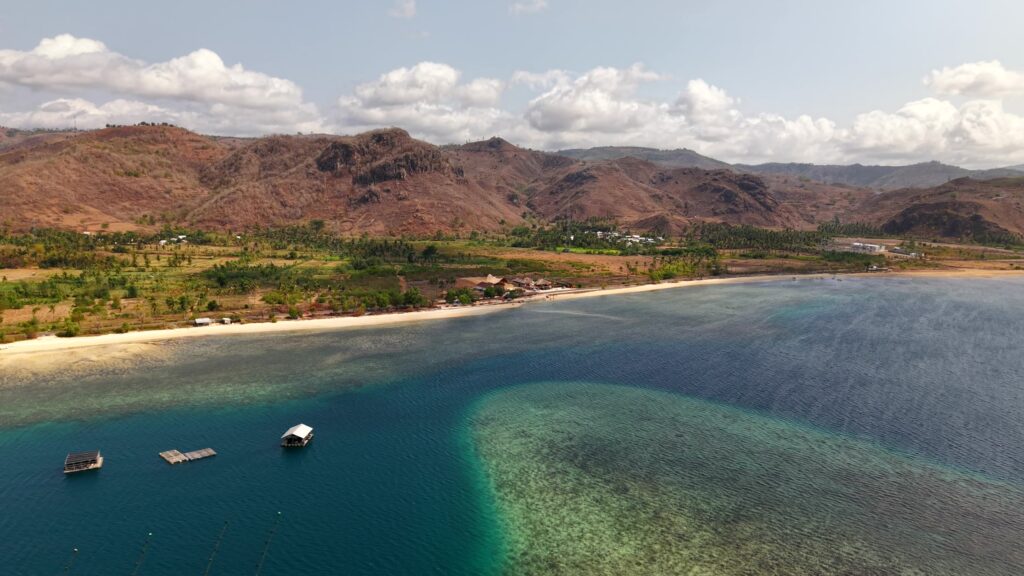
About 1 hour 10 minutes by car from Lombok International Airport. We offer a stay programme of 3 nights/4 days or more, with island trips by local boat and sunsets at SAKURA CAFE. The villas are due to be completed in stages from 2027.
Sources used for this article
- Directorate General of Immigration, “B1 Tourism Visitor Visa” (Rp500,000, 30 days plus one extension, no wages from Indonesia)https://www.imigrasi.go.id/wna/daftar-visa-indonesia/B1?lang=en-US
- Directorate General of Immigration, “C1 Tourism Visitor Visa” (60 days, up to 180 days, Rp1,000,000, US$2,000 bank statement)https://imigrasi.go.id/wna/daftar-visa-indonesia/C1?lang=en-US
- Directorate General of Immigration, “E33G Visa Rumah Kedua Pekerja Jarak Jauh” (1 year, Rp7,000,000, US$60,000 a year)https://imigrasi.go.id/wna/daftar-visa-indonesia/E33G
- Directorate General of Immigration, “E33E 5-Year Retiree Special Residency Visa” (aged 55 or over, US$50,000 deposit, US$3,000 a month, Rp13,000,000)https://www.imigrasi.go.id/wna/daftar-visa-indonesia/E33E?lang=en-US
- Directorate General of Immigration, “E33F Visa Rumah Kedua Lansia Untuk 1 Tahun” (1 year, Rp7,000,000, US$3,000 a month, sponsor)https://imigrasi.go.id/wna/daftar-visa-indonesia/E33F
- Directorate General of Immigration, “E33 Visa Rumah Kedua” (up to 5 years, US$130,000 deposit option, Rp13,000,000)https://imigrasi.go.id/wna/daftar-visa-indonesia/E33
- Directorate General of Immigration, “E23 Visa Kerja” (employer sponsor, Ministry of Manpower work permit, fees)https://imigrasi.go.id/wna/daftar-visa-indonesia/E23
- DDTC News, “Ingat Lagi, Ini Kriteria Subjek Pajak Orang Pribadi Dalam Negeri” (11 May 2025; more than 183 days in 12 months)https://news.ddtc.co.id/berita/nasional/1810666/ingat-lagi-ini-kriteria-subjek-pajak-orang-pribadi-dalam-negeri
- US Department of State, “Indonesia Travel Advisory” (issued 7 July 2026; health section)https://travel.state.gov/en/international-travel/travel-advisories/indonesia.html
- Wikipedia, “Bali” (2020 census, religion, Ministry of Tourism estimate of foreign residents)https://en.wikipedia.org/wiki/Bali
- Wikipedia, “Lombok” (2020 census, mid-2024 estimate, Sasak population and religion)https://en.wikipedia.org/wiki/Lombok
- flightconnections, “Non-stop flights from Praya, Lombok (LOP)” (2 international destinations, November 2026)https://www.flightconnections.com/flights-from-mataram-lop
- Love Bali (Bali Provincial Government), FAQ (Rp150,000 per foreign tourist, once per trip)https://lovebali.baliprov.go.id/faq